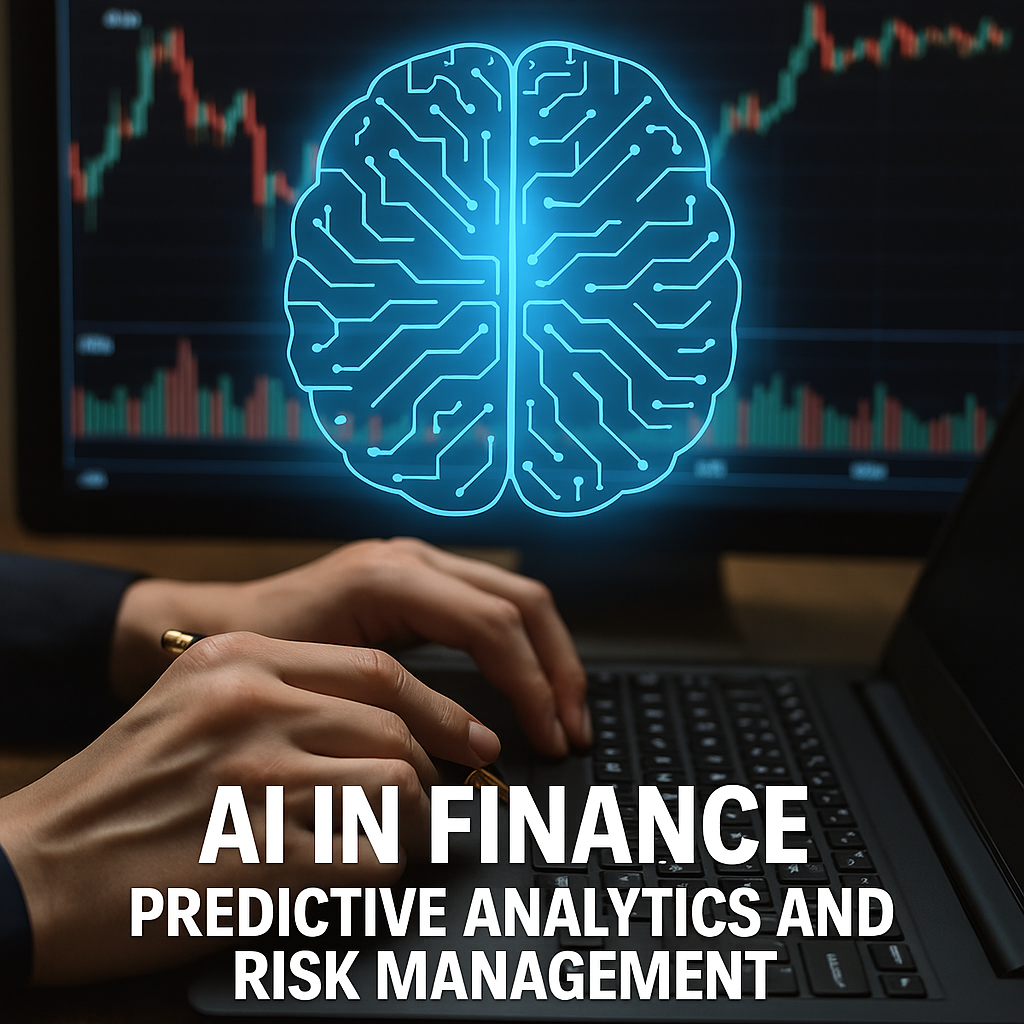
Technology is transforming every industry, and finance is leading this revolution. Entrepreneurs and small business owners are leveraging advanced digital tools to streamline operations and reduce uncertainties. At the forefront of this change is artificial intelligence, merging sophisticated algorithms with traditional financial models to offer powerful artificial intelligence predictive analytics for financial risk management. This integration helps companies navigate market fluctuations and mitigate financial threats effectively.
Transforming Financial Risk Management
Risk management has always been a critical, yet challenging, aspect of running a successful business. Historically, risk assessments depended on historical data, intuition, and reactive measures. Today, artificial intelligence is reshaping these outdated methods. Businesses can now implement ai-driven risk management strategies in finance that deliver real-time insights and proactively identify potential threats before they escalate.
With predictive analytics and a data-focused approach, companies can analyze vast amounts of information to build detailed and effective risk profiles. This evolution is especially advantageous for businesses without extensive in-house risk management teams. Cloud-based solutions and scalable software now provide small businesses access to cutting-edge tools once exclusive to large financial institutions.
For example, by integrating these advanced technologies into their operations, entrepreneurs can forecast cash flow challenges, detect industry trends, and prepare contingency plans for unexpected events. The result is a resilient business model that not only endures turbulent times but also thrives in them.
Leveraging AI-Driven Strategies for Smarter Decisions
One of the most significant benefits of modern artificial intelligence in finance is its capacity to transform large datasets into actionable insights. Ai-driven risk management strategies in finance can unearth subtle patterns and correlations that may be overlooked by traditional methods. By harnessing both historical and real-time data, these systems predict future market behaviors with greater accuracy.
Imagine a small business owner deciding whether to expand operations, optimize inventory, or invest in new technology. Traditional decision-making might rely on guesswork or outdated data. However, using predictive analytics and risk assessment in finance using machine learning enables the analysis of various economic indicators, comparison with historical data, and simulation of multiple scenarios to support informed decisions. For additional insights on integrating modern analytics into business practice, check out our AI in Finance Strategies post.
This forward-thinking approach not only avoids pitfalls but also seizes emerging opportunities. Entrepreneurs adopting these methods are well-positioned to innovate and expand sustainably. In a competitive market, leveraging insights from artificial intelligence provides the crucial advantage needed to adapt to continuous market changes.
For further insights into technology’s impact on business, explore this Forbes article on AI in finance. It details real-world applications and success stories that can inspire businesses of all sizes.
Innovating with Machine Learning in Financial Risk Assessment
Machine learning is opening new avenues for precise risk evaluation in finance. Businesses are moving beyond traditional models by incorporating algorithms that continuously learn and refine their predictions. This evolution means that predictive analytics and risk assessment in finance using machine learning are becoming more accurate and reliable every day.
These models handle countless variables—from market volatility to consumer behavior—using advanced statistical techniques. This dynamic approach ensures that businesses can adjust their strategies in real-time, making risk management both strategic and responsive.
Small business owners and entrepreneurs can greatly benefit by integrating these systems into their financial planning. Automated systems can detect unusual patterns or sudden shifts in spending, enabling proactive responses in complex financial environments where timing is critical. For more on machine learning applications in finance, visit our detailed guide on Machine Learning in Financial Risk Assessment.
Moreover, these predictive models continuously improve as they process more data. As your business evolves and market conditions change, the system becomes increasingly adept at predicting outcomes tailored to your specific profile. This continuous refinement builds trust in data-driven decision-making and reduces reliance on guesswork.
Entrepreneurs seeking to learn more about how modern technologies can redefine business strategies can explore additional comprehensive business insights on our website, featuring success stories from companies that have successfully integrated these advanced systems.
The integration of artificial intelligence into daily business operations represents a significant transformation in managing risk, fostering growth, and planning strategy. For small businesses where every decision impacts the bottom line, these advanced methodologies provide a competitive edge and a safeguard against uncertainty. Adopting machine learning and predictive analytics enables smarter, data-backed decisions that enhance sustainable growth, optimize resource allocation, and improve overall performance.
This transformation is also leveling the playing field. Historically, large financial institutions dominated risk assessment with proprietary systems and vast data pools. Today, innovative technologies empower smaller players with the same high-caliber insights. This democratization of tools is revolutionizing risk evaluation and future planning.
As regulatory frameworks continue to evolve, robust risk management systems become increasingly important. Governments and financial watchdogs are emphasizing the adoption of advanced solutions to monitor and mitigate risks. By aligning with these regulatory standards, entrepreneurs ensure that their risk strategies remain compliant and resilient amidst changing requirements.
This continuous evolution highlights the importance of staying current with emerging trends and tools. Integrating artificial intelligence is not a reactive trend—it’s a strategic investment in the future stability and competitiveness of your business.
- Advanced AI delivers real-time, data-driven insights for effective risk management.
- Machine learning models continuously enhance predictions for financial outcomes.
- Entrepreneurs can make smarter, data-backed decisions with reduced uncertainty.
- Accessible technology levels the playing field for businesses of all sizes.