Latest posts
-
How Power-Intensive Businesses Can Turn Electricity Flexibility Into an Operating Advantage

For a power-intensive facility, electricity is not merely a bill to negotiate once a year. Its cost can vary with consumption timing, peak demand, tariff design, market prices and, where applicable, participation in grid services. Yet shifting load is only valuable if production quality, throughput, equipment life and safety remain protected. Commercial interest in this…
-
Replacing US Business Software with European Alternatives: A Practical Migration Framework

Replacing US business software with European alternatives can improve control over supplier exposure, contractual terms and data location. It can also introduce hidden costs: broken integrations, incomplete data exports, retraining, duplicated subscriptions and weaker functionality in critical workflows. EU-Startups has published a list of European alternatives across common software categories. That list is useful for…
-
Climate-smart crop breeding: What seed companies should assess before adopting predictive platforms

Predictive breeding platforms promise to help crop breeders identify heat- and drought-resilient varieties faster and with greater confidence. The commercial context is changing too: according to EU-Startups, Germany-based Computomics has raised €6.3 million to expand delivery of its climate-smart breeding platform as extreme heat and drought increase pressure on agriculture. That funding is evidence of…
-
What Einride’s 500-Truck Tesla Semi Order Signals for Commercial Fleet Planning

Einride’s agreement to add 500 Tesla Semis to its fleet is significant less as a vehicle endorsement than as a test of large-scale fleet coordination. TechCrunch reports that the trucks are intended to support Amazon and other customers. That creates a planning problem involving far more than procurement: vehicles, freight commitments, charging capacity, grid connections,…
-
How Small Businesses Should Evaluate Custom Electric Versus Petrol Vans

A commercial van is not merely a vehicle for a tradesperson, delivery operator or mobile service company. It is a workplace, an inventory room and often the business’s main revenue-producing asset. Choosing between an electric and petrol van therefore requires more than comparing purchase prices or accepting broad claims about fuel savings. Grounded offers a…
-
How to Reset Growth Expectations Without Putting the Business on Defense

A revenue slowdown does not automatically call for a retreat. It calls for a more precise operating plan. When expectations fall, the finance leader’s task is to establish a credible baseline without triggering indiscriminate cuts that weaken the company’s next growth cycle. That distinction matters because a lower forecast can easily be misread. Investors may…
-
Preparing the Next Generation of CFOs for the Top Finance Job

The profile of the incoming chief financial officer is changing. CFO Dive, citing Crist Kolder Associates, reports a rise in younger Gen X executives taking CFO appointments. That observation should not become a claim about the abilities or preferences of an entire generation. It should, however, prompt boards and CEOs to ask whether their succession…
-
Can Modular Electric Motorcycles Replace Vans for Urban Service Businesses?

A van often remains the default choice for urban deliveries and mobile work—even when much of its capacity travels empty. Any’s LUV1 offers a different proposition: an electric motorcycle designed around modular cargo carrying. TechCrunch reports that the vehicle provides 120 litres of cargo space, making load utility rather than passenger transport central to its…
-
Why Healthcare AI Projects Need a Data-Readiness Plan Before Bigger Models
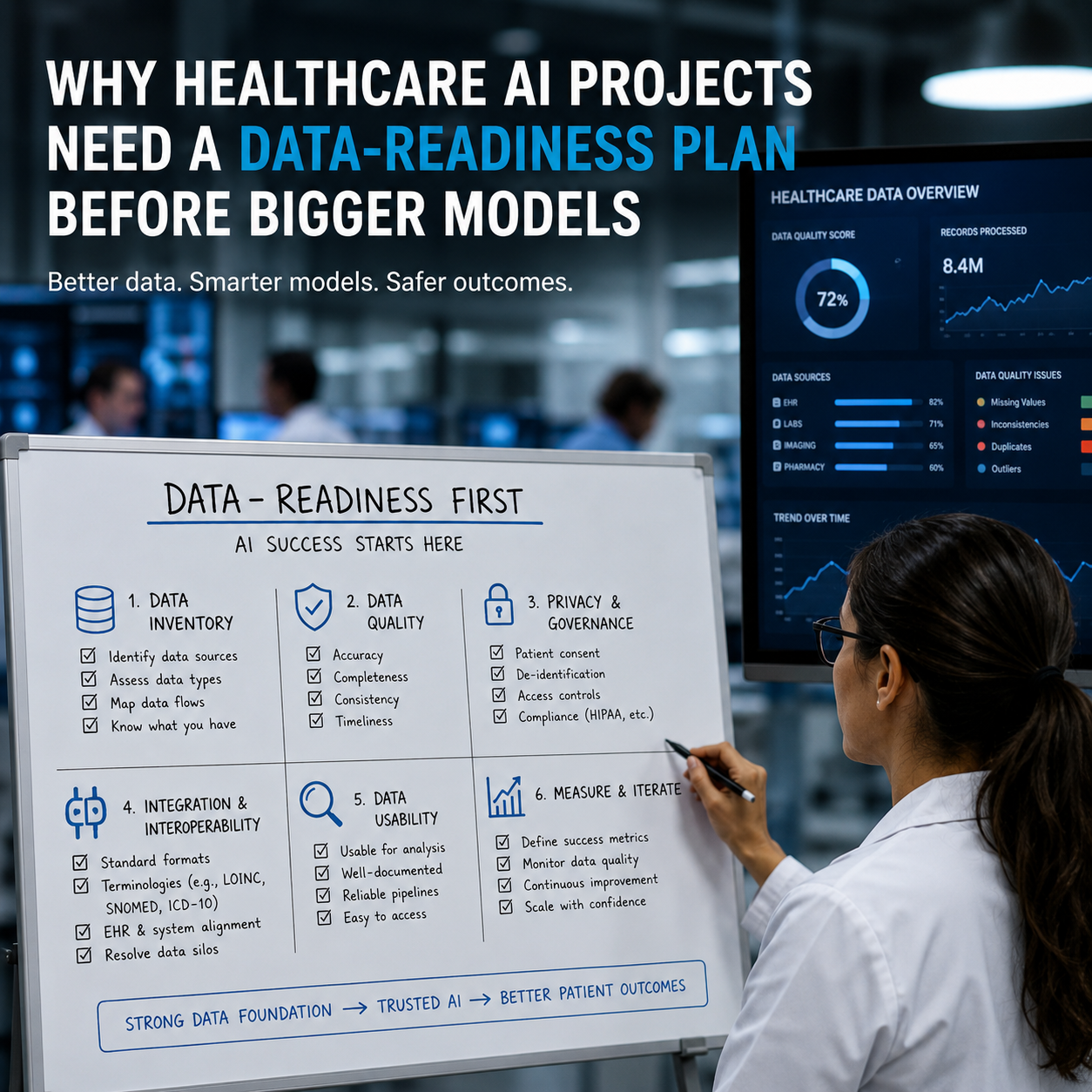
Healthcare and biotech leaders face an increasingly expensive temptation: when an AI project underperforms, assume the answer is a larger or more sophisticated model. Yet the central argument highlighted by TechCrunch’s report on a cancer-AI startup is more fundamental: AI is not close to curing cancer, and progress depends heavily on the data available to…
-
Faster data-center fiber: when a 30% transmission gain could justify infrastructure change

Relativity Networks says its hollow-core fiber can transmit data 30% faster than conventional optical fiber, according to TechCrunch. That is potentially meaningful for data centers, but it is not the same as making an application, AI cluster, or facility network 30% faster. Buyers must determine how much end-to-end delay comes from the fiber itself, whether…