Latest posts
-
Should Development Teams Consider Cursor’s GitHub Alternative? A Migration-Risk Checklist
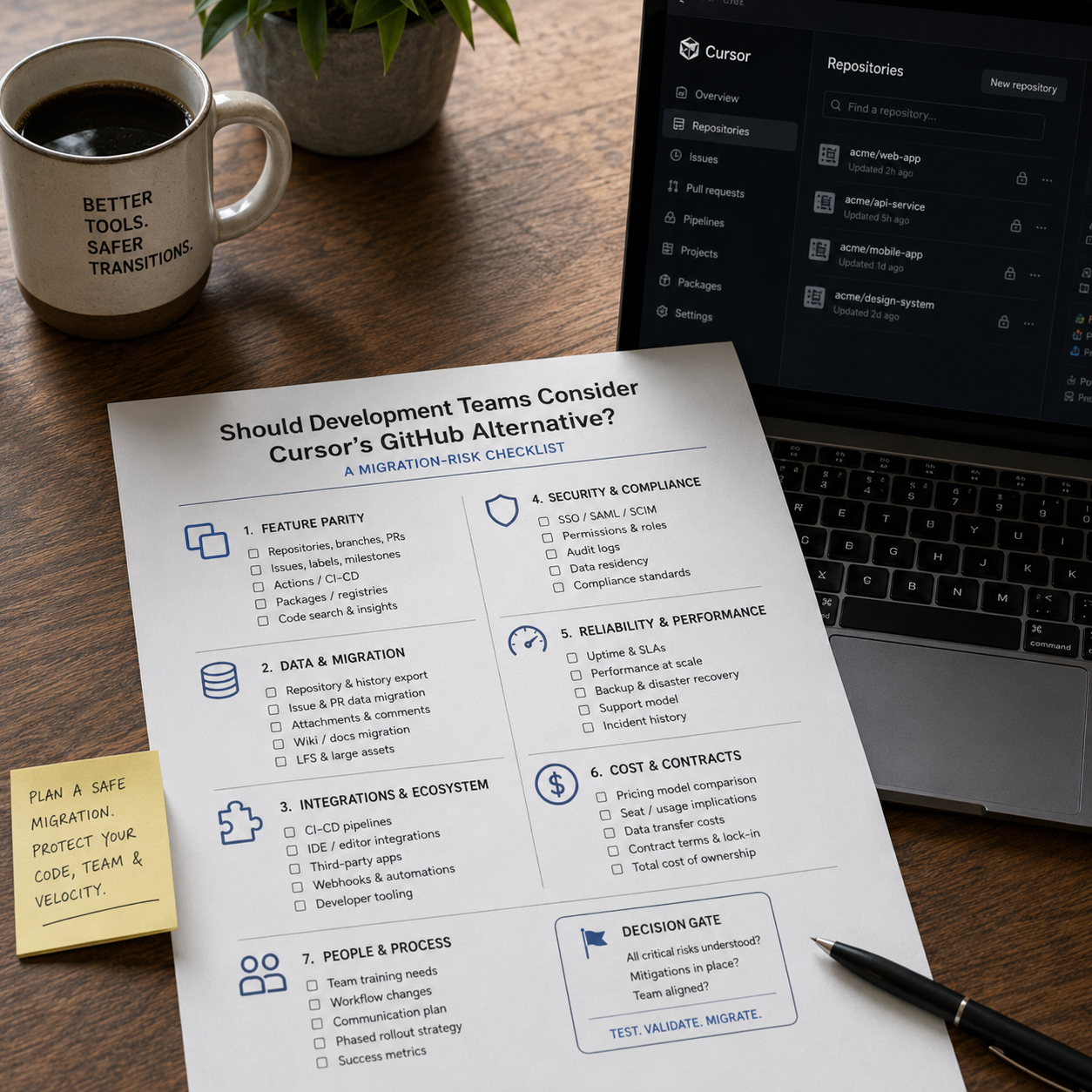
Cursor’s move from AI-assisted editor into code hosting changes the decision facing engineering leaders. Trying an editor is relatively contained: a team can test it with selected developers, limit repository access and return to existing tools. Moving source repositories is different. The repository host can sit at the centre of identity, permissions, pull requests, CI/CD,…
-
Entering Indonesia’s Ecommerce Market: A Decision Framework for Foreign Brands

Indonesia can look unusually attractive to an international ecommerce brand: widespread internet use creates a large digitally reachable audience, while comparatively low retail ecommerce sales suggest room for growth. But that gap is not proof that any particular foreign product will sell profitably. It may reflect barriers involving purchasing power, payments, logistics, regulation, trust, or…
-
How to Rebuild Your About Page for Visibility in AI-Driven Search

Your ecommerce About page is no longer only a reassurance page for shoppers wondering whether your store is legitimate. It is also a concentrated source of information about who operates the business, what it sells, where it is based, and why its expertise should be trusted. As Practical Ecommerce reports, About pages can shape how…
-
Overhead Control: Finding Sustainable Savings Without Weakening the Business

Overhead cuts can improve cash flow quickly, but indiscriminate reductions often create costs elsewhere: slower service, missed sales, unreliable systems, or an overstretched team. Small-business owners therefore need to distinguish waste from the resources that keep the operation dependable. As Small Business Trends explains, overhead generally covers expenses that support the business rather than directly…
-
How to Migrate CRM Systems Without Losing Customer Data or Disrupting Sales

Changing CRM platforms is not simply a software installation. It is an operational transfer of customer history, pipeline visibility, ownership rules, and daily sales routines. If records are incomplete, mapped incorrectly, or unavailable during cutover, representatives may contact the wrong person, overlook an opportunity, duplicate outreach, or lose the context needed to serve an account.…
-
Modular Femtosecond Lasers: When Advanced Processing Belongs In-House

Bringing femtosecond laser processing in-house is not simply an equipment purchase. It can change how a manufacturer develops processes, qualifies parts, schedules production, controls quality and maintains specialist expertise. The central question is therefore not whether ultrafast lasers are technically impressive, but whether ownership solves a defined production problem better than outsourcing does. LITILIT’s FEMODA…
-
When 3D and AR Product Previews Reduce E-Commerce Buying Uncertainty

Interactive visualization is most useful when an online shopper cannot confidently answer a question that would be easy to resolve in a store: How will this product look, fit, or coordinate in the intended space? Michaels’ digital frame builder illustrates that problem clearly. According to Retail Dive, the retailer introduced a tool through which shoppers…
-
What Warehouse Operators Should Verify Before Signing an Automation Framework Deal

Amazon and AutoStore’s global supply agreement is significant, but its structure matters as much as the names involved. Supply Chain Dive reports that the agreement includes no purchase commitments. That makes it evidence of a strategic supplier relationship—not proof that a specified number of systems will be installed, at named sites, on a fixed timetable.…
-
Alternative Fibers as a Hedge Against Raw-Material Cost Volatility

Alternative fibers can reduce dependence on a volatile raw material, but substituting an input is not simply a procurement decision. It can change product performance, machine behavior, supplier requirements, capital needs and the credibility of environmental claims. For manufacturers, the important question is therefore not whether an alternative material looks cheaper or more sustainable in…
-
How Retailers Can Enforce Vendor EDI Compliance Without Breaking Supply Relationships
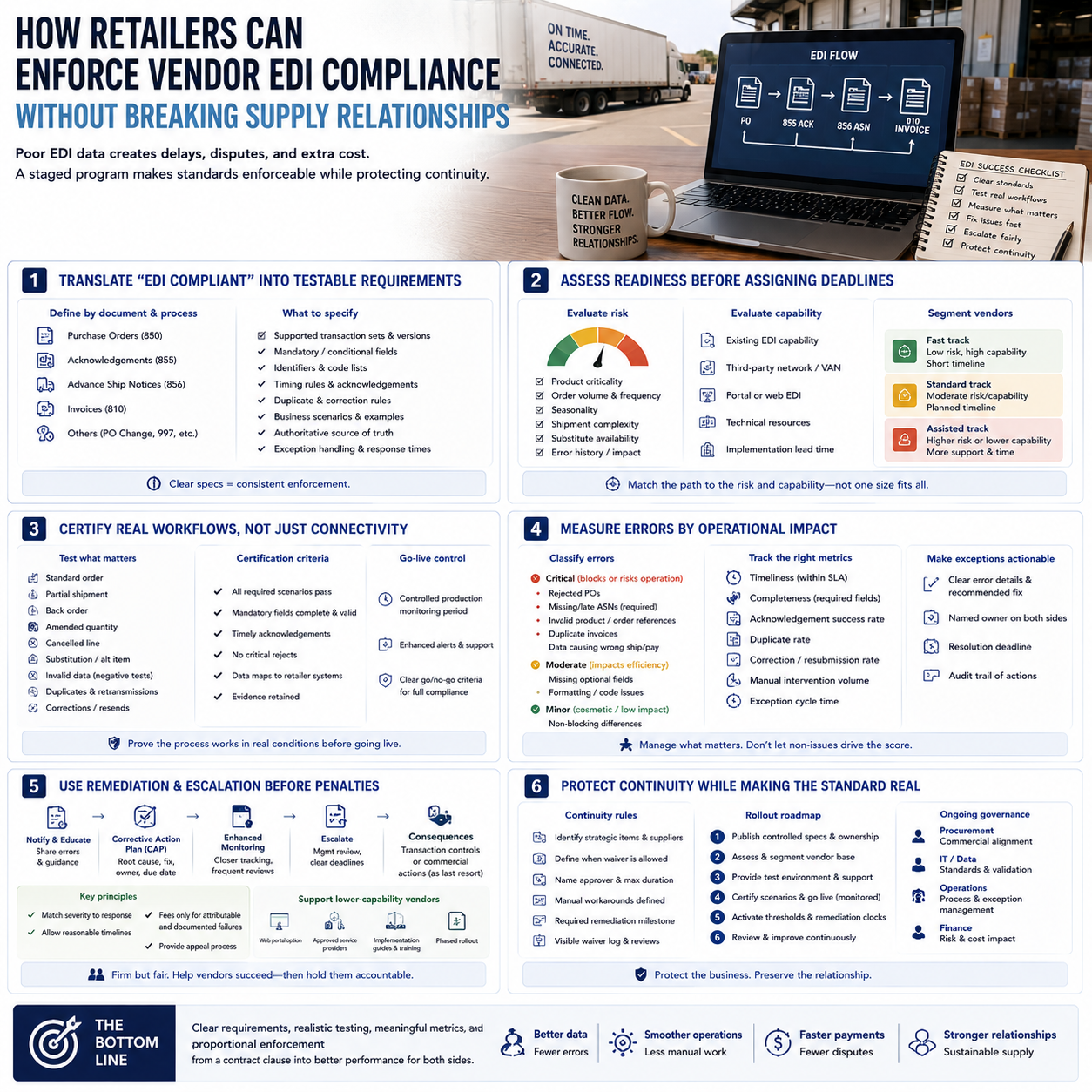
Retailers increasingly depend on electronic data interchange (EDI) to move purchase orders, acknowledgements, shipment notices, invoices, and related documents between trading partners. When a vendor sends incomplete, late, duplicated, or incorrectly mapped data, the failure does not remain inside the supplier’s system. It becomes a retailer problem: orders require manual intervention, receiving teams cannot reliably…