Amazon and AutoStore’s global supply agreement is significant, but its structure matters as much as the names involved. Supply Chain Dive reports that the agreement includes no purchase commitments. That makes it evidence of a strategic supplier relationship—not proof that a specified number of systems will be installed, at named sites, on a fixed timetable.
For e-commerce and warehouse leaders, the distinction is practical. A framework agreement can standardize commercial terms, technical cooperation or procurement processes while leaving individual deployments subject to further approval. Before committing capital, operators should therefore test whether a modular automation concept works in each facility, under its actual demand profile and constraints. A prominent customer relationship may strengthen a vendor’s credibility, but it cannot replace site-level evidence.
Separate the supply framework from the deployment decision
A global framework can create useful options. It may reduce repeated negotiation, establish common specifications and make it easier to evaluate projects across a network. It may also signal that the parties expect opportunities to cooperate. None of those benefits establishes how much equipment will ultimately be ordered.
Operators should ask which obligations are binding at framework level and which remain open. Does the agreement fix pricing, service levels, lead times or software responsibilities? Are purchases optional? Must every site pass a separate business case and design review? Can alternative suppliers still compete for projects?
The reported absence of purchase commitments in the Amazon-AutoStore agreement illustrates why announcements should be read narrowly. It would be unsafe to infer confirmed deployment volumes, project economics or site performance from the agreement alone. Those claims require evidence such as signed site orders, validated designs, implementation milestones or operating results.
Internally, governance should reflect the same distinction. Approval of a preferred-vendor framework should not automatically authorize equipment orders. Each location needs its own operational model, risk review and investment decision.
Make the throughput case reflect real orders
Automation proposals often lead with headline throughput. The more important question is whether the modeled system can process the operator’s work mix throughout the day and year. Request a simulation based on representative order lines, not only averages or an idealized peak hour.
The input set should include SKU count, inventory by SKU, unit dimensions and weights, order-line distribution, units per line, seasonality, replenishment demand, returns and cut-off times. Identify products that cannot enter the system because of size, fragility, temperature, hazardous-material rules or handling requirements. Those exclusions may leave a costly manual operation beside the automated one.
Challenge assumptions about workstation utilization, robot availability, replenishment timing and storage density. Ask what happens when fast movers are poorly positioned, inbound stock arrives late or the order mix changes. Throughput should be reported at the end-to-end process level: receiving, decanting, storage, picking, packing and dispatch must remain balanced.
Require sensitivity tests rather than one forecast. Scenarios should cover ordinary demand, promotional peaks, assortment growth, a degraded operating mode and demand below plan. A modular design has value only if capacity can be added in practical increments without disproportionate software changes, disruption or stranded equipment.
Verify that the building and software can support the design
A concept that works on a clean layout may fail against a real building’s columns, clear height, floor tolerances, fire protection, exits and loading patterns. Commission a site survey before accepting the final design. Structural loading, power availability, network coverage, climate, local codes and emergency-access requirements should be documented, along with who pays for remediation.
Expansion deserves particular attention. The initial layout should show where added storage, robots, ports, conveyors and workstations could go. Confirm that future modules would not block travel routes or require relocating major utilities. Where a leased building is involved, compare the system’s economic life with lease duration and reinstatement obligations.
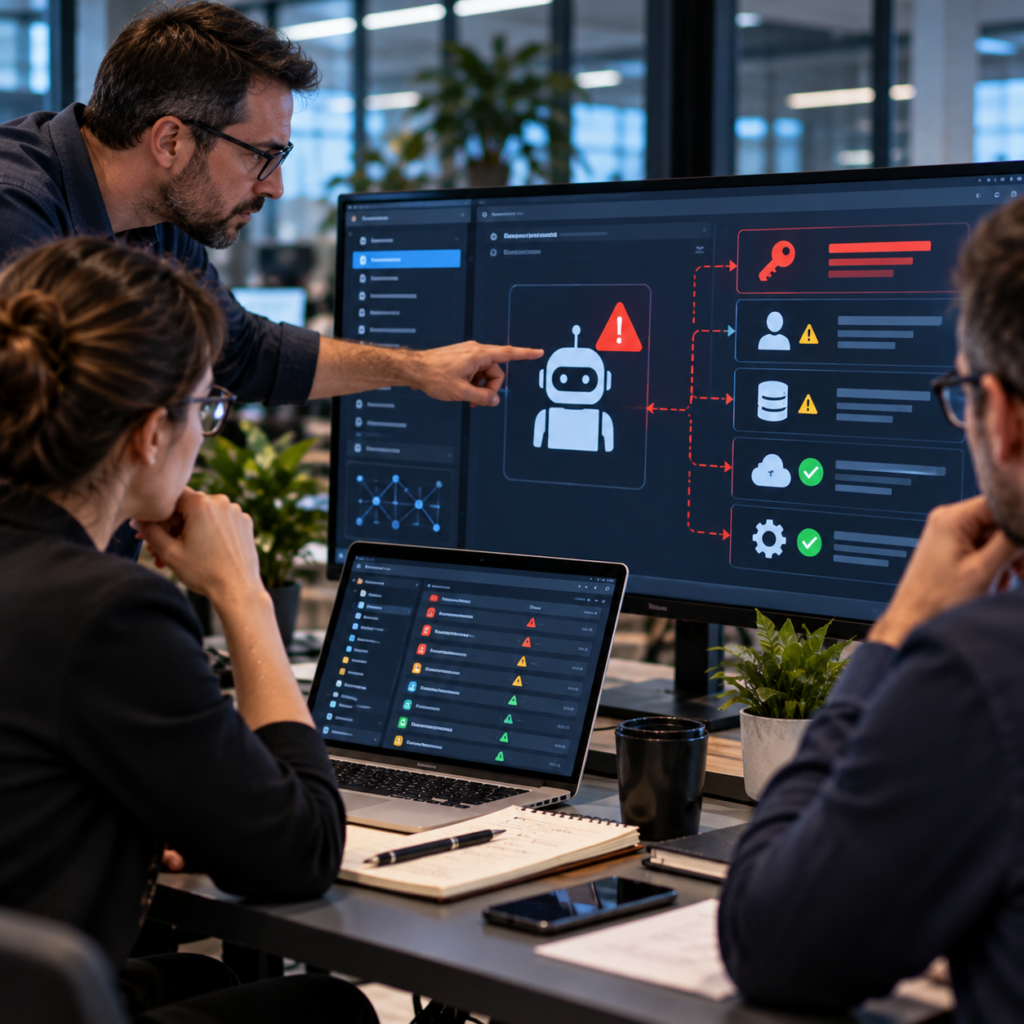
Software scope must be equally explicit. Map the interfaces among the warehouse management system, order management system, warehouse control or execution layer, equipment controls, carrier systems and identity services. Define which platform owns inventory truth, order prioritization, exception handling and recovery after an outage.
Before go-live, require interface specifications, test environments, volume tests, cybersecurity requirements and rollback procedures. Clarify responsibility when a fault spans multiple vendors. Without an agreed diagnostic and escalation model, the warehouse operator can become the referee between software and equipment providers while orders accumulate.
Price the operating model, not just the equipment
The investment case should include more than hardware and installation. Build total cost of ownership around design work, building modifications, software licenses, integration, testing, training, spare parts, preventive maintenance, support, energy, connectivity and insurance implications. Include expected upgrades and the internal team required to operate and improve the system.
Commercial assumptions should be traceable. If the return depends on labor savings, specify which tasks and shifts change, when vacancies can be removed, and whether new technical roles offset part of the reduction. Automation usually redistributes work as well as removing it. Receiving, decanting, replenishment, exception management and maintenance may become more important even as travel time falls.
Plan the future organization before commissioning. Define staffing by operating mode, technical competencies, safety procedures and escalation authority. Workstation ergonomics and sustainable rates should be validated with employees rather than inferred from theoretical equipment capacity.
Maintenance terms need measurable commitments: response and restoration targets, support hours, remote-access controls, parts availability and preventive-maintenance windows. Ask for availability calculations and exclusions. Determine whether the operator may hold critical spares, train its own technicians or use qualified third parties. A low acquisition price can conceal expensive dependence if routine changes and repairs remain vendor-controlled.
Test delivery risk and preserve a credible way out
A supplier’s technology may be modular while its delivery organization is constrained. Evaluate engineering bandwidth, manufacturing lead times, installer availability, commissioning resources and support coverage in every relevant region. If a major global customer could absorb substantial capacity, ask how your project’s labor, equipment and spare-parts allocations are protected. Avoid assuming that a global agreement by itself proves unlimited delivery capacity.
Implementation planning should quantify disruption. Require a phased cutover plan covering temporary storage, parallel operations, inventory migration, restricted work areas, testing, peak-season blackouts and rollback triggers. Assign the cost of delay and define acceptance around sustained operational performance—not merely mechanical completion.
Procurement flexibility should survive the framework. Examine exclusivity, minimum spend, price-adjustment formulas, renewal, termination and change-control provisions. Confirm data ownership, export formats, interface access and post-termination support. Ask whether equipment can be relocated, expanded or operated after the vendor relationship ends, and whether another integrator could maintain peripheral systems.
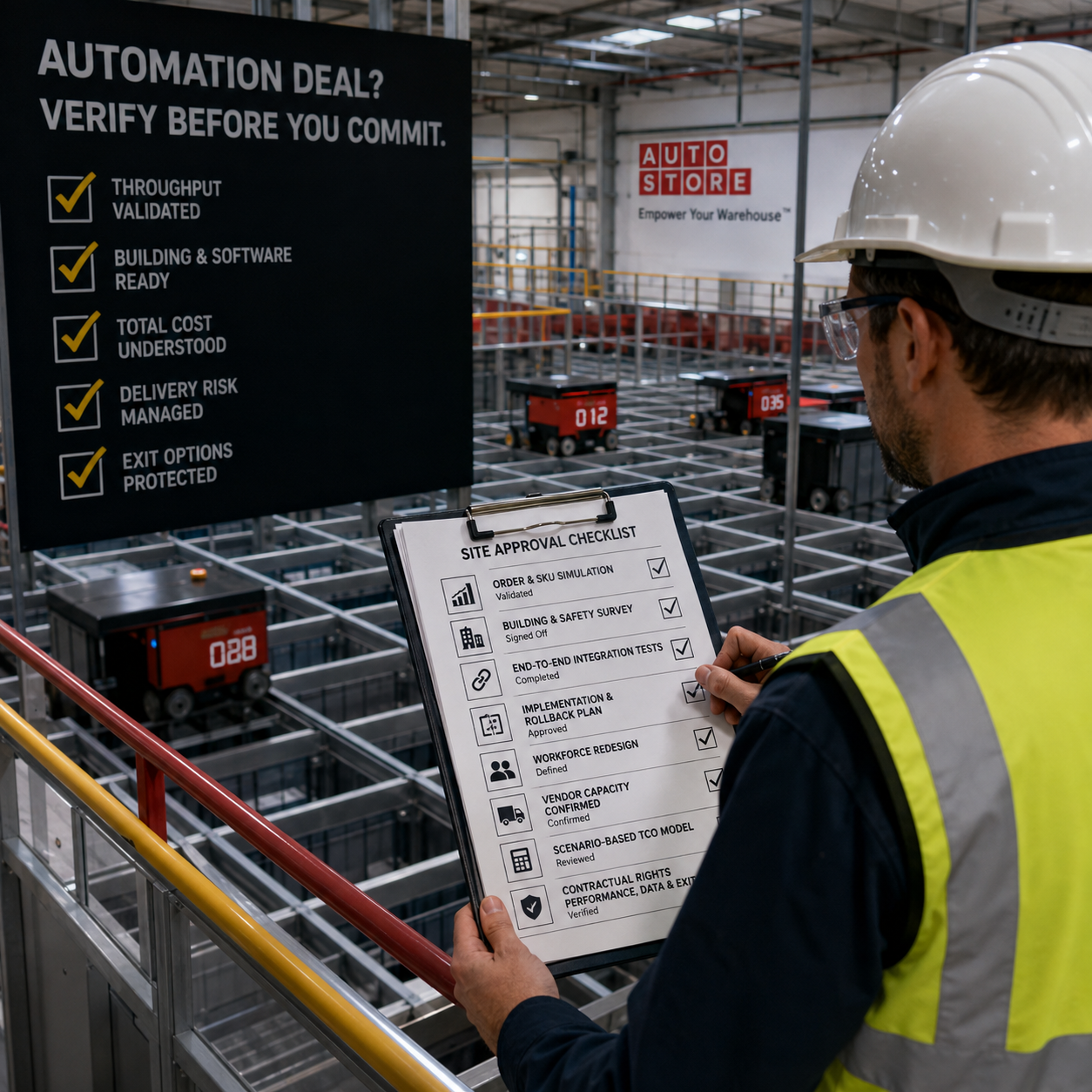
A useful site approval gate should require: a validated order-and-SKU simulation; signed building and safety surveys; end-to-end integration tests; an implementation and rollback plan; a workforce redesign; vendor-capacity confirmation; a scenario-based total-cost model; and contractual rights covering performance, data and exit. The Amazon-AutoStore news is a reminder that strategic access to technology and commitment to deploy it are different decisions. Warehouse leaders should retain that separation until each facility has earned its own investment case.