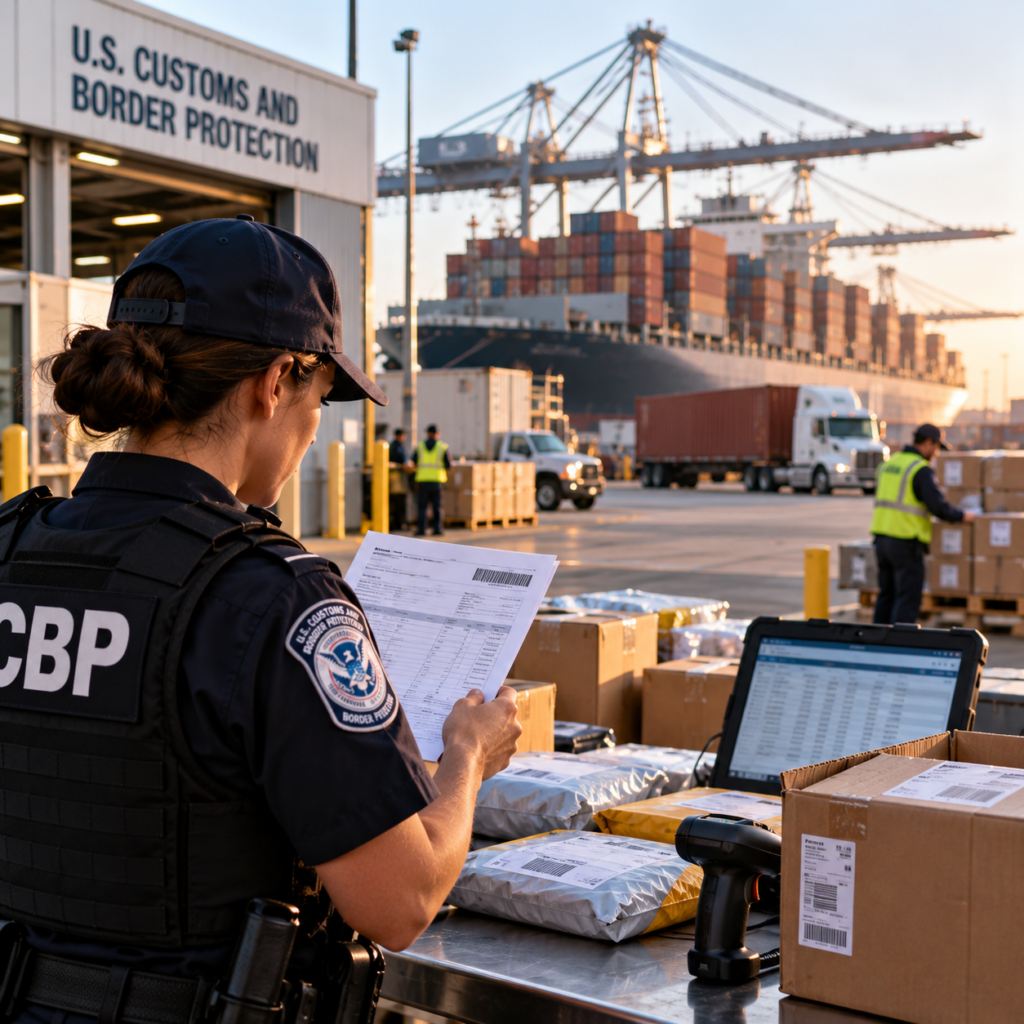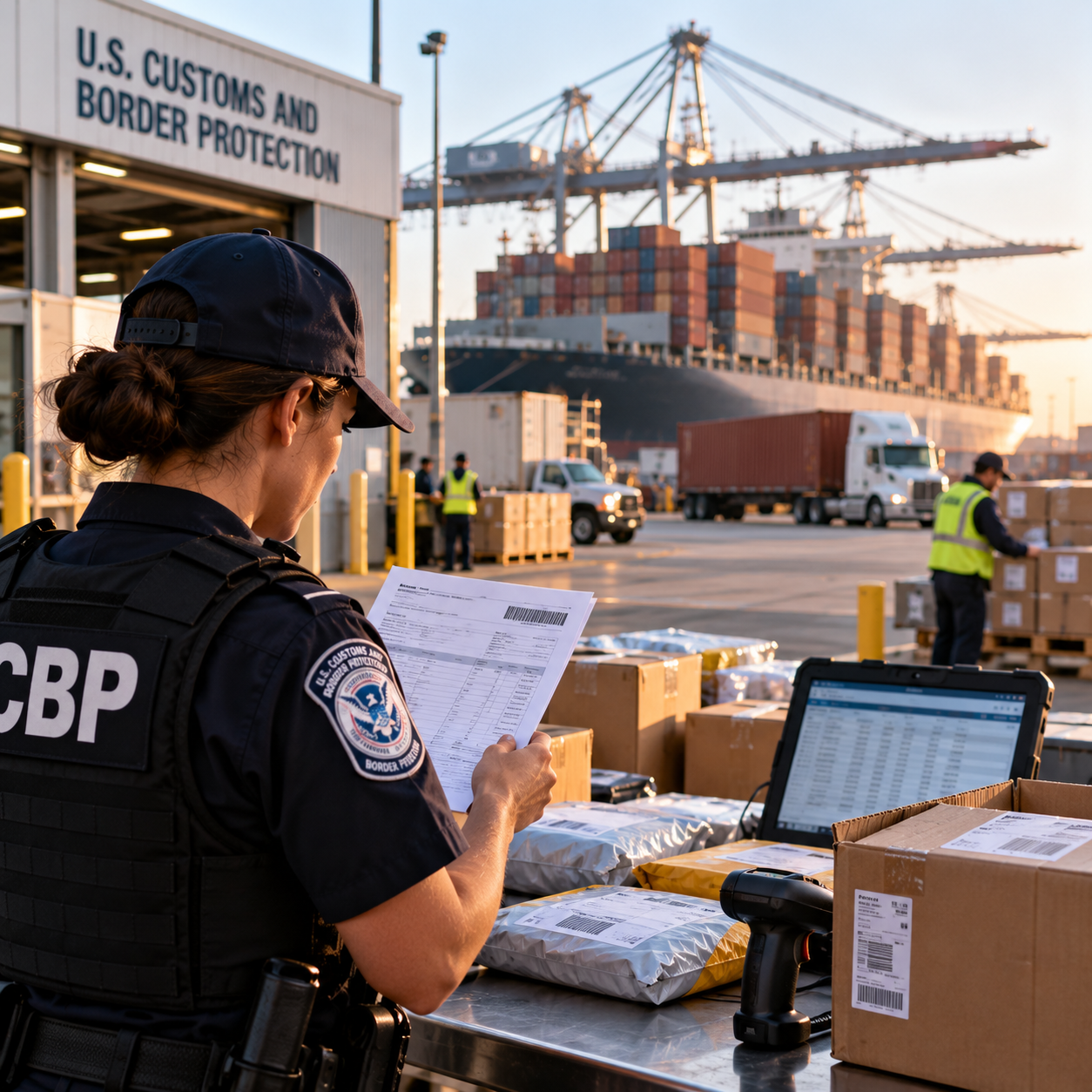
Proposed earlier customs filing deadlines could require merchants to provide accurate shipment information sooner. If their systems, suppliers or logistics partners cannot do so, low-value imports could incur additional handling, correction, delay or service-switching costs. No standard cost increase can yet be established.
Supply Chain Dive reports that CBP is considering earlier filing deadlines for low-cost imports and changes affecting postal shipments. Federal rulemaking materials also discuss earlier data submission and a postal informal entry process known as ET13.
These remain evolving proposals. The supplied evidence does not establish final deadlines, compliance dates or universal carrier charges. Importers should prepare without treating the proposals as confirmed requirements. The immediate task is to determine whether complete customs data can reach the filing party earlier and what would happen operationally and financially when it cannot.
Why an earlier filing deadline could change unit economics
A customs deadline is also a data-readiness deadline. Information used in a filing may be divided among the merchant, marketplace, supplier, warehouse, broker and transport provider. A carrier may transmit the filing while relying on product and packing data controlled by another party.
Earlier submission could expose gaps that remain manageable under a later cutoff. A supplier may not finalize parcel contents until packing, a catalogue may contain descriptions that need correction, or a broker may receive an amended value after its processing cutoff. If an incomplete shipment has to be removed from a consolidated dispatch, the consequences could include additional handling, storage, delay and customer-service work.
Reported concerns include potentially higher shipping costs and postal capacity effects, while CBP says the proposed changes would improve trade compliance. Neither commercial outcome is guaranteed. The effect will depend on the final rule, shipment channel and response of each provider.
Map exposure by shipment flow
Start with a lane-level inventory rather than total order volume. Postal parcels, commercial carrier shipments and other entry types may follow different filing workflows.
For each material flow, record:
- whether it moves through a postal or non-postal network;
- its usual value range, product category and origin;
- which supplier or warehouse creates the shipment record;
- which party files or transmits customs information;
- when each necessary data element becomes available;
- the booking, filing and physical handoff sequence;
- how incomplete or rejected records are handled; and
- which alternative service could carry the parcel.
This map should reveal where exposure is concentrated. The main risk may be one supplier that sends data late, one postal consolidator or one integration that creates a customs record only after packing rather than the merchant’s total low-value order volume.
Assign ownership for each data element
“The carrier handles customs” does not identify who is responsible for the underlying information. Build a data ownership table using the applicable filing specification provided by the filer. For each field, identify the system of record, the party accountable for accuracy, when the information becomes available and who can correct it.
Fields to examine may include product descriptions, values, quantities, origin information and recipient details, subject to the requirements for the shipment. Classify each field as catalogue data, order data, packing data or provider-generated data. Packing data usually becomes available later than catalogue or checkout information, so that distinction can determine whether an earlier cutoff is workable.
Document every manual transfer as well. Email attachments and spreadsheets may work when there is time to resolve discrepancies, but they can become bottlenecks under an earlier cutoff. The readiness question is not merely whether the data exists. It is whether validated data can reach the filer on time and remain synchronized after a correction.
Test the workflow with realistic exceptions
Ask suppliers, brokers and carriers for a field-level review rather than a general assurance that they are prepared. Then run a controlled test using representative shipments. Attempt to assemble and transmit complete records earlier than the current process requires.
Track:
- the share of records complete at the test cutoff;
- which fields are missing or changed most often;
- the time and labour needed to resolve an error;
- whether corrections reach every downstream system;
- the number of parcels that would miss dispatch; and
- whether rejection messages identify an actionable problem.
Include difficult orders rather than testing only clean transactions. Split shipments, substitutions, cancellations, catalogue errors, changed quantities and address corrections can reveal whether a theoretically compliant workflow will function in daily operations.
Postal importers should review the proposed process separately. The Federal Register material on low-value shipments and ET13 discusses a postal informal entry process and related timing changes. Importers should confirm its status and final requirements before committing to permanent system or network changes.
Clarify broker and carrier responsibilities
For each provider, establish who submits the filing, who validates the source data, when the provider needs it and what happens when a record fails. Ask whether a rejected parcel would be held, returned for correction, removed from a dispatch or moved to another service.
Commercial discussions should also cover possible changes to acceptance cutoffs, data formats, volume limits and service eligibility. Review whether agreements allow pass-through compliance costs, manual correction fees or service upgrades without prior approval. These are questions to investigate, not confirmed consequences of the proposal.
Record unresolved questions with an owner and review date. Providers may not be able to give definitive answers before rulemaking concludes, but management should know which assumptions underpin its cost forecast.
Model several cost scenarios
Do not add an unsupported flat surcharge to every parcel. Model exposure under several scenarios:
- Data-ready case: Existing partners submit accurate information earlier with limited process changes.
- Exception case: More records require manual review or miss a consolidation cutoff.
- Service-shift case: Some postal volume moves to another postal or commercial option.
- Capacity case: An existing route cannot accept the planned volume, requiring allocation across providers.
For each case, estimate transport, filing or brokerage, internal handling, integration work, storage, inventory delay and customer-service exposure. Separate recurring per-order costs from one-time technology spending.
Review the result at product and basket level. An additional handling cost may be manageable on a multi-item order but undermine the margin on a single inexpensive product. The analysis may support changes to shipping thresholds, bundles, product availability or fulfilment location, but only after customer and demand effects are considered.
Prepare alternatives with activation triggers
For each important lane, identify the next-best service and test its data connection before it is urgently needed. Options may include another provider, consolidated clearance, an earlier order cutoff or holding selected stock closer to customers. Each involves a trade-off in cost, speed, control, working capital or customer experience.
A contingency should state what activates it. Possible triggers include publication of a final compliance date, a provider’s confirmed acceptance cutoff, a documented capacity restriction or a quoted cost that breaches the product’s approved margin threshold.
This avoids two costly mistakes: changing the network based only on speculation or waiting until a confirmed rule leaves too little time to test an alternative.
Pre-rule readiness checklist
- Separate low-value postal and non-postal shipment flows.
- Name the filer and data owner for every flow.
- Test whether complete records can be produced earlier.
- Measure error, correction and missed-dispatch costs.
- Obtain conditional operating assumptions from providers.
- Model effects on landed cost and product margin.
- Prequalify alternatives and define activation triggers.
- Recheck official CBP and Federal Register materials before implementation.
The safest preparation is reversible. Importers can improve data ownership, test integrations and price contingencies without assuming every proposed provision will become final. Businesses that cannot see or validate shipment information until a parcel is ready to leave may have the greatest operational exposure to an earlier deadline. Closing that data gap is useful even if the final requirements change.