Cybersecurity for small and mid-sized businesses is moving from an IT line item to a packaged service model. The latest funding round for Leeds-based Xentra is a useful signal for founders and operators: demand is not just for tools, but for providers that can bundle protection, safeguarding, and compliance into something SMEs can buy, renew, and understand.
That matters if you sell managed services, advisory work, software, or any subscription offer to smaller businesses. The real question is not whether cybersecurity is growing; it is how to turn fragmented demand into a repeatable commercial offer.
What Xentra’s raise says about SME buying behavior
Xentra, a Leeds-based digital security startup, secured €3.18 million to scale cybersecurity services for SMEs. The stated use of funds is telling: strengthen leadership, accelerate customer acquisition, and expand its platform. That combination suggests the market is rewarding companies that can sell security as an operational service rather than a one-off audit.
For SME buyers, the purchase decision is usually driven by a painful trigger: a client questionnaire, a procurement requirement, a policy deadline, a cyber insurance form, or a compliance gap. They rarely want a deep technical project. They want something that helps them close deals, reduce risk, and avoid internal firefighting.
That creates a commercial opening for providers who can package assessment, remediation, monitoring, and documentation into one recurring offer.
The service model SMEs actually buy
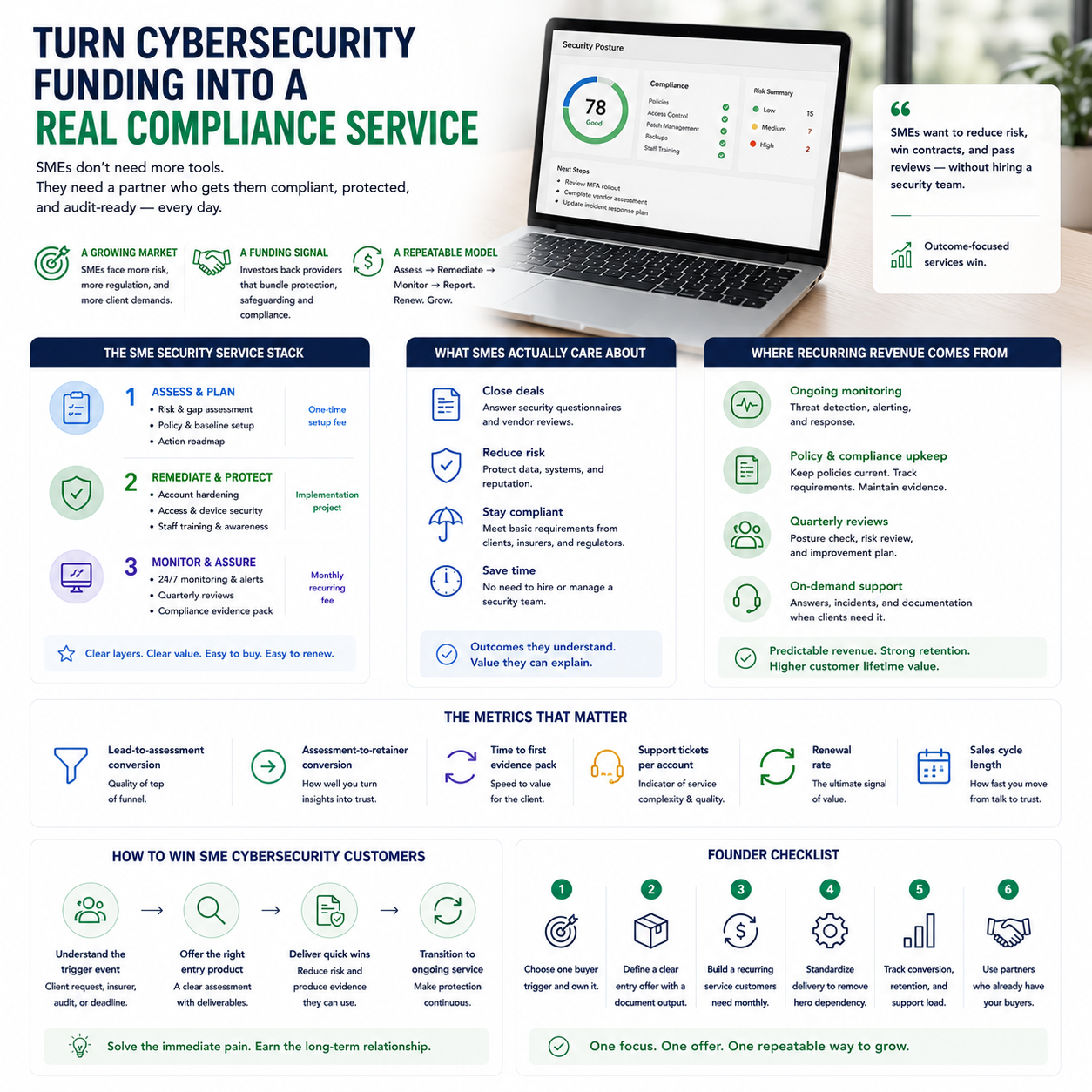
If you are building in this space, the offer needs to be easy to explain and even easier to renew. A strong SME cybersecurity package usually has three layers:
What most people miss
Many providers sell “security” but fail to map it to the buyer’s operational pressure. The SME customer is often not buying best-in-class technical depth. They are buying the ability to answer a client’s security request, pass an insurer review, or demonstrate basic compliance without hiring a full internal team.
That means your offer should be built around outcomes that non-technical owners recognize. Examples include readiness assessments, policy templates, device hardening, access control setup, phishing protection, staff training, and a simple evidence pack for audits or customer due diligence.
The commercial model becomes stronger when each layer feeds the next: an entry assessment leads to a remediation plan, which leads to monthly monitoring and a quarterly compliance review. That gives you a subscription path instead of a one-off project.
Where recurring revenue comes from
SME cybersecurity can be sold as a mix of setup fees and recurring retainers. The setup work typically covers baseline assessment, policy creation, account hardening, and onboarding. The recurring element covers monitoring, alerts, reporting, staff refreshers, and support for customer or insurer requests.
That structure matters because many small businesses will not pay large upfront fees unless there is an immediate business reason. Recurring revenue is easier to defend when the customer sees the service as part of staying operational, not as discretionary tech spend.
For operators, the practical decision is whether to lead with managed service retainers or productized compliance packages. Retainers work well when the buyer needs human support. Productized packages work better when the delivery is standardized and the output is a clear document trail. Most small providers need both.
The strongest offers keep scope tight. Broad “digital security” services often become messy. A narrower promise such as “SME cyber readiness and compliance support” is easier to sell, train, and deliver consistently.
How to measure whether the offer is working
The most useful metrics here are operational, not vanity metrics. If you are building a cybersecurity service for SMEs, track the business through the lens of conversion, delivery load, and renewal risk.
Start with these measures:
Lead-to-assessment conversion: how many inquiries become paid assessments.
Assessment-to-retainer conversion: how many assessments lead to recurring work.
Time to first evidence pack: how quickly a client gets documents they can use for procurement, insurance, or compliance.
Support ticket volume per account: a sign of whether the service is too complex or too manual.
Renewal rate: whether clients see the service as ongoing protection or a one-time fix.
Sales cycle length: how long it takes to move from first conversation to signed engagement.
These numbers tell you whether the offer is a genuine operational product or just consulting with security branding.
Why customer acquisition matters as much as the product
Xentra’s funding mention of customer acquisition is important because SME cybersecurity is crowded with providers who sound similar. The challenge is not only technical credibility; it is trust, specificity, and channel access.
For a founder, that means the go-to-market strategy should match the buyer’s trigger event. You may win customers through accountants, insurance brokers, MSPs, fractional CFOs, compliance advisers, or industry associations. Those channels already sit close to the pain point and can shorten the trust gap.
Direct outbound can work too, but only if the message is specific. “We help SMEs handle cyber risk” is vague. “We help you respond to client security questionnaires and build a basic compliance pack in weeks” is much more likely to get a reply.
The funding signal also suggests that investors are looking for services businesses with software-like repeatability. That means workflow discipline matters: standardized onboarding, templated deliverables, clear escalation paths, and reporting that does not depend on one senior consultant’s memory.
What founders should decide now
If you already serve SMEs in IT, compliance, insurance, or business services, this is a good moment to decide whether cybersecurity should become a separate product line. The right answer depends on your ability to standardize delivery and support recurring billing.
If you are a new entrant, the opportunity is not to build a broad cyber agency. It is to choose a narrow buyer segment and solve one expensive problem well. That might be retail operators who need vendor security docs, professional firms that must satisfy client due diligence, or smaller regulated businesses that need policy and evidence support.
Do not build around the abstract promise of safety. Build around the operational burden of proving safety.
- Choose one buyer trigger: client questionnaires, insurance reviews, or compliance deadlines.
- Define one entry product: a paid assessment with a clear document output.
- Attach one recurring offer: monitoring, policy upkeep, or evidence support.
- Standardize delivery so the service does not depend on a single expert.
- Measure conversion from assessment to retainer, renewal rate, and support load.
- Use one or two partner channels that already serve SME decision-makers.


