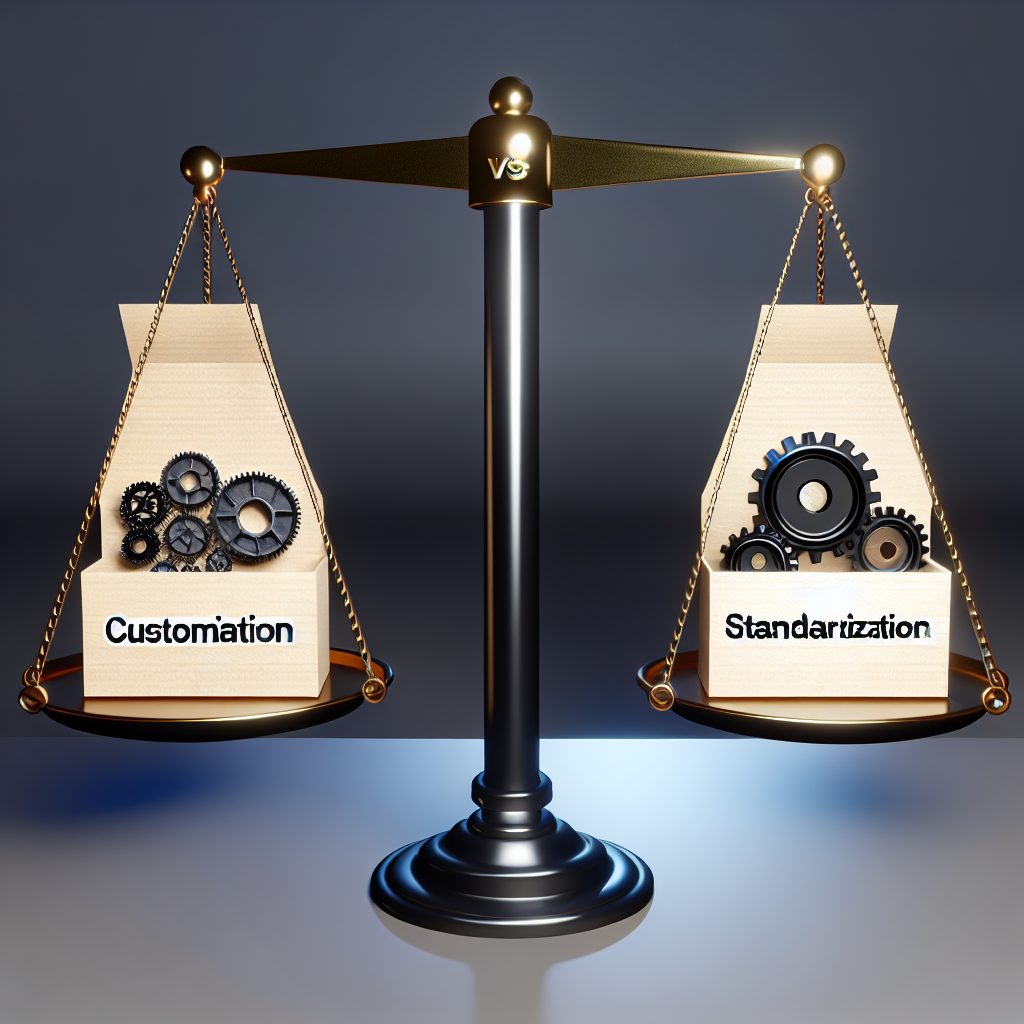
In today’s fast-paced business world, technology must evolve to meet both immediate needs and long-term strategic goals. Selecting the right Enterprise Resource Planning (ERP) approach can streamline operations, drive growth, and enhance competitiveness. Business leaders often debate whether to invest in a customized ERP solution tailored to their unique operations or adopt a standardized system with proven best practices. This guide on ERP customization vs. standardization provides valuable insights to help you make an informed decision.
Understanding ERP Customization and Standardization
ERP customization involves modifying an existing system to perfectly align with your specific operational requirements. This could mean developing unique workflows, integrating specialized features, or connecting with proprietary applications. The result is a personalized solution that enhances your business processes. In contrast, ERP standardization offers an off-the-shelf system designed around industry best practices. Standardized solutions are typically easier to implement, less costly upfront, and supported by extensive user communities—making them a popular choice for many small businesses.
ERP Customization: The Personalized Advantage
Custom ERP solutions offer the advantage of tailoring your system to mirror your business’s unique processes. When conducting an ERP customization vs. standardization cost and benefits analysis, consider how custom features can streamline non-standard workflows or integrate with legacy systems. For instance, businesses with complex supply chains or unique production processes might find that a custom ERP offers operational advantages that justify the additional investment.
While customization demands a significant upfront investment in time and resources, long-term gains in efficiency and competitive differentiation can outweigh these costs. However, customized systems require ongoing maintenance, frequent updates, and dedicated technical support. This approach is ideal for organizations with the resources to sustain continuous development and the need for niche functionalities not available in standard ERP packages.
Standardization: A Proven Path to Efficiency
Standardized ERP systems provide a ready-to-deploy solution with integrated functionalities aligned with industry standards. This approach is particularly attractive for small businesses due to its ease of implementation, lower initial costs, and streamlined upgrade processes. Following ERP customization vs. standardization best practices for small businesses, a standardized system ensures consistency, rapid deployment, and minimized risks compared to custom code development.
A major benefit of standardized ERP solutions is their foundation in competitive best practices developed over years of industry experience. While they may lack some of the unique features of a fully customized system, these solutions reduce pressure on internal IT teams and offer swift responses to regulatory changes and market shifts.
Weighing Costs and Benefits
Conducting a detailed ERP customization vs. standardization cost and benefits analysis is essential. Customized systems provide a competitive edge by addressing specific business challenges, albeit at a higher financial and time cost. Conversely, standardized systems are more budget-friendly and easier to upgrade but may not deliver the unique functionalities required for distinct competitive advantages.
The decision ultimately depends on a realistic assessment of your current operational needs and long-term business strategy. For companies with straightforward requirements or those in early growth phases, a standardized ERP may be more practical. However, if you operate in a niche market with complex integration demands, investing in a customized ERP could drive operational agility and precise control over your processes.
Striking a balance between immediate needs and future scalability is critical. Consider factors like industry dynamics, growth projections, available IT expertise, and budget limitations. In many cases, a hybrid approach—adopting a standardized core with options for limited customization—offers the most flexible solution.
Best Practices When Choosing an ERP Strategy
For small business owners, the decision between ERP customization and standardization requires careful planning. Following best practices can save time and resources. Begin by thoroughly evaluating your business processes to determine which operations align with standard industry practices and where customization could provide a competitive edge. You may want to review our insights on ERP Implementation Guide for additional strategies.
Engage experienced professionals in ERP implementations. Include stakeholders from multiple departments in your evaluation to identify essential features versus those that are optional. Developing a phased roadmap for ERP implementation can help anticipate and address potential challenges during the transition.
Piloting a core ERP module that meets your most critical needs is a practical first step. This pilot serves as a proof of concept, enabling you to test functionality and make adjustments before a full-scale rollout, thereby minimizing business disruptions.
Explore expert insights on platforms like MakeBusiness to stay informed about the latest ERP trends, integration tips, and real-world case studies. These resources shed light on the benefits and challenges of customization versus standardization, ensuring a well-informed decision-making process.
Also, evaluate the scalability of your chosen ERP solution. As your business grows, your system must adapt. Standardized solutions often scale easily with available upgrades, while customized systems may require additional adjustments over time. Integrating long-term maintenance and upgrade plans into your evaluation is essential.
Industry experts, including those from Forbes, emphasize that aligning technology with business strategy goes beyond immediate gains—it’s about securing long-term competitive positioning. Choose systems that adapt as market conditions shift and your business evolves.
Ultimately, there is no one-size-fits-all solution. The best approach depends on balancing your unique business needs, budget constraints, and long-term strategic goals. Whether you opt for a fully customized ERP or a standardized system, the key is a thorough assessment of your operational processes, market positioning, and future growth plans.
With careful planning and strategic evaluation, you can align your IT investments with your business objectives, ensuring your ERP system acts as a powerful engine for growth rather than a burdensome overhead.
- Custom ERP solutions offer tailored functionality but require a larger investment and ongoing maintenance.
- Standardized ERP systems provide ease of implementation, faster upgrades, and proven industry practices.
- Conducting a detailed cost and benefits analysis is vital to determine the best fit for your organization.
- Small business owners should consider scalability, long-term maintenance, and how well the system aligns with their operational processes.