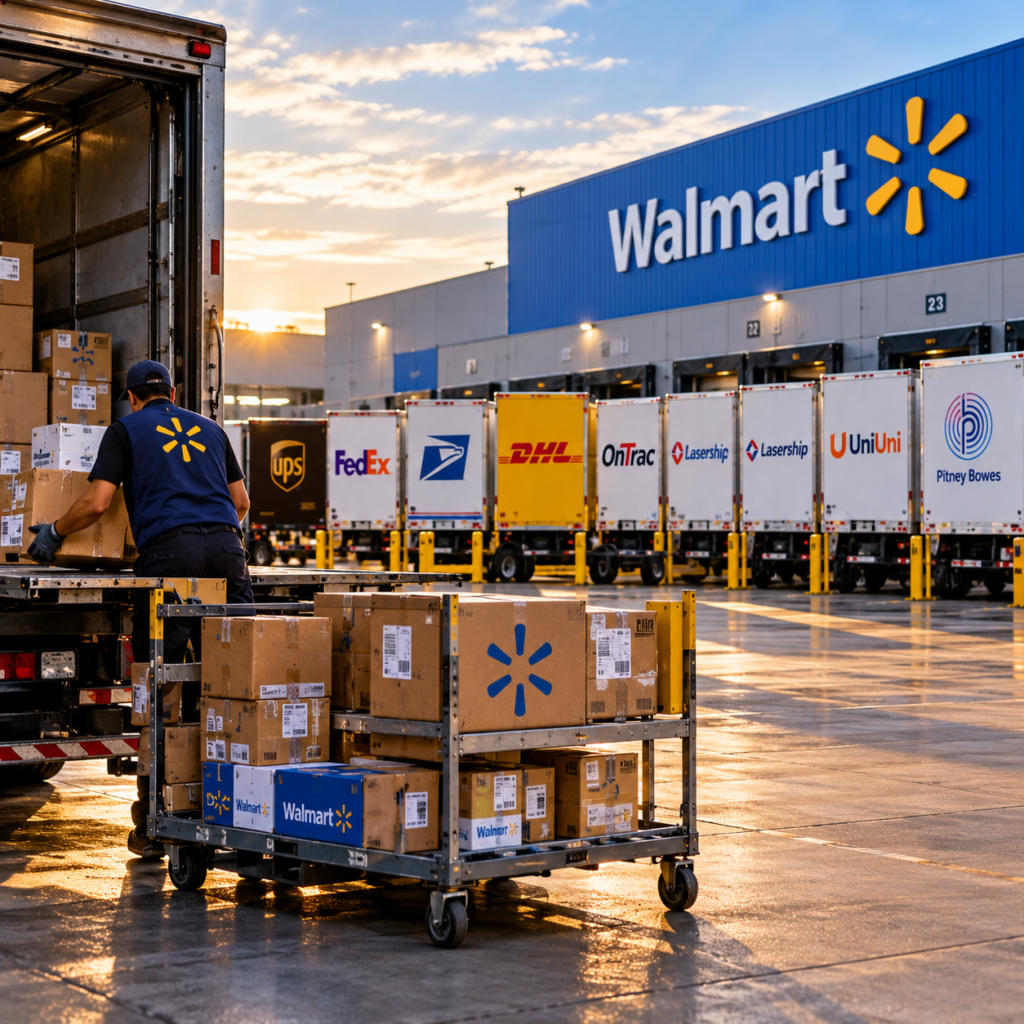
Walmart’s expansion of paid delivery in 30 minutes or less offers retailers an important signal: some customers will pay to shorten the wait for selected shopping missions. As reported by Retail Dive, Walmart broadened the availability of its faster delivery option after seeing customer uptake. That demonstrates interest, but it does not establish that the same model will work profitably for every retailer, store or service area. The source does not disclose enough to infer Walmart’s unit economics.
For operators, the real question is not whether customers like speed. It is whether a fee-based rapid service creates incremental, profitable demand after accounting for picking pressure, delivery expense, substitutions, cancellations and disruption to standard orders. The answer should come from a controlled pilot rather than a chain-wide promise.
Identify the missions in which 30 minutes has real value
Customers do not value every saved minute equally. Rapid delivery is more compelling when delay has an immediate cost: a missing dinner ingredient, an urgent household essential, a forgotten item for an event or a product needed by a caregiver. Planned weekly shops are less obvious candidates because customers may prioritize assortment, price and delivery-slot reliability over extreme speed.
Retailers should segment demand by shopping mission, not merely by age, income or membership status. Useful behavioral segments include customers who already choose the earliest available slot, place smaller convenience-led orders, reorder urgent categories or abandon baskets when delivery is unavailable soon enough. Geography also matters: dense areas may offer shorter routes, while suburban stores may have stronger inventory availability but longer travel times.
A pilot should determine whether rapid delivery changes behavior. If customers simply move an existing order from standard delivery to a faster and more expensive fulfillment path, the service may raise cost without generating meaningful new revenue. More promising evidence includes orders that would otherwise have gone to a convenience store or competing platform, additional shopping occasions, higher purchase frequency, or baskets with enough gross profit and fee revenue to cover incremental fulfillment costs.
Choose a fee that manages demand as well as revenue
Charging per order is the clearest starting point. It makes the speed premium visible, limits the retailer’s exposure and helps reveal willingness to pay. Operators can test different fees or eligibility thresholds across comparable locations, provided the customer proposition remains transparent. The objective is not simply to maximize adoption; a low fee that attracts unprofitable volume is a weak result.
A bundled model—such as including rapid access in a paid membership—can strengthen retention and make the service feel differentiated. It also creates risk if frequent users consume more costly deliveries than their membership revenue can support. A sensible progression is to validate order-level economics first, then test whether a bundle improves lifetime value without encouraging excessive substitution from lower-cost delivery options.
Fee design should also reflect operational conditions. Peak-period pricing or limited rapid slots may be more responsible than promising unlimited availability when stores are busy. A minimum basket can improve economics, but setting it too high may conflict with urgent, small-basket missions. Likewise, waiving the fee above a threshold can stimulate basket growth, yet the extra merchandise margin must exceed the lost fee and any additional picking effort.
Select stores by readiness, not market size alone
A large addressable population does not make a store suitable for a 30-minute promise. The service clock must accommodate order transmission, item picking, substitutions, packing, driver handoff and travel. A location that regularly struggles with standard digital orders is unlikely to improve when the deadline becomes tighter.
Candidate stores should have reliable inventory records, predictable staffing, efficient picking routes and a handoff area that does not create congestion. They also need enough order density to use delivery capacity efficiently without overwhelming pickers. Historical data can identify stores with low cancellation and substitution rates, stable on-time performance and manageable peak workloads.
Service areas should be drawn using realistic travel times rather than broad postcode boundaries. Congestion, parking, building access and weather can turn a short distance into an unreliable journey. Start with a compact radius and selected operating hours, then expand only after observing performance across weekdays, weekends and demand peaks.
Assortment may need limits too. Offering every store item can increase search time and substitution risk. A curated rapid-delivery catalogue focused on reliably stocked, easy-to-pick products may protect the promise during the pilot. Retailers can broaden eligibility as their data shows which categories can be fulfilled consistently.
Protect the promise with inventory and picking controls
Inventory accuracy is central to rapid delivery because there is little time for recovery. A missing item forces a substitution decision, customer contact or cancellation, each of which consumes part of the delivery window. Retailers should suppress products with uncertain availability and update digital stock positions quickly after sales, damages and picking activity.
Picking capacity must be reserved rather than assumed. If rapid orders jump ahead of standard orders without additional labor or clear prioritization rules, the retailer may improve one service while degrading another. Stores need explicit capacity limits by time interval, escalation procedures for late orders and authority to pause rapid ordering when conditions deteriorate.
Operators should map the full order journey and assign an internal time budget to each stage. Measuring only final delivery time can hide the bottleneck. Long pick times suggest assortment, layout or staffing problems; handoff delays point to coordination issues; excessive road time may require a smaller service area. The operating model should also specify how substitutions are approved and when an order is cancelled rather than sent late.
Run a pilot that separates demand from cannibalization
A useful pilot should include a small group of ready stores, matched comparison locations and a defined test period long enough to capture repeat use. Keep the initial proposition narrow: a specified fee, compact service radius, controlled assortment and limited hours. Document any changes during the test so that improvements are not mistakenly attributed to demand alone.
Track adoption as the share of eligible customers or orders choosing rapid delivery, but do not treat adoption as the verdict. Pair it with:
- Incremental orders and frequency: whether the option generates new occasions rather than shifting standard deliveries.
- Basket value and gross profit: including differences in category mix and promotional use.
- Fulfillment cost per order: picking labor, packaging, delivery, failed attempts, refunds and customer-service expense.
- On-time performance: measured against the customer-facing promise, with delays split by operational stage.
- Substitution and cancellation rates: including their effect on retained sales and satisfaction.
- Contribution margin: merchandise gross profit plus the delivery fee, less variable fulfillment and service-recovery costs.
Results should be segmented by store, service area, time, basket size, customer cohort and mission. An average can conceal a profitable urgent-essentials segment alongside an unprofitable group using rapid delivery as a cheap replacement for standard service.
Scale only the combinations that earn the right to grow
Before expansion, set explicit gates for contribution margin, on-time performance, substitutions and cancellations. Also verify that standard delivery and in-store operations have not deteriorated. A pilot can appear successful while transferring labor costs or delays elsewhere.
If uptake is low but service performance is strong, test the proposition, fee or eligible missions before adding locations. If uptake is high but margins are weak, raise the fee, tighten the radius, adjust basket rules or restrict costly periods. If reliability is poor, fix inventory and capacity before stimulating more demand.
Walmart’s reported expansion supports the case for testing paid rapid delivery; it does not remove the need for retailer-specific evidence. The strongest decision is likely to be selective rather than universal: offer 30-minute delivery where urgent demand, store capability, delivery geography and fee revenue combine to produce positive contribution margin. Speed should be treated as a priced operating product—with defined capacity and economics—not as a blanket marketing promise.