Latest posts
-
Spatial Twins and Agentic AI: An Operations Playbook for the Built World
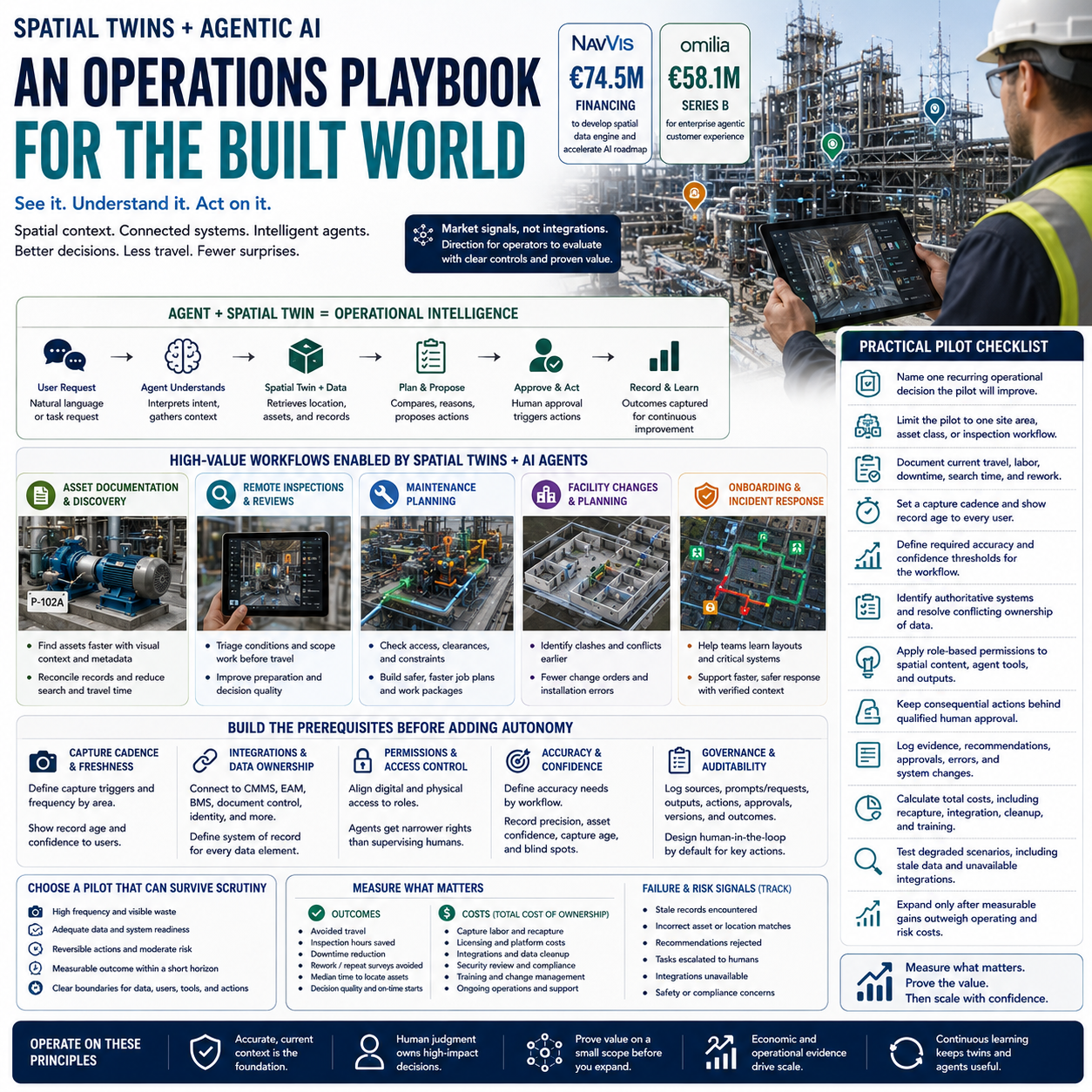
Spatial twins are becoming more than visual replicas of buildings. Combined with AI agents, they could provide an operational layer through which teams inspect sites, find equipment, plan maintenance, document changes, and coordinate responses without starting every task with a physical walkthrough. NavVis’s reported €74.5 million financing to develop its spatial data engine and accelerate…
-
How to Engineer AI-Driven Marketing and Customer Experience
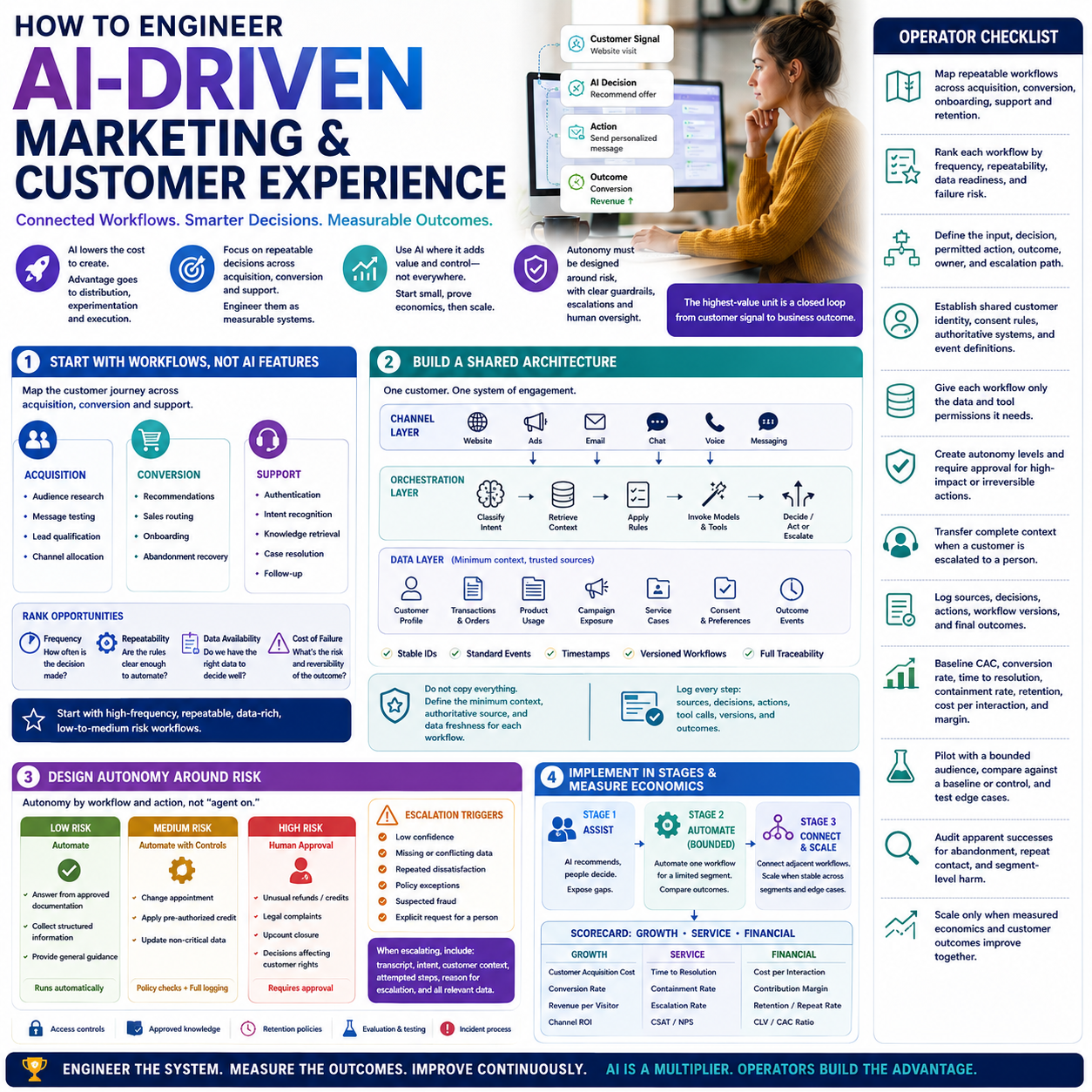
AI is pushing marketing and customer experience toward the same operating model: a connected system of workflows, data, decisions, experiments, and feedback loops. That does not make creativity irrelevant. It means creative work increasingly operates inside an engineered process that can generate variants, route customers, learn from outcomes, and escalate exceptions. This shift matters because…
-
Supply Chain Resilience in Practice: Traceability, Backup Suppliers and Alternate Routes
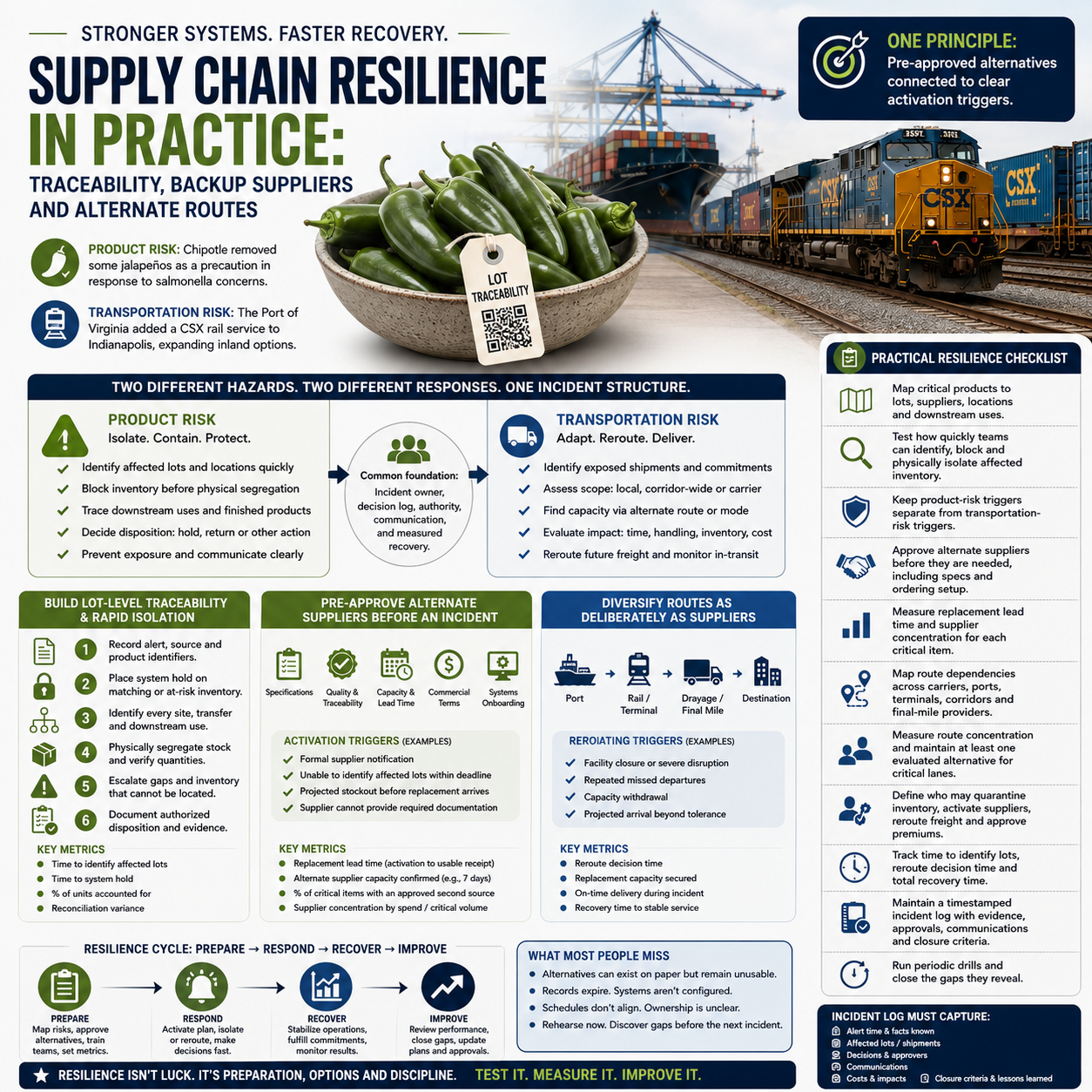
Supply chain resilience becomes real when an operator must decide what to isolate, who can authorize a replacement and how quickly goods can move through another channel. Two recent examples illustrate the distinction. Chipotle removed some jalapeños as a precaution in response to salmonella concerns, demonstrating a product-risk response. Separately, the Port of Virginia added…
-
A Small Business Playbook for More Reliable Parcel Pickup and Inland Freight
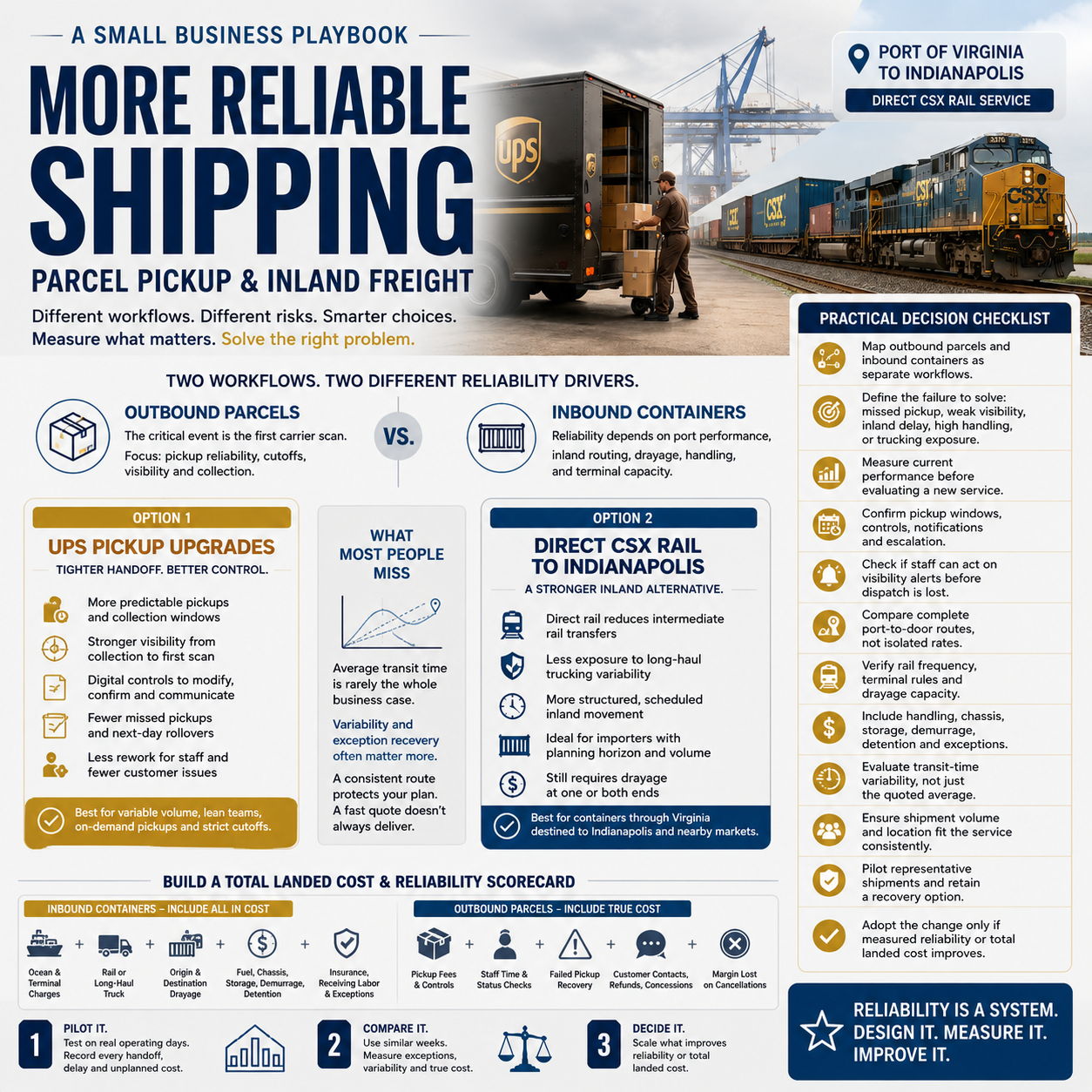
Shipping reliability is often treated as one carrier problem, but small businesses usually face two very different workflows. Outbound parcel orders depend on predictable pickups, accurate cutoffs and timely tracking. Inbound imports depend on port performance, inland routing, drayage capacity and the number of times a container is handled. Two recent developments illustrate how operators…
-
How Fuel Surcharges Change E-commerce Shipping Economics
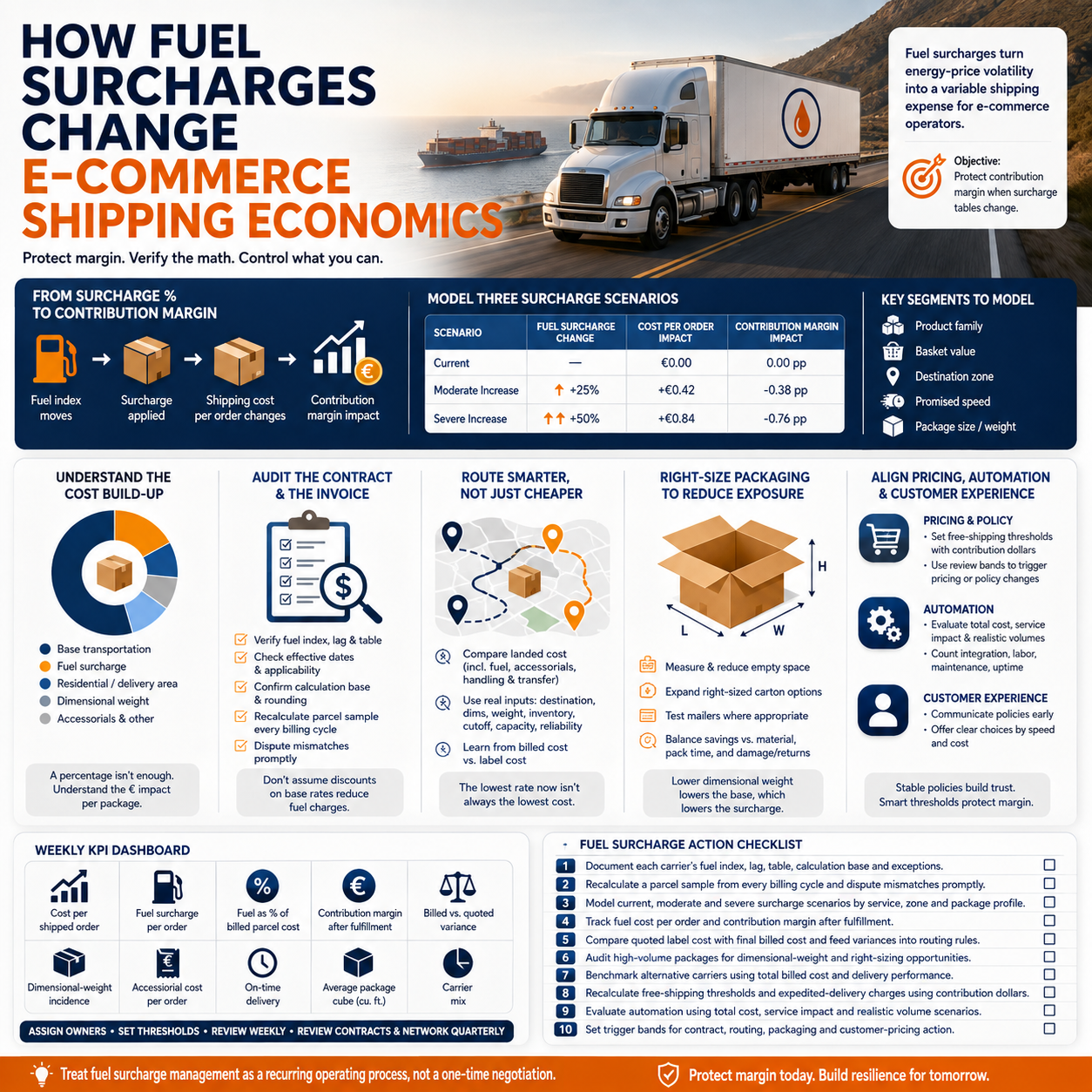
Fuel surcharges turn energy-price volatility into a variable shipping expense for e-commerce operators. Instead of absorbing every increase in fuel costs, carriers can pass part of the change to shippers through a surcharge linked to a published fuel index and a carrier-defined schedule. That protects carrier economics, but it makes merchants’ cost per order less…
-
Before You Sign a Long-Term AI Compute Contract: A Procurement and Concentration-Risk Playbook
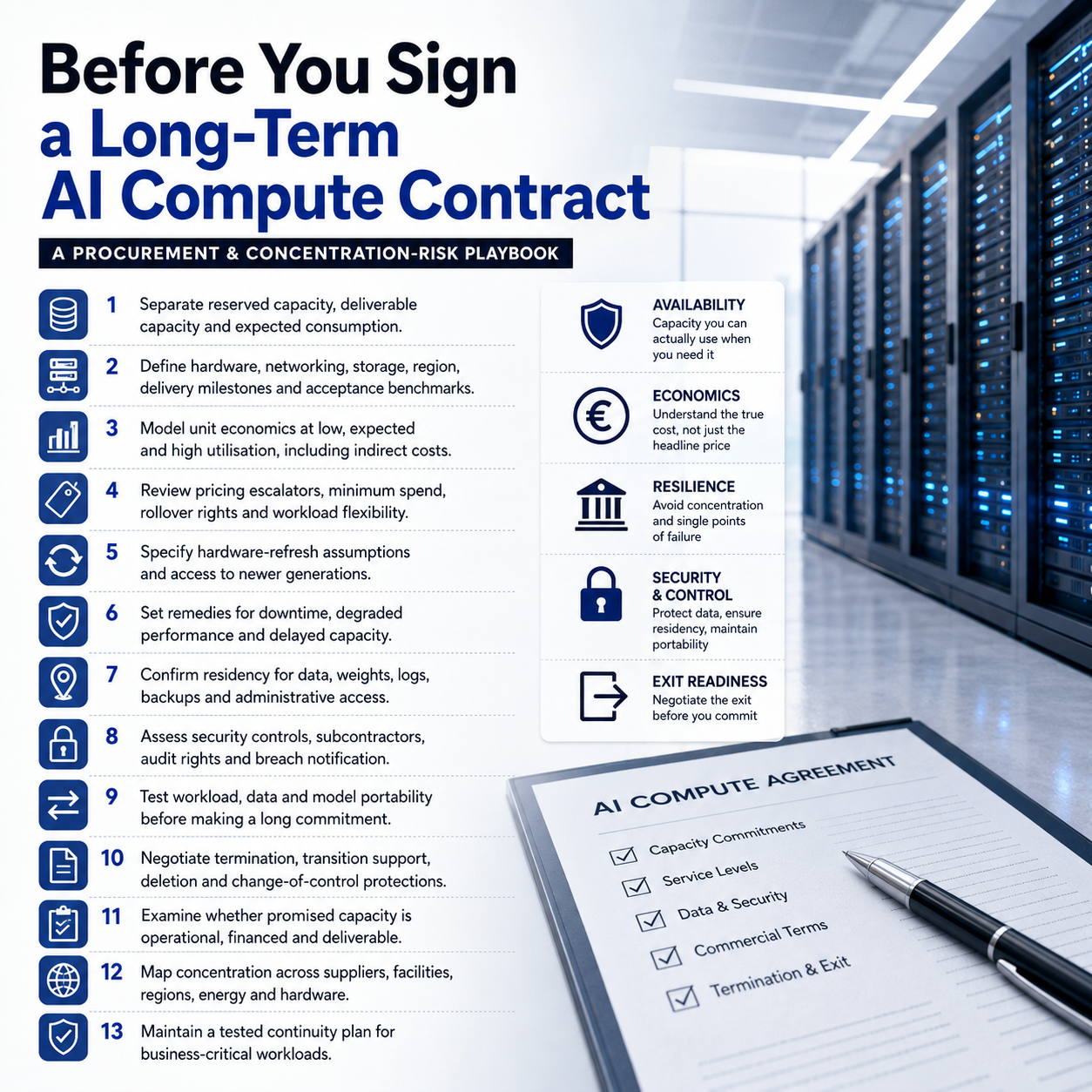
AI compute is no longer merely an infrastructure purchase. For companies scaling training, inference or AI-enabled products, it is becoming a long-duration capital allocation and operational resilience decision. Volta’s emergence from stealth illustrates the shift. The London AI cloud startup was reported at a €2.07 billion valuation, alongside a reported €8.6 billion compute agreement. The…
-
What Europe’s billion-euro space investments reveal about selling critical infrastructure
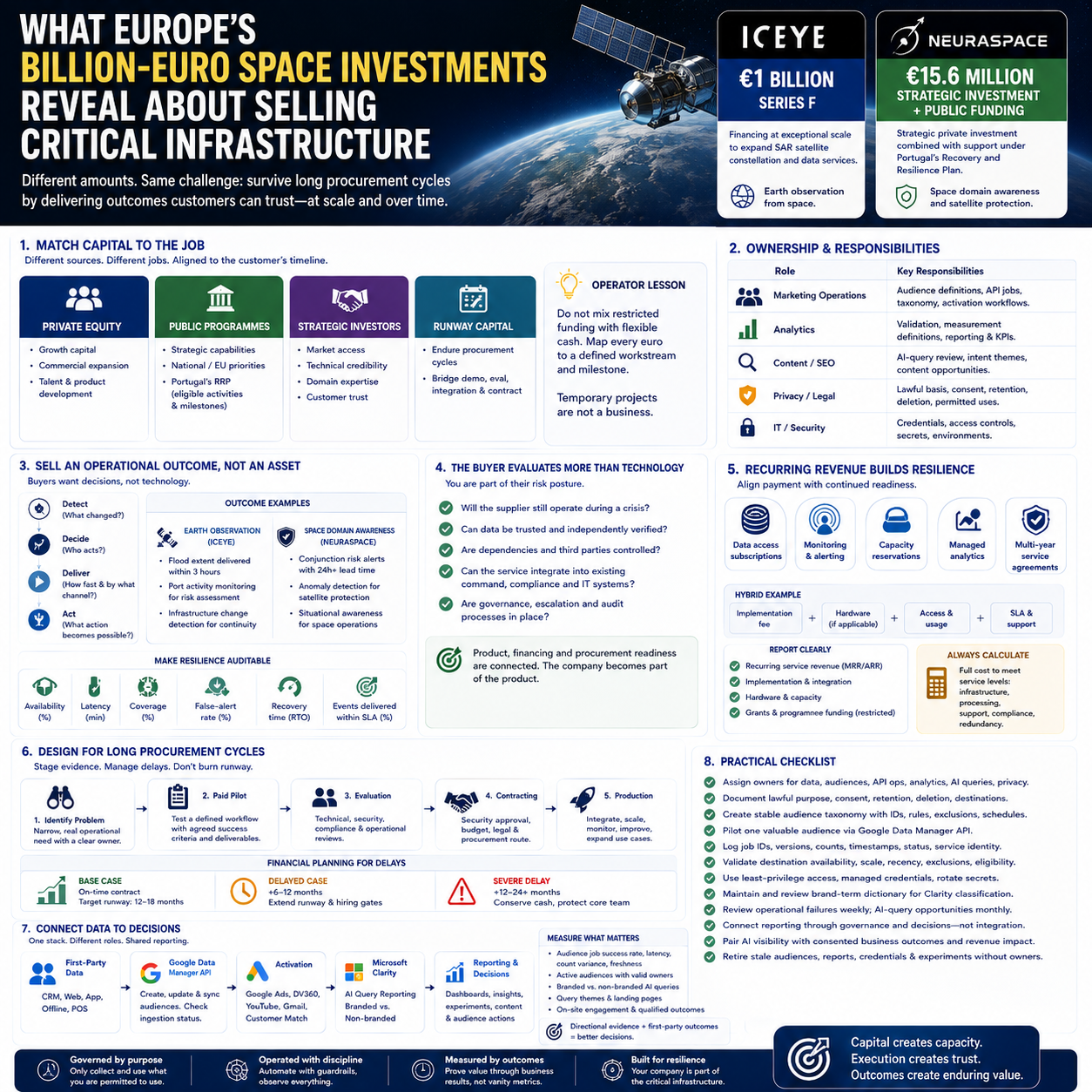
Europe’s space financing market is producing companies that look less like conventional software startups and more like infrastructure operators. Two recent transactions make that distinction useful: ICEYE announced a €1 billion Series F, while Portugal’s Neuraspace secured €15.6 million through strategic private investment and public funding. The amounts are radically different, but the operating question…
-
A Practical First-Party Audience and AI-Search Measurement Stack
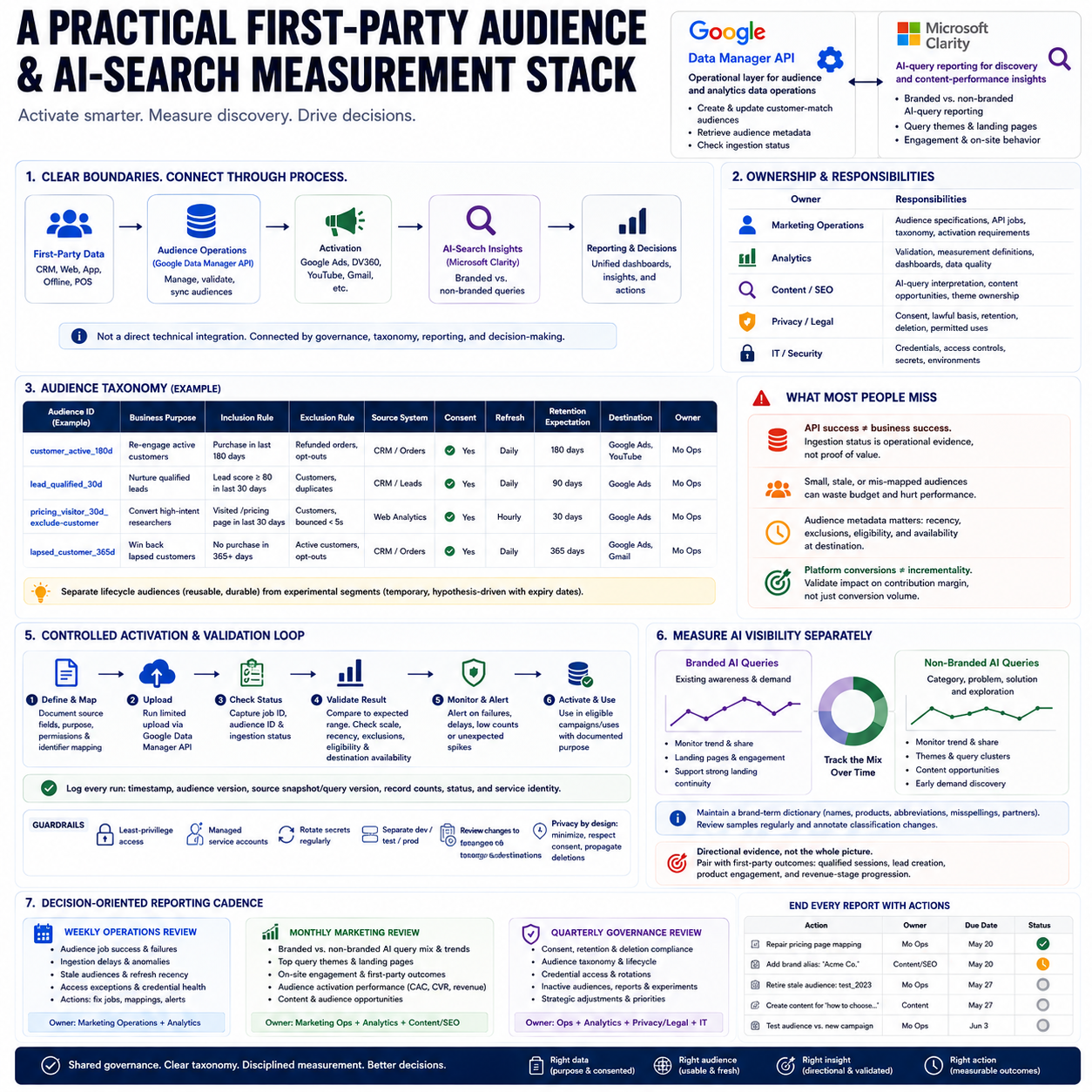
Marketing operators face two related but distinct challenges: activating reliable first-party audiences and understanding how their brands appear in emerging AI-driven discovery. Google Data Manager API improvements and Microsoft Clarity’s branded-versus-non-branded AI-query reporting can help address those challenges, but they serve different purposes and should not be treated as a single integrated product stack. Google…
-
Google Ads Automation Audit: Stop Default Settings From Quietly Eroding Revenue
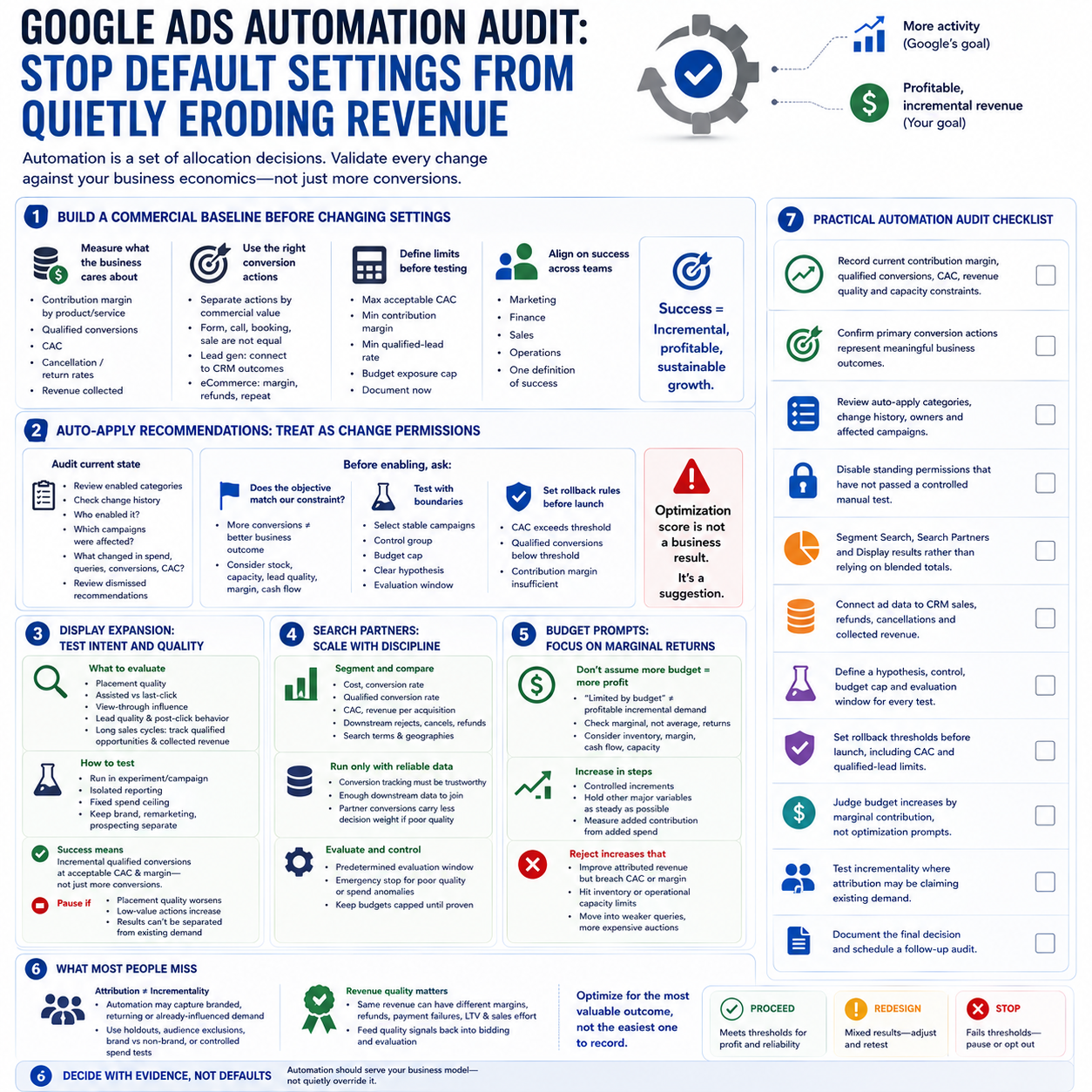
Google Ads automation is not inherently good or bad. It is a set of allocation decisions made by a platform whose objective—generating more advertising activity—does not perfectly match an operator’s objective of producing profitable, incremental revenue. That distinction matters. Search Engine Land reported a case in which following a platform “best practice” cost a client…
-
When Drone Delivery Can Beat Conventional Last-Mile Fulfillment
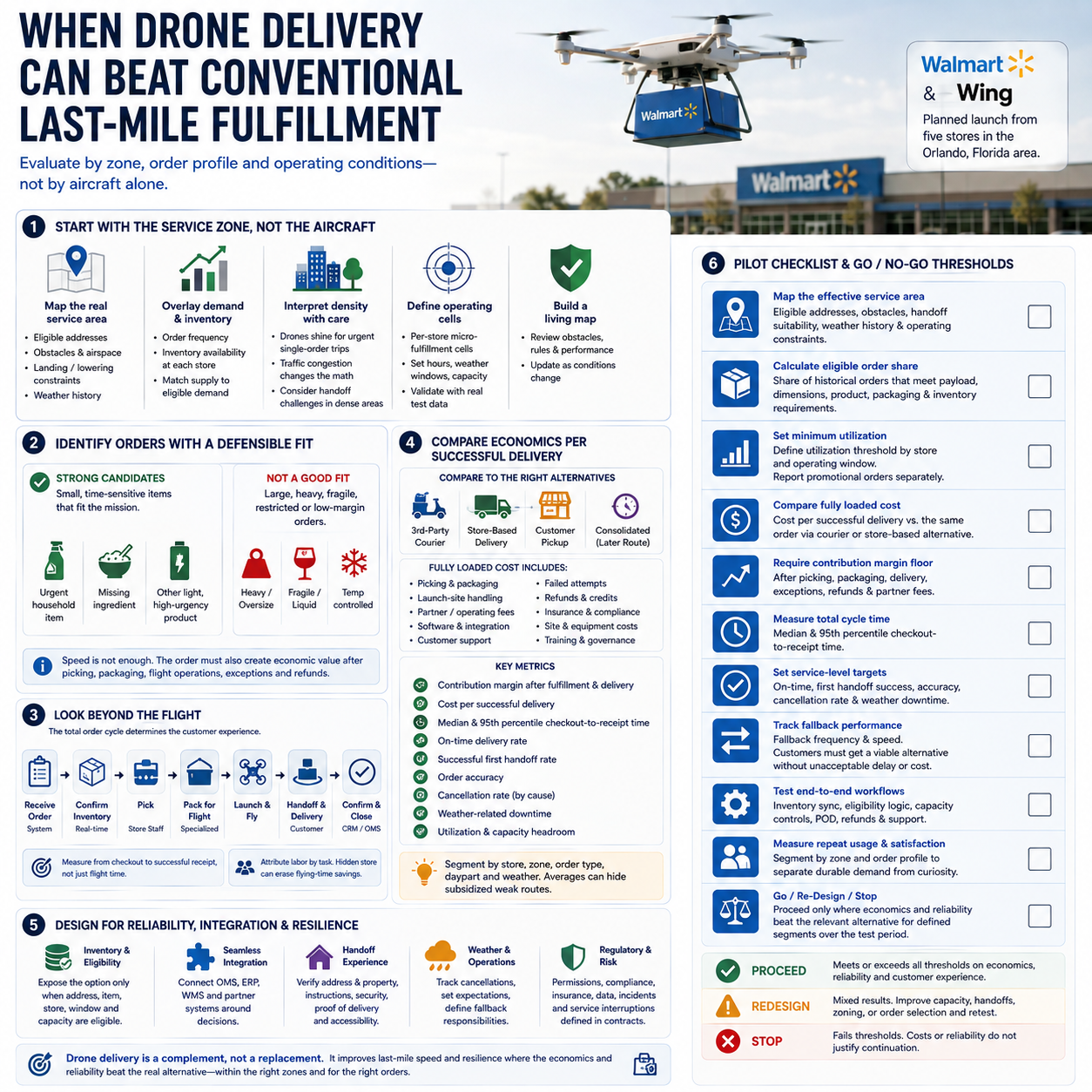
Walmart and Wing’s planned launch from five stores in the Orlando, Florida, area offers retailers a useful way to evaluate drone delivery without assuming it will replace conventional fulfillment. The relevant question is narrower: within which service zones, order profiles, and operating conditions can drones deliver a better outcome than couriers or store-based delivery? That…