Latest posts
-
A Practical Operating System for Managing Remote Teams

Remote work becomes difficult when employees must guess where to communicate, who owns a decision, how quickly to respond, or what good performance looks like. For a small company, these ambiguities quickly reach the owner: routine questions become meetings, decisions disappear in chat, and managers confuse online presence with progress. The solution is not more…
-
AI Adoption Has a Trust Problem: A Practical Rollout Plan for Employers
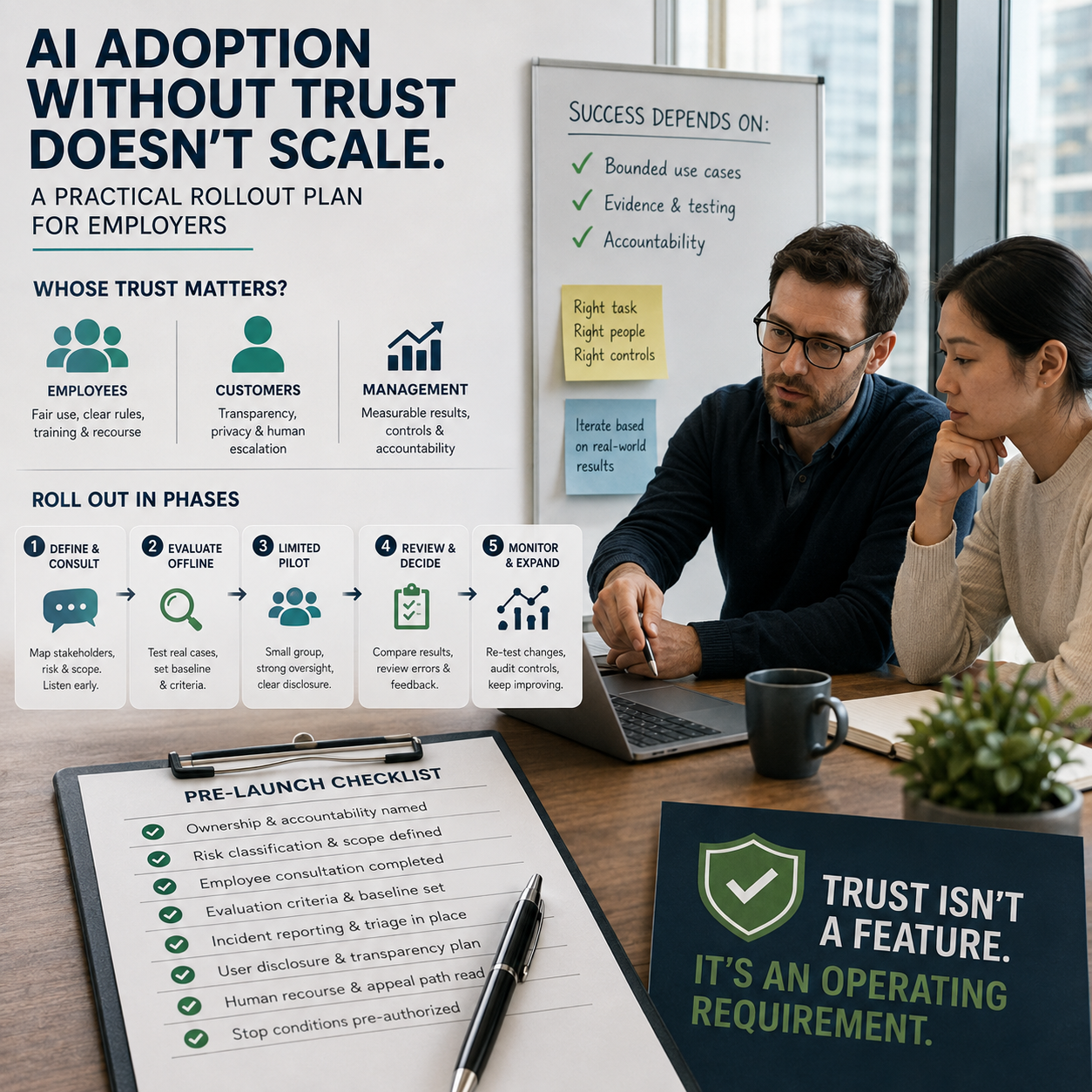
Employers can buy an AI system faster than they can earn permission—social, managerial or practical—to rely on it. That gap matters because deployment succeeds only when employees use the system appropriately, managers can defend its outcomes and customers understand when it affects them. Recent TechCrunch coverage frames resistance to ambitious AI visions as a problem…
-
AI Adoption Has a Trust Problem: An Operator’s Checklist for Credible Deployment
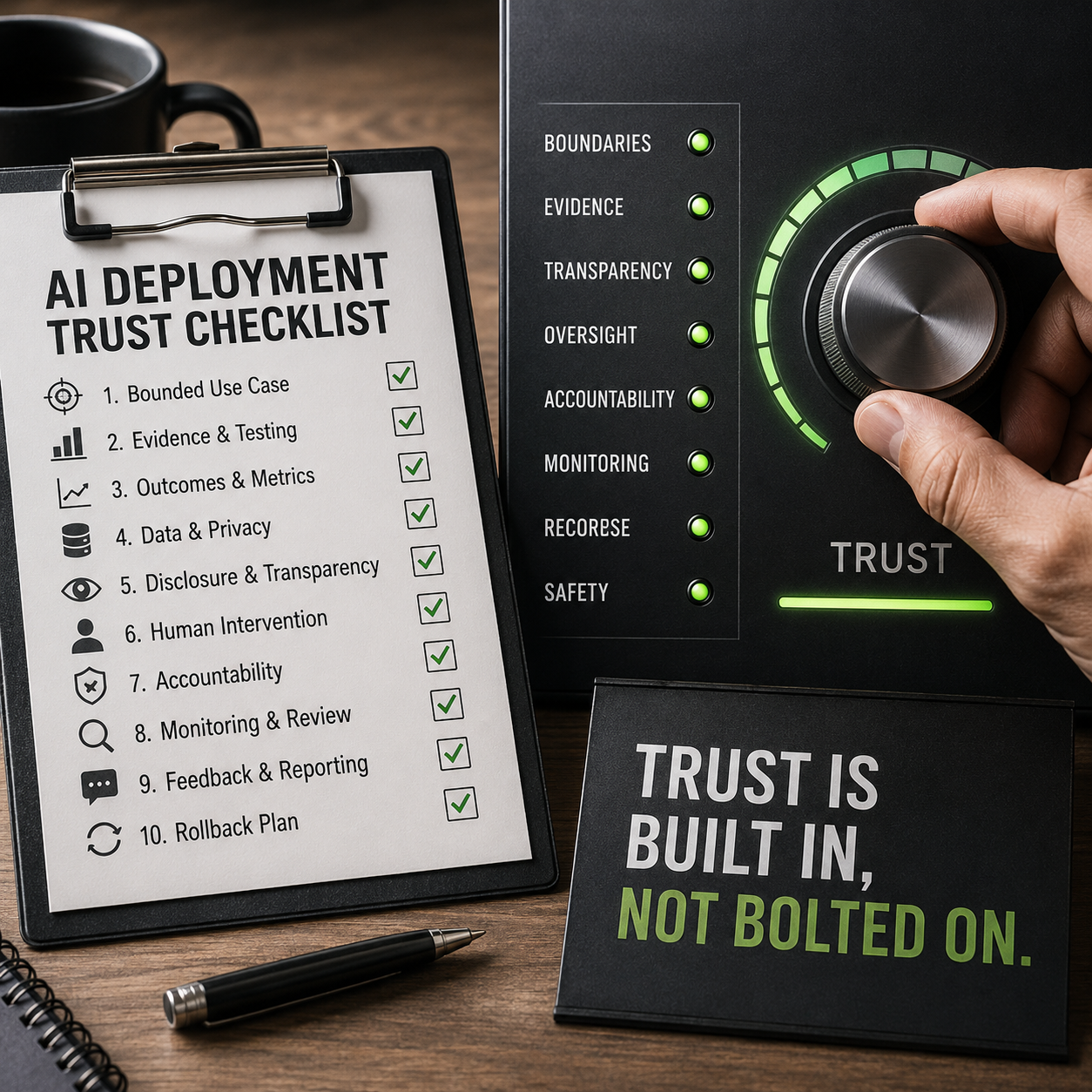
AI adoption can fail even when the technology works. Customers may doubt claims they cannot verify, while employees may resist tools that affect their work without clear safeguards or recourse. The operational mistake is to treat those reactions as a communications problem to be solved with more ambitious messaging. Two recent TechCrunch articles illustrate the…
-
How SMEs Can Prepare Their Knowledge Systems for Autonomous Business AI
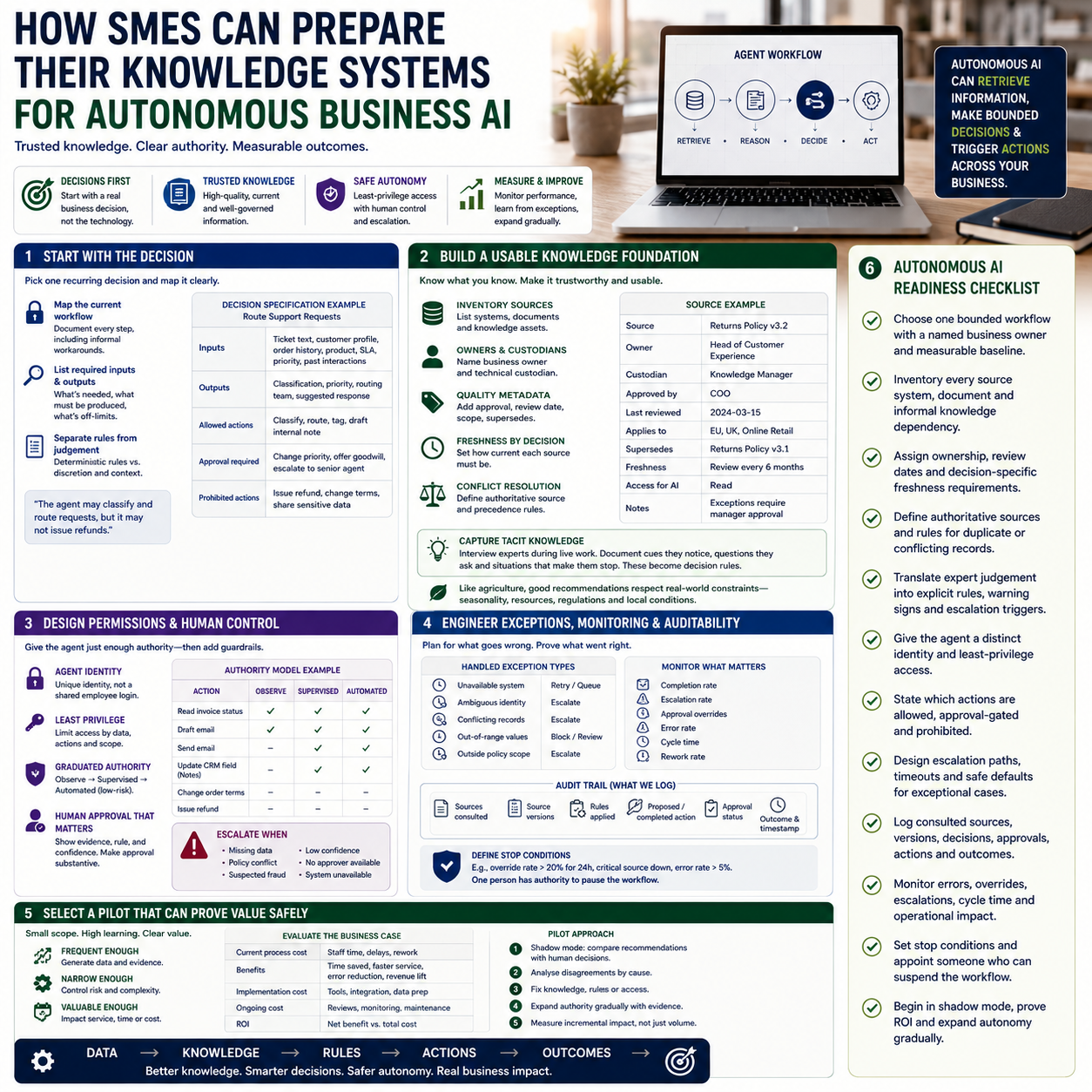
Autonomous business AI promises more than answering questions. It can retrieve information, make bounded decisions and trigger actions across operational systems. For an SME, however, the main obstacle is rarely the model itself. It is the condition of the organisation’s knowledge: scattered documents, undocumented judgement, inconsistent records and permissions designed for people rather than software…
-
Build a Customer Retention System Using Purchase Behavior and Engagement Data
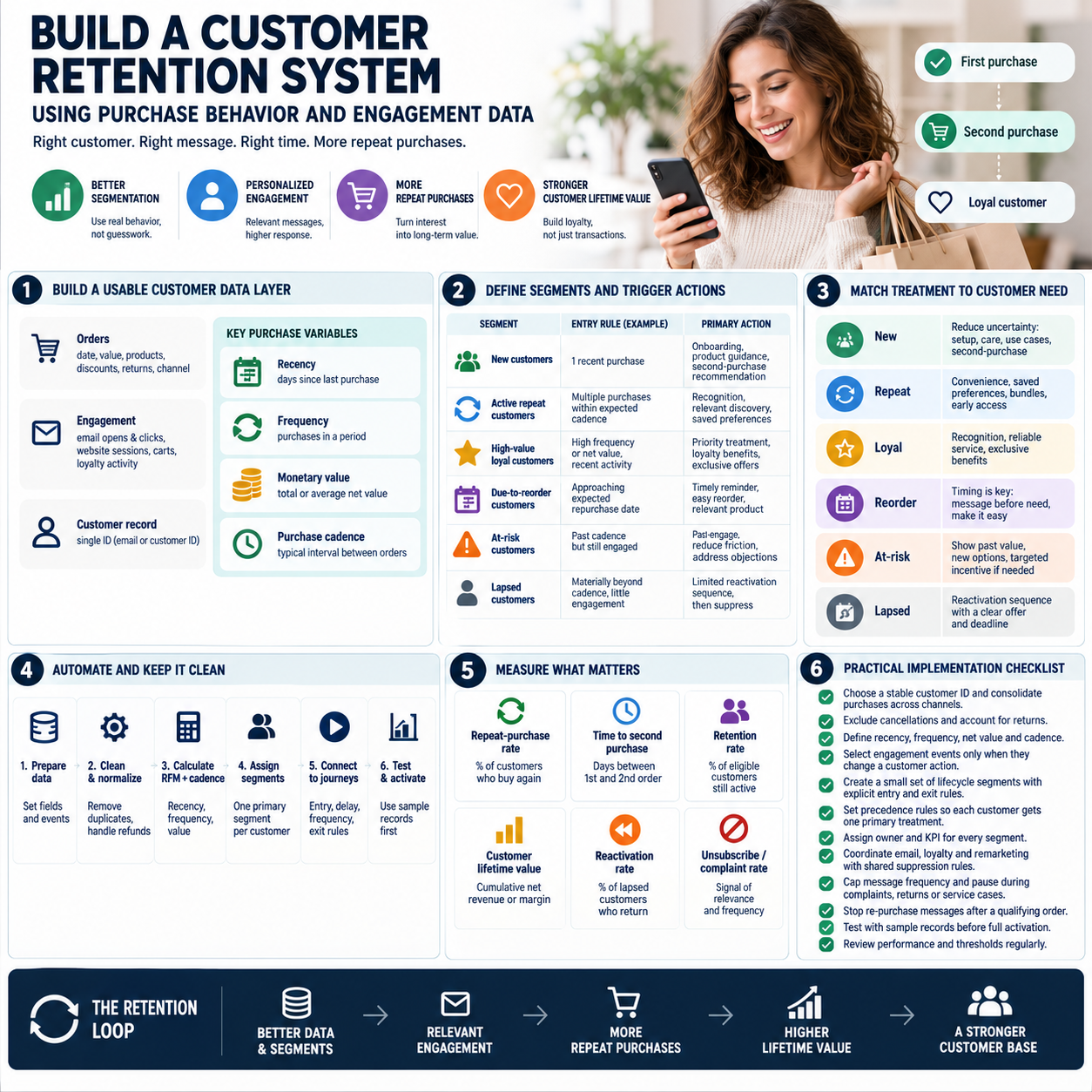
Customer retention becomes manageable when it is treated as an operating system rather than a sequence of promotions. The system should answer three questions every day: which customers need attention, what action fits their current behavior, and whether that action produces another profitable purchase. A small business does not need an advanced data platform to…
-
How to Protect Margins When Freight Disruption and Input Inflation Collide
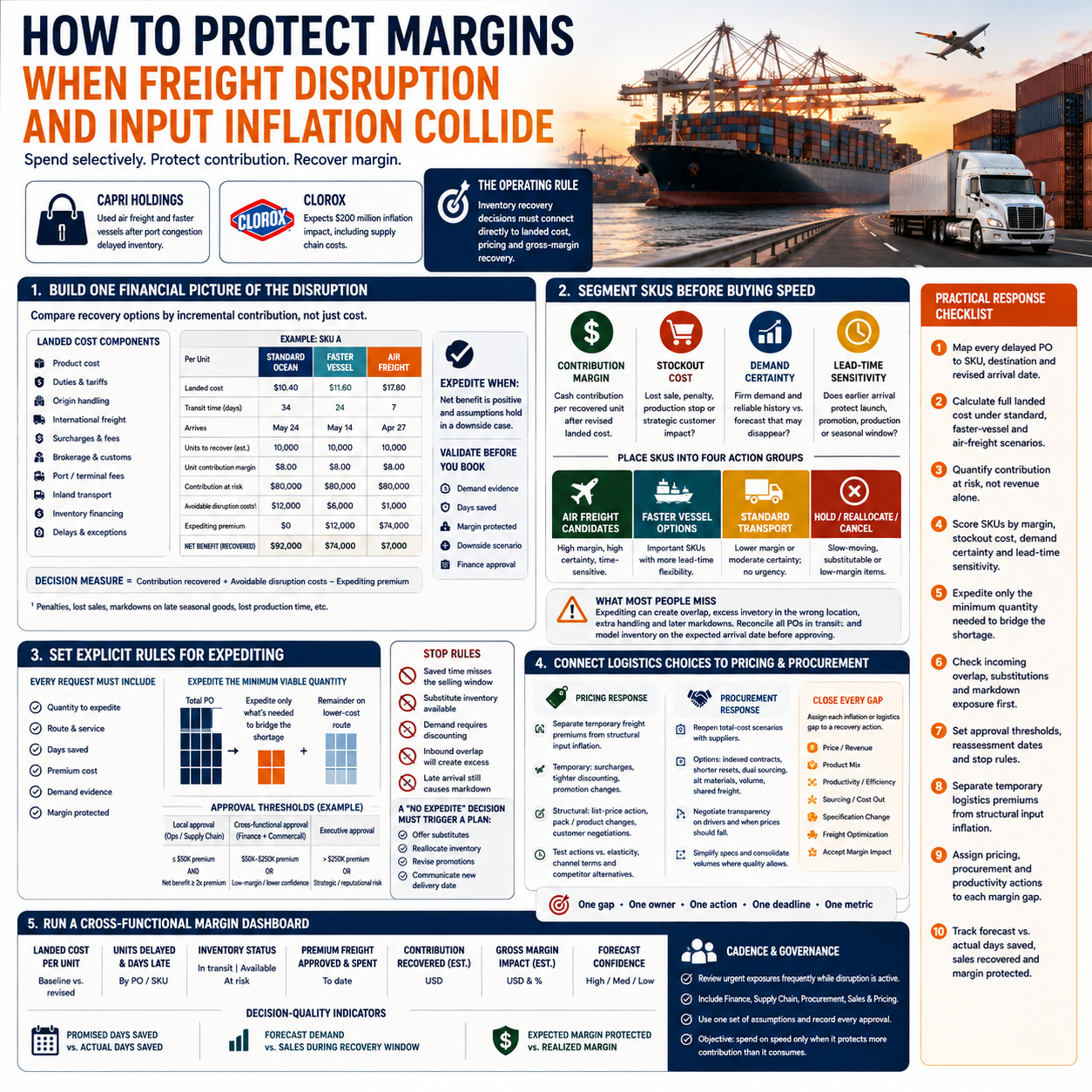
When freight disruption and supplier inflation arrive together, the instinctive response is often to treat them as separate problems. Operations tries to recover delayed inventory, procurement negotiates input costs, and finance revises the margin forecast. That separation creates expensive decisions: a team may approve premium freight to protect sales without calculating whether the recovered contribution…
-
Holiday Inventory Strategy When Freight Rates and Tariff Risk Rise
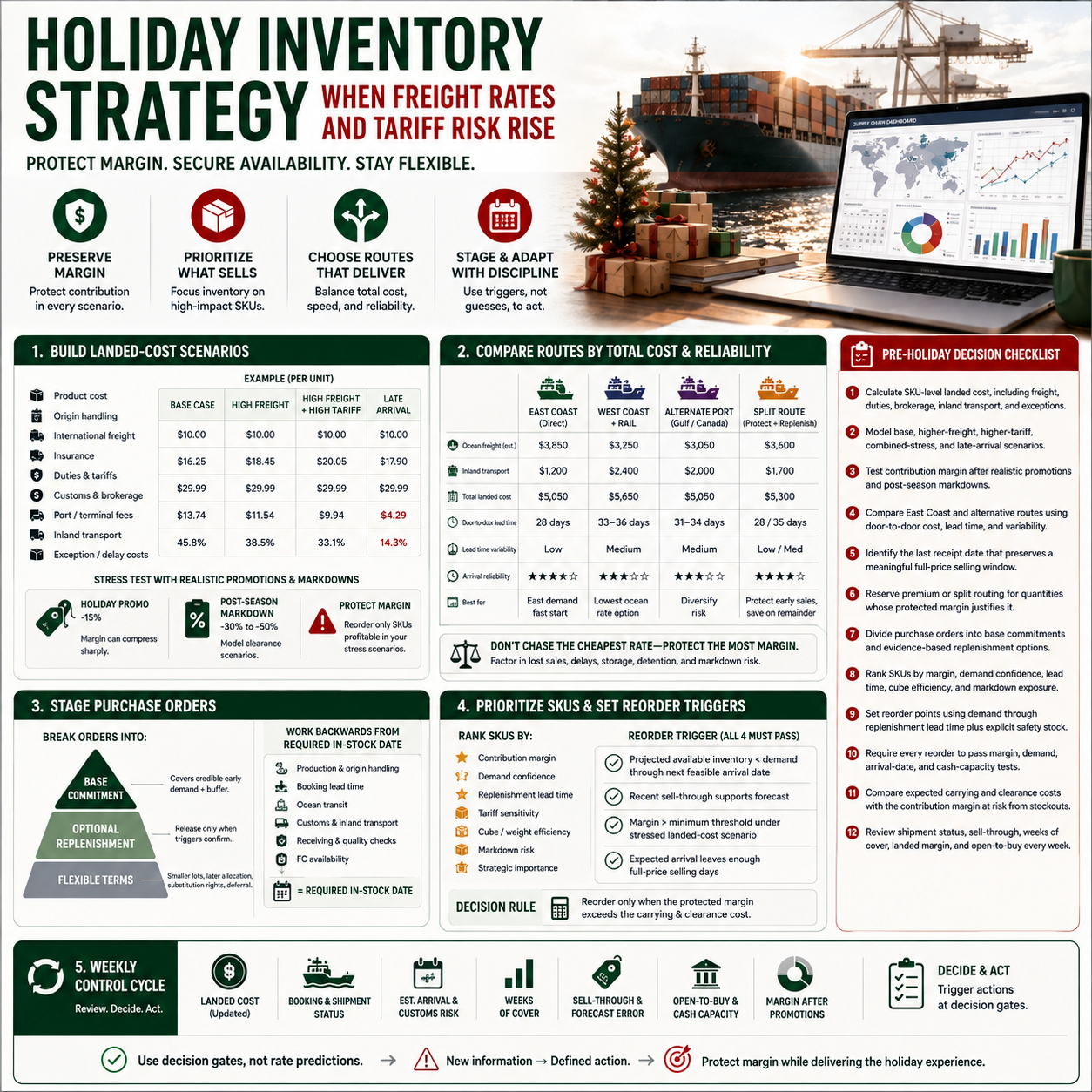
Holiday inventory planning becomes harder when several risks arrive together: retailers have already pulled imports forward, Asia-to-US East Coast ocean rates are rising, and tariff exposure remains uncertain. Importers cannot solve that combination by making a single forecast. They need a decision system that remains useful across multiple outcomes. The objective is not simply to…
-
Building a Resilient Delivery Budget as Parcel and Freight Costs Rise
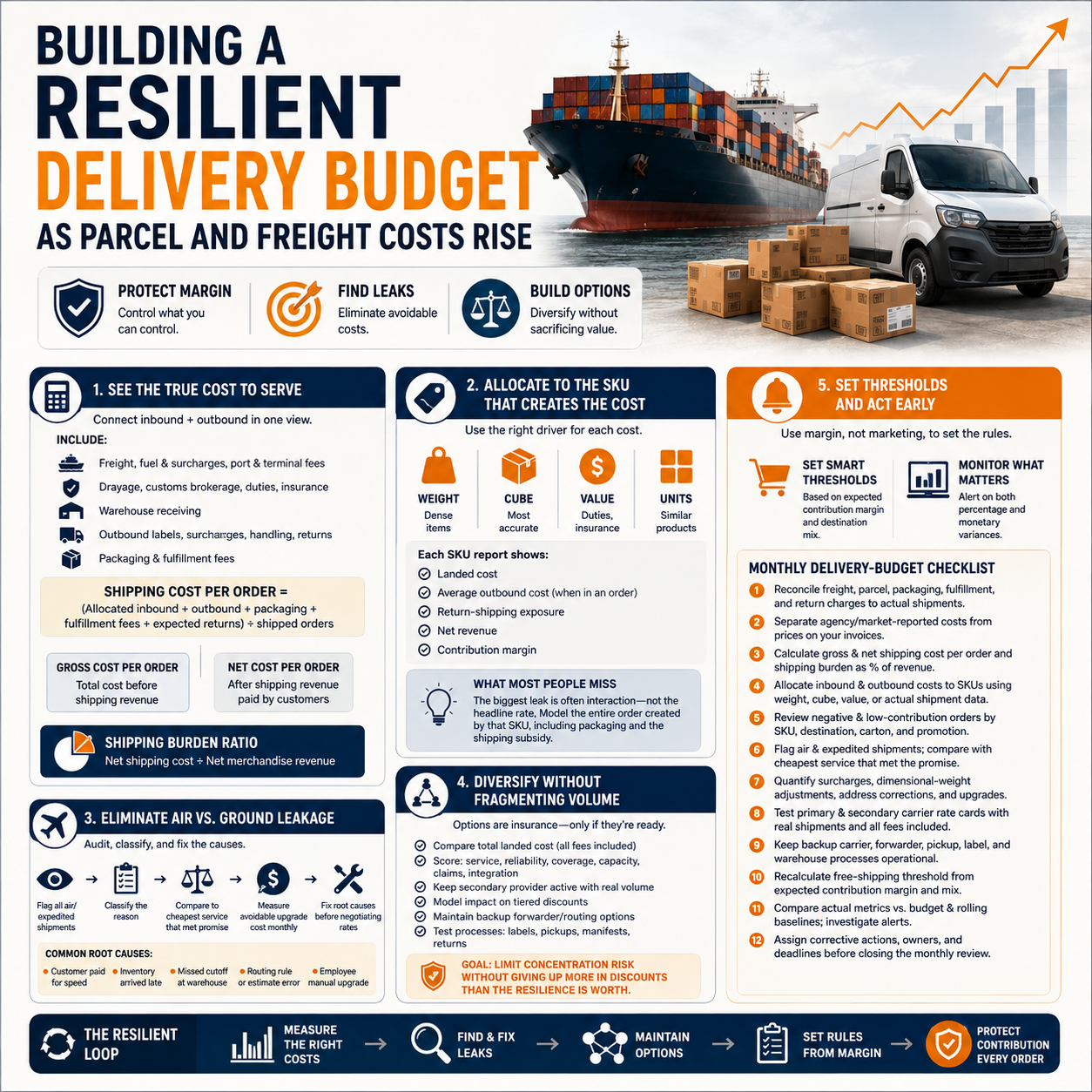
For commerce operators, inbound freight and outbound parcel shipping are not separate budgeting problems. They meet in the contribution margin of every order. A container-rate increase raises landed cost before inventory reaches the warehouse; a more expensive delivery service then adds pressure after the customer checks out. Recent logistics developments illustrate why a resilient budget…
-
Peak-Season Inventory Planning: When to Frontload and When to Replenish Faster
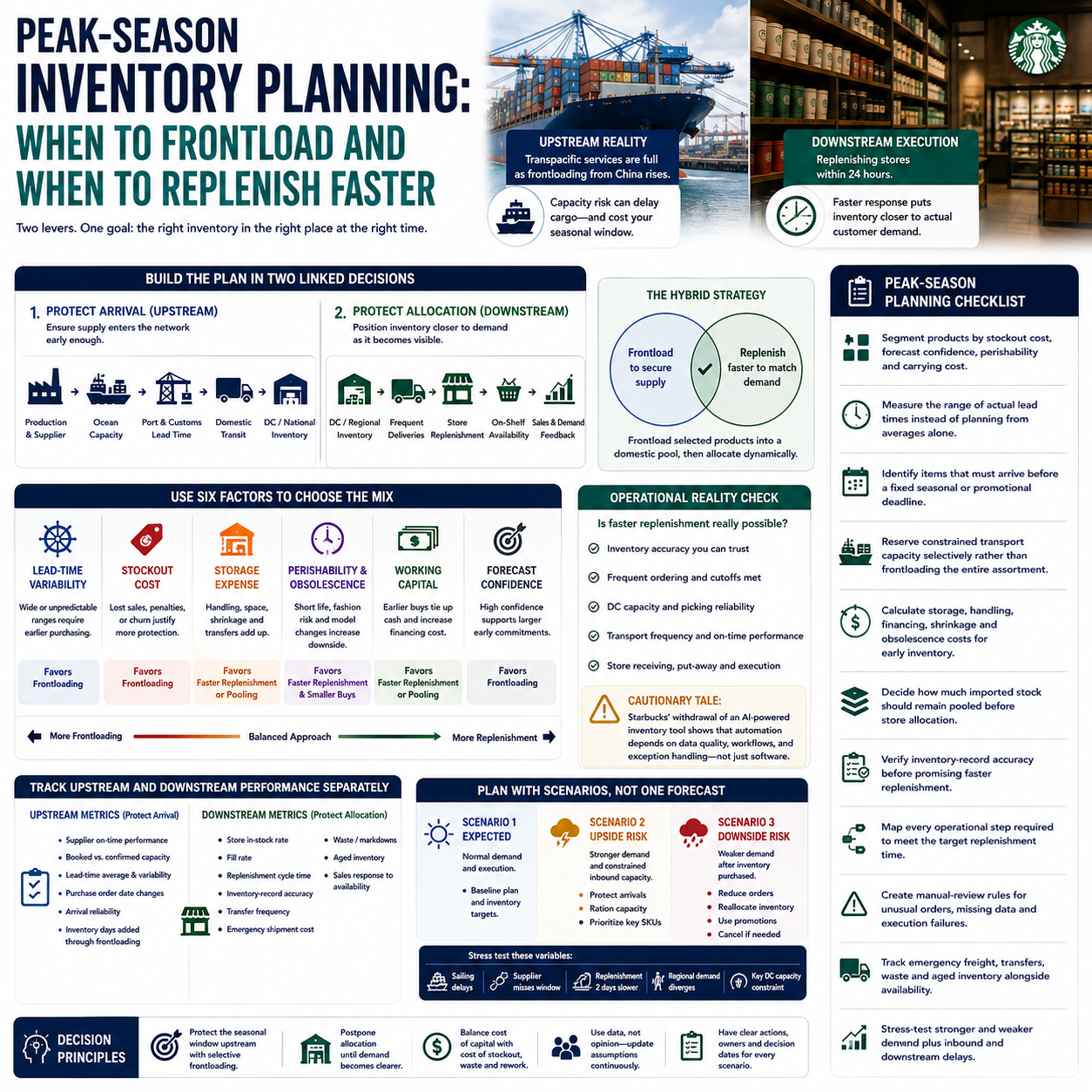
Peak-season inventory planning often appears to present a binary choice: buy early to protect supply, or keep inventory lean and replenish faster. In practice, importers and multi-location retailers need both strategies—but not for every product, location or risk. Reports of full Transpacific services amid frontloading from China highlight the upstream problem: when transport capacity tightens,…
-
Tariff Exposure Is Shifting: A Practical Framework for Costs, Refunds, and Supplier Sharing
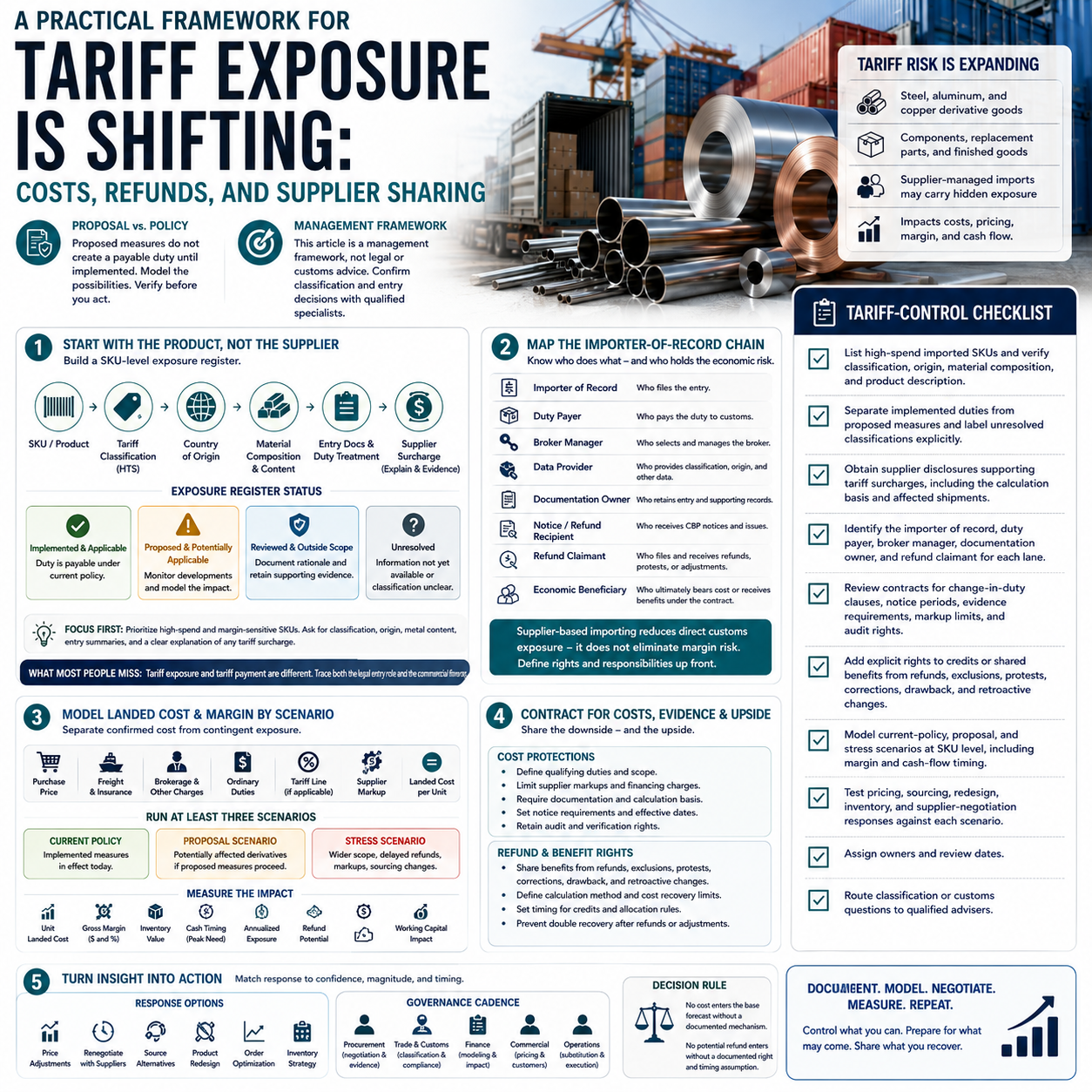
Tariff risk is no longer confined to businesses importing obvious metal inputs. Proposed expansion of U.S. duties to additional steel, aluminum, and copper derivative goods could move exposure deeper into finished products, components, replacement parts, and supplier-managed imports. That makes tariff control an operational problem spanning procurement, customs data, contracts, pricing, and finance. The essential…