
Latest News
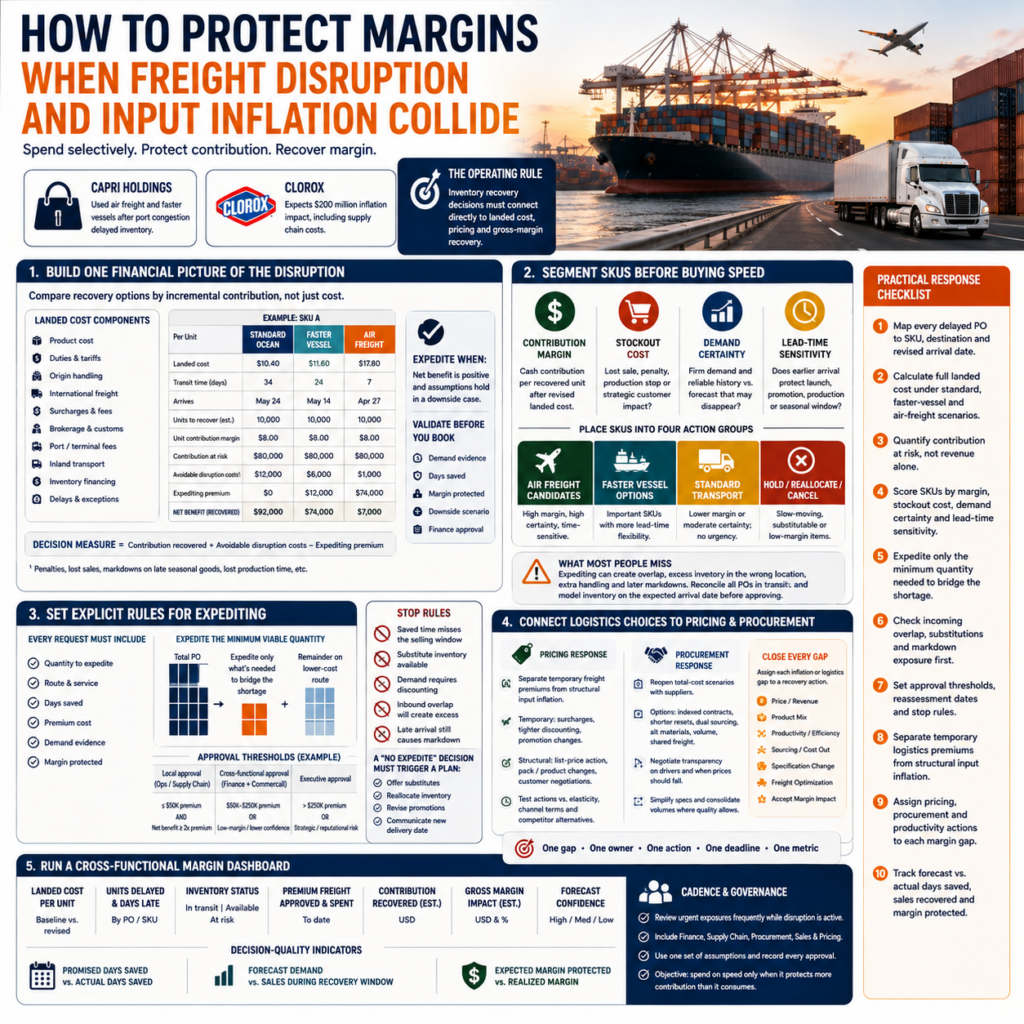
How to Protect Margins When Freight Disruption and Input Inflation Collide
When freight disruption and supplier inflation arrive together, the instinctive response is often to treat them as separate problems. Operations tries to recover delayed inventory, procurement negotiates input costs, and finance revises the margin forecast. That separation creates expensive decisions: a team may approve premium freight to protect sales without calculating whether the recovered contribution […]
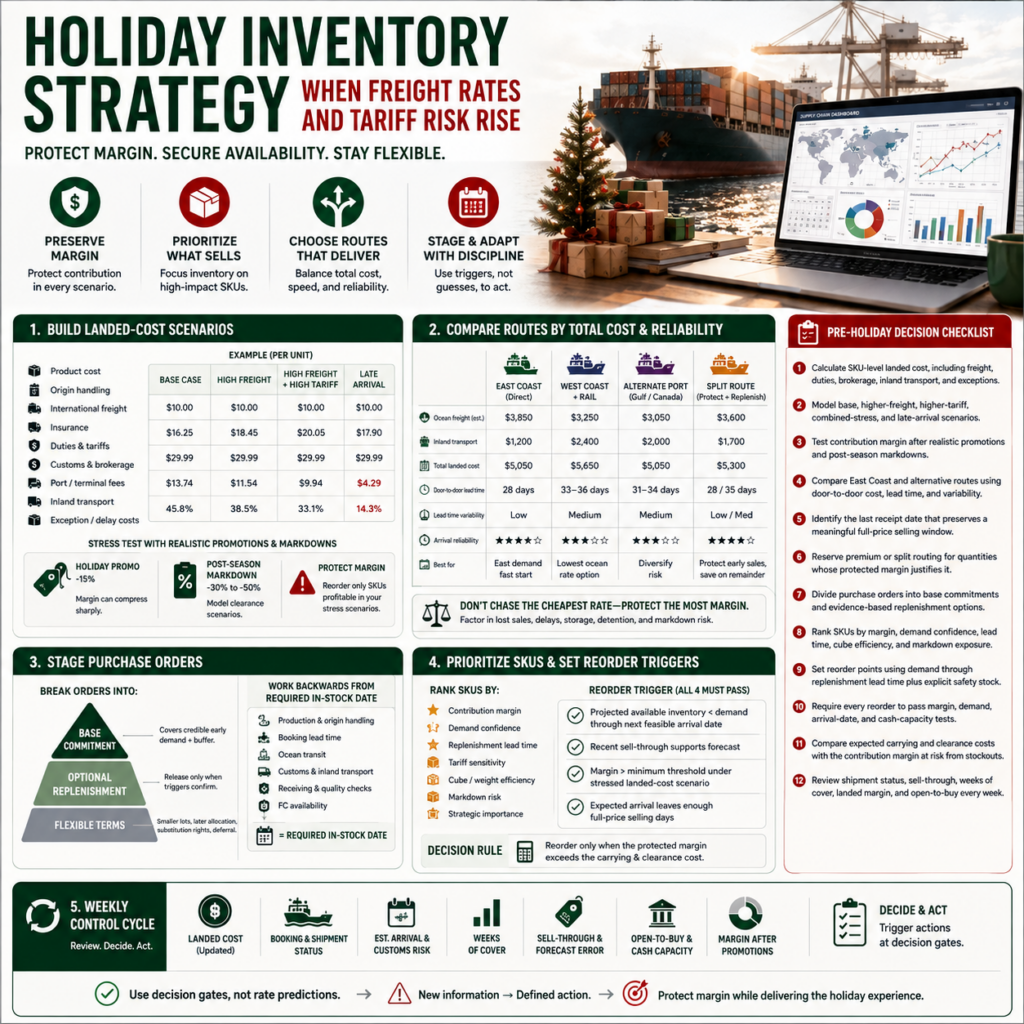
Holiday Inventory Strategy When Freight Rates and Tariff Risk Rise
Holiday inventory planning becomes harder when several risks arrive together: retailers have already pulled imports forward, Asia-to-US East Coast ocean rates are rising, and tariff exposure remains uncertain. Importers cannot solve that combination by making a single forecast. They need a decision system that remains useful across multiple outcomes. The objective is not simply to […]
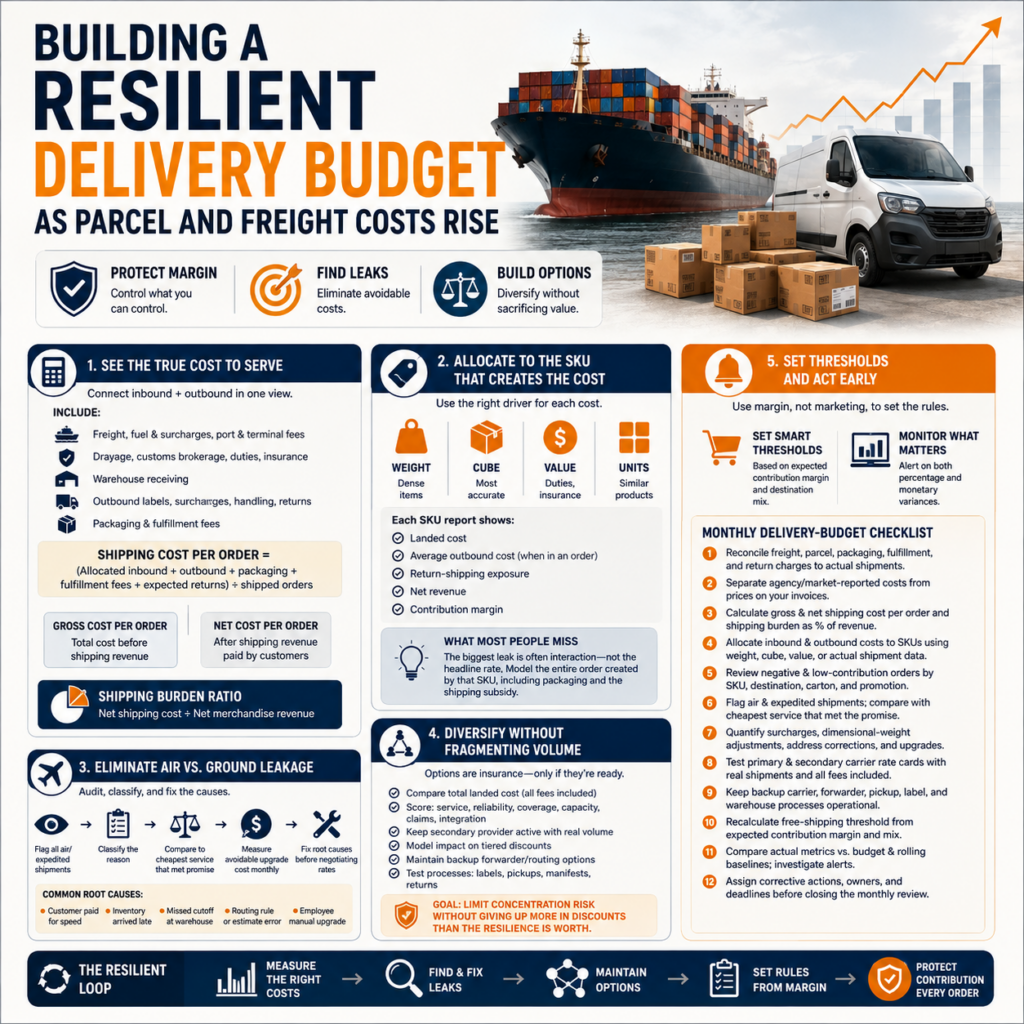
Building a Resilient Delivery Budget as Parcel and Freight Costs Rise
For commerce operators, inbound freight and outbound parcel shipping are not separate budgeting problems. They meet in the contribution margin of every order. A container-rate increase raises landed cost before inventory reaches the warehouse; a more expensive delivery service then adds pressure after the customer checks out. Recent logistics developments illustrate why a resilient budget […]
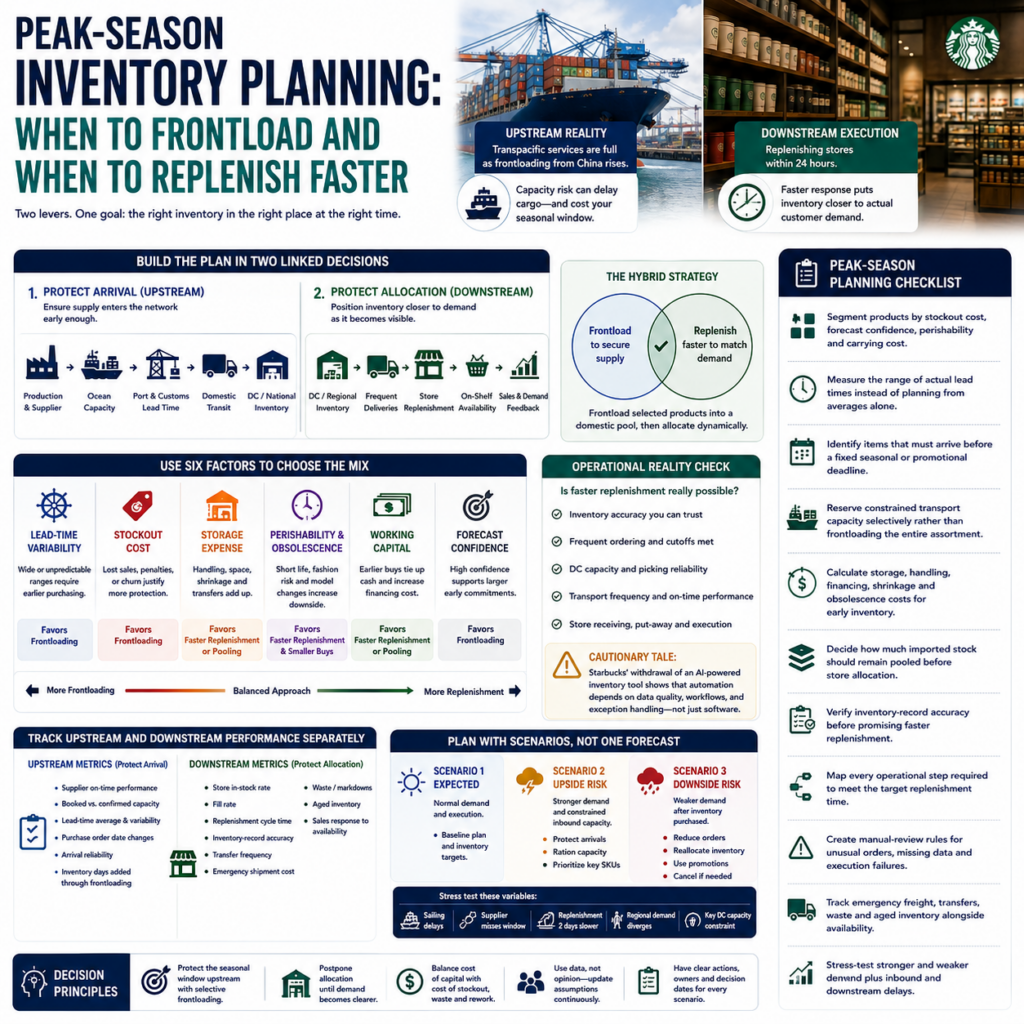
Peak-Season Inventory Planning: When to Frontload and When to Replenish Faster
Peak-season inventory planning often appears to present a binary choice: buy early to protect supply, or keep inventory lean and replenish faster. In practice, importers and multi-location retailers need both strategies—but not for every product, location or risk. Reports of full Transpacific services amid frontloading from China highlight the upstream problem: when transport capacity tightens, […]
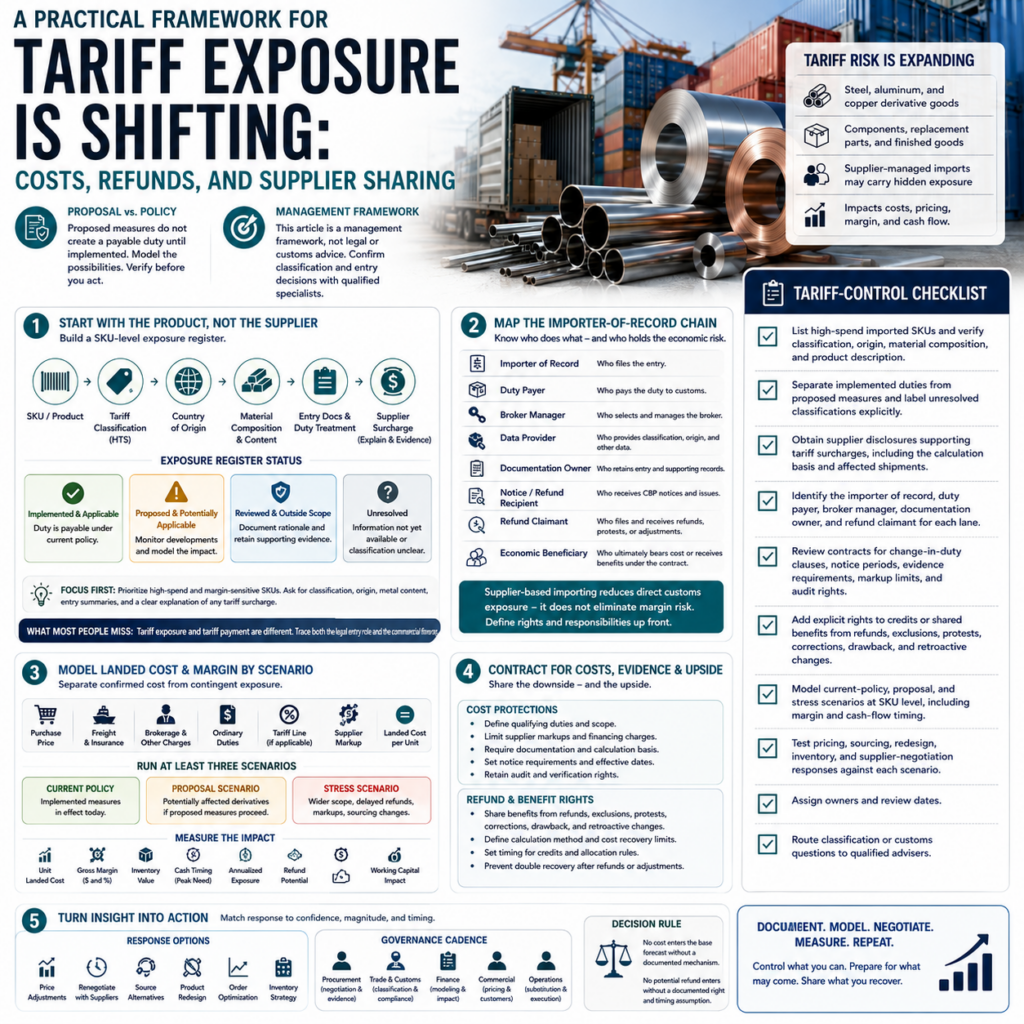
Tariff Exposure Is Shifting: A Practical Framework for Costs, Refunds, and Supplier Sharing
Tariff risk is no longer confined to businesses importing obvious metal inputs. Proposed expansion of U.S. duties to additional steel, aluminum, and copper derivative goods could move exposure deeper into finished products, components, replacement parts, and supplier-managed imports. That makes tariff control an operational problem spanning procurement, customs data, contracts, pricing, and finance. The essential […]
The Complete Guide to Business Loans for Small Business Owners
Discover business loans for small business owners in our guide—featuring SBA loans for growth and expert tips on securing competitive rates.
What Is a Line of Credit, and How Can It Help Your Business?
Boost your small business with a flexible line of credit to manage cash flow and seize growth opportunities while building your business credit profile.
Pros and Cons of Venture Capital for Small Businesses
Discover venture capital for small businesses: weigh key benefits against challenges for smart, growth-driven funding decisions.
Understanding Business Credit Lines: A Flexible Financing Solution
Business credit lines offer a flexible financing solution that boosts effective cash flow management for small businesses.