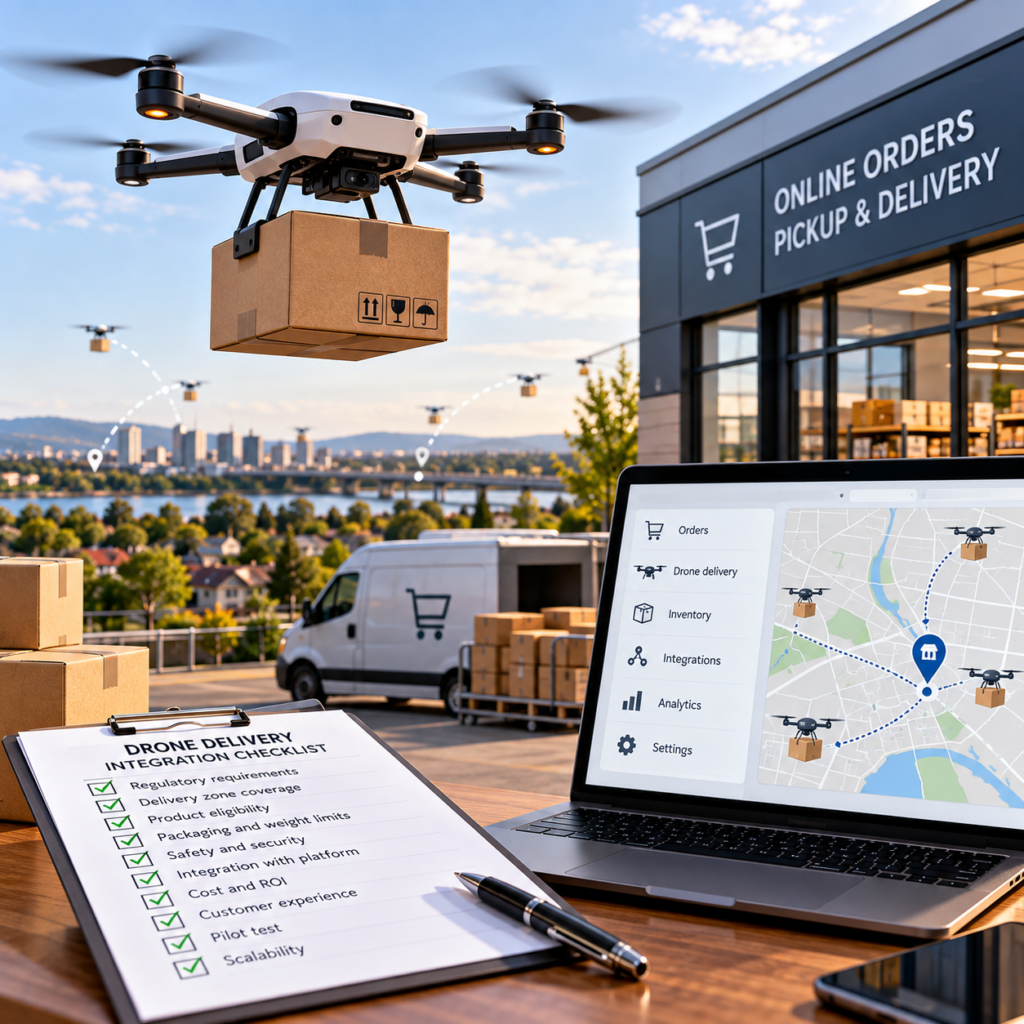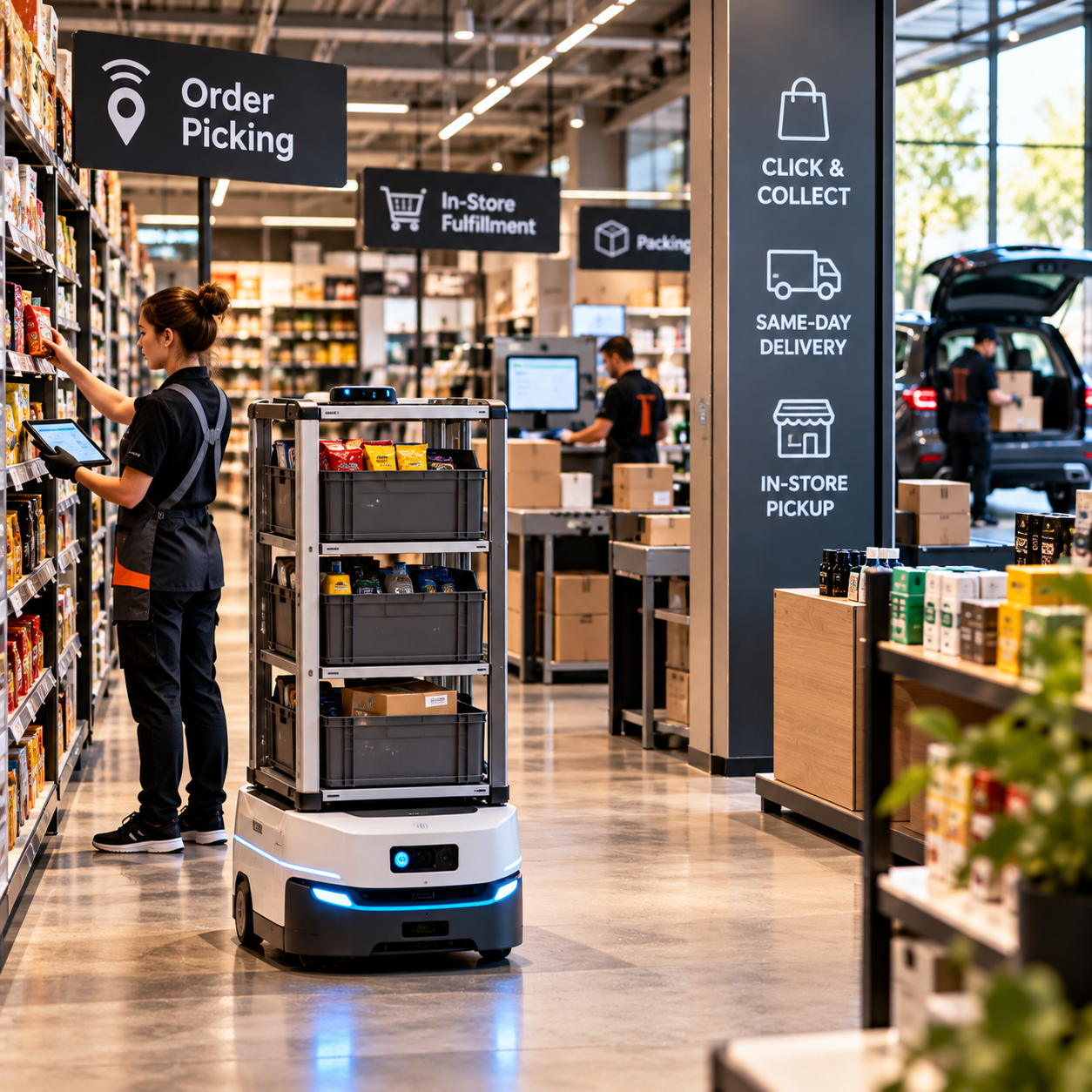
Walmart’s plan to equip a store with Symbotic’s SymMicro fulfillment system puts a specific omnichannel challenge under scrutiny: can automation accelerate pickup and delivery orders without disrupting an active retail floor? As reported by Retail Dive, the deployment is intended to support faster fulfillment inside the store. That goal is relevant well beyond Walmart, but its economics and implementation model should not be treated as a ready-made blueprint for other retailers.
For most operators, the investment question is not simply whether automation can move products faster. It is whether a particular store has enough stable demand, repeatable work, physical capacity, and operational friction to make a controlled pilot informative. Before selecting technology or projecting a rollout, retailers should establish where the existing process loses time, how automation would interact with inventory and order systems, and what measurable improvement would justify expansion.
Start with the bottleneck, not the machine
A pilot needs a defined operating hypothesis. “Make fulfillment faster” is too broad because an order can be delayed by inventory errors, walking distance, replenishment gaps, staging congestion, handoff procedures, or insufficient labor. Automation aimed at storage and retrieval will not necessarily solve late order release, inaccurate stock records, or parking-lot bottlenecks.
Map the full path of pickup and delivery orders: order receipt, inventory allocation, picking, exception handling, consolidation, packing, staging, and customer or driver handoff. Record where employees wait, retrace routes, search for missing items, or compete with shoppers and replenishment teams for aisle access.
Volume matters, but averages are inadequate. Examine orders and units by hour, peak-day patterns, basket composition, service deadlines, cancellation rates, and the share of products suitable for the proposed automated workflow. A store with high annual demand but sharp, short-lived peaks may require a different capacity design from one with steady daily flow. Equally, a large order count may not support automation if most baskets contain products that remain outside the system.
The strongest pilot hypothesis connects a constraint to an outcome. For example: reducing travel and retrieval work for eligible items should lower median picking time and labor minutes per completed order while maintaining accuracy. If the team cannot state that relationship clearly, it is not ready to judge a pilot.
Choose a test store that can produce transferable evidence
The busiest location is not automatically the best test site. Extreme demand can expose capacity limits, but it can also bury the team in exceptions before integrations and procedures stabilize. Conversely, a quiet store may deliver a technically successful test without generating enough transactions to reveal peak-load behavior or a credible labor effect.
A useful pilot location should have sufficient and reasonably predictable pickup and delivery volume, a visible bottleneck that the system is designed to address, reliable leadership, and a workforce experienced enough to distinguish implementation problems from normal store variability. Its product mix should provide a meaningful pool of automation-eligible items rather than an artificially favorable sample.
Physical suitability is equally important. Operators must assess available space, floor loading and clearances, power, connectivity, fire and safety requirements, maintenance access, receiving and replenishment routes, and the distance between automated storage, packing, staging, and handoff areas. A fast retrieval process can still create congestion if completed work arrives at an undersized packing station.
Choose a store that resembles a defined rollout cohort. If the pilot uses an unusually large backroom, unusually modern systems, or exceptional staffing, document those differences. Results from such a site may establish technical feasibility but say little about the wider estate.
Build the operating baseline before installation
Measurement should begin several weeks before go-live and cover comparable weekdays, weekends, promotions, and demand peaks. Define each KPI precisely so that the baseline and pilot use the same clock, denominator, and exclusions.
- Fulfillment time: Measure order release to ready-for-handoff, while also separating queue time, active picking, consolidation, packing, and staging. Report median and upper-percentile performance; averages can conceal late orders.
- Order accuracy: Track correct items and quantities, substitutions, missing items, mis-picks, and post-handoff complaints. Distinguish inventory unavailability from execution errors.
- Labor requirements: Record direct labor minutes per order and per unit, plus exception handling, replenishment, supervision, cleaning, and maintenance. Do not count only the work that automation removes.
- Throughput and capacity: Measure units and orders completed per hour, utilization by time band, queue growth, and sustained peak throughput. Identify whether packing or handoff becomes the new constraint.
- Downtime: Log planned and unplanned outages, degraded-operation periods, recovery time, causes, and orders affected. A backup process should also be timed and staffed.
- Inventory availability: Monitor the proportion of ordered units found, inventory-record accuracy, replenishment latency, stockouts inside the automated area, and failed allocations.
- Customer experience: Track arrival-to-handoff wait time, orders ready by promise time, cancellations, complaints, and satisfaction feedback specific to pickup or delivery.
Segment results by basket size, item type, daypart, demand level, and automation eligibility. Otherwise, an apparent gain may simply reflect a change in order mix.
Prepare people, facilities, and system interfaces together
Store automation changes roles rather than eliminating the need for operational judgment. Employees must understand how orders enter the system, how eligible inventory is replenished, who resolves exceptions, what happens during downtime, and when to switch to a manual process. Training should include realistic failure scenarios—not only normal operation.
Assign clear ownership for safety, maintenance escalation, inventory reconciliation, order exceptions, and daily performance review. Involve store employees in workflow design because they can identify conflicts that plans may miss, such as replenishment activity blocking handoff routes or packing queues obstructing other backroom work.
Integration testing deserves the same attention as equipment testing. Inventory, order-management, warehouse or store tasking, and customer-notification systems must agree about stock location and order status. Test cancellations, substitutions, partial orders, duplicate messages, late inventory updates, connectivity loss, and recovery after interruption. Confirm that customers and delivery drivers are not notified before an order is physically ready.
Facilities preparation should include safe pedestrian and equipment flows, ergonomic workstations, secure access, emergency procedures, and space for peak staging. Retailers should also model how automation changes replenishment timing: rapid retrieval is of limited value if the automated inventory pool is not refilled accurately and on schedule.
Set scale gates before results arrive
Decide in advance what constitutes success, conditional success, or failure. Gates should cover more than speed. A pilot that reduces fulfillment time but increases errors, downtime exposure, replenishment labor, or customer waits has shifted the constraint rather than solved it.
Compare pilot results with the pre-installation baseline and, where possible, a similar control store. Normalize for volume, basket mix, promotions, staffing, and product availability. Separate commissioning effects from steady-state performance, but do not dismiss persistent manual intervention as a temporary issue without evidence.
Before scaling, operators should be able to answer five questions: Which items and orders genuinely benefit? At what hourly volume does the workflow become constrained? What labor is removed, added, or moved elsewhere? Can the store continue serving orders safely during an outage? Which property and systems requirements would exclude other locations?
Walmart’s SymMicro plan is a useful signal that fulfillment automation is moving closer to the customer-facing store. It is not proof that every omnichannel network should follow. The responsible next step is a bounded pilot built around a diagnosed bottleneck, a representative location, tested fallback procedures, and KPIs established before installation. Scale only when the evidence shows repeatable gains across speed, accuracy, labor, capacity, inventory availability, resilience, and the customer handoff—not merely impressive machine activity.