Digital technology has become an integral part of our daily lives, sparking an era where everyday objects seamlessly communicate with each other. The evolution of smart devices and sensors has paved the way for the revolutionary Internet of Things (IoT), transforming operations for entrepreneurs and small business owners alike. Whether you aim to optimize your business operations or simply stay informed about the future of connectivity, understanding how connected devices are driving change is essential.
Understanding the Evolution and Benefits of IoT
Not long ago, the internet was primarily a medium for communication and information sharing. Today, its role has exploded, enabling devices to interact and exchange data autonomously. This transformation provides rich, real-time insights that empower smarter business decisions. IoT now spans everything from smart thermostats and refrigerators to complex industrial machines outfitted with sensors. The impact of IoT on global connectivity is both profound and far-reaching.
The dramatic reduction in computing and sensor costs has made IoT solutions financially accessible to virtually any organization. These innovations enhance operational efficiency, refine decision-making, and enable a level of customization that was once unimaginable. Companies now harness data from interconnected ecosystems to develop solutions perfectly tailored to consumer needs.
Small businesses, in particular, can reap substantial benefits. By leveraging IoT-enabled devices, entrepreneurs can streamline daily operations without hefty infrastructure investments. From real-time inventory monitoring to upholding top-notch security protocols, IoT offers robust solutions to everyday business challenges. For more innovative business tools and insights, visit MakeBusiness.
How Connected Devices are Transforming Industries
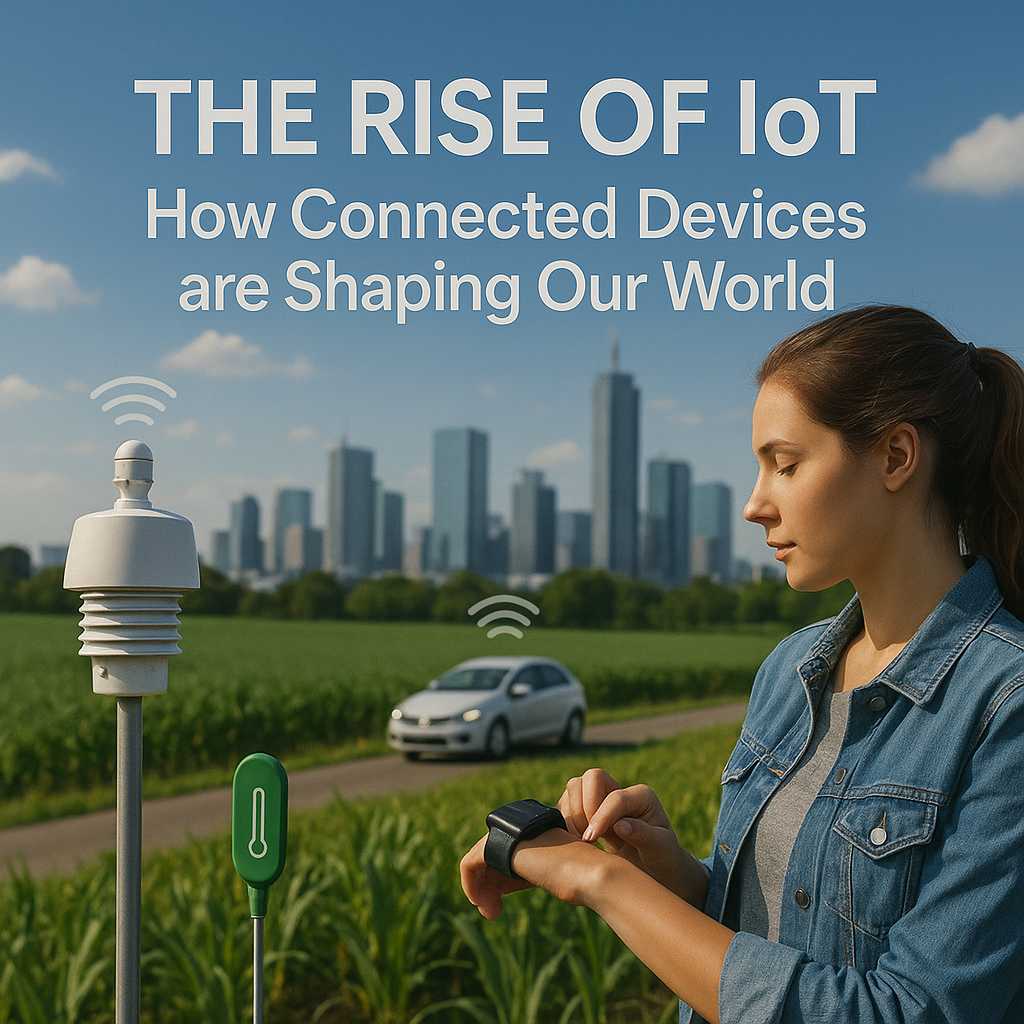
Industries across the board are undergoing a digital transformation. Prominent sectors like manufacturing, healthcare, and retail are integrating IoT devices to boost efficiency and elevate customer experiences. In manufacturing, sophisticated sensors predict maintenance needs, reduce downtime, and streamline production lines. In healthcare, wearable devices monitor vital signs, providing real-time data that informs both immediate and long-term medical decisions.
In retail, IoT is unveiling deeper insights into customer behavior. Smart shelves and automated checkout systems simplify shopping and optimize inventory management. This blending of technology with traditional business models demonstrates how connected devices are revolutionizing industries by delivering personalized experiences and operational efficiencies.
Furthermore, IoT is breaking geographical boundaries by enabling seamless data flow between devices globally. This interconnectedness allows businesses to offer products and services on an international scale, paving the way for agile and responsive practices that keep companies competitive in a rapidly evolving marketplace.
Real-World Applications Fueling Business Growth
Innovative IoT applications are achieving considerable competitive advantages across various sectors. Urban environments are increasingly employing smart technologies to manage traffic flow, cut energy consumption, and monitor pollution levels. The evolution of smart cities highlights how IoT extends far beyond consumer electronics. Entrepreneurs are at the forefront of these initiatives, introducing scalable, cost-effective solutions that tackle critical societal challenges.
Environmental sustainability is also in focus, with IoT applications optimizing resource usage. Smart grids and renewable energy management systems use connected sensors to balance supply and demand in real time. These solutions not only reduce carbon footprints but also generate substantial long-term savings, appealing to eco-conscious consumers and investors.
In agriculture, precision farming utilizes networked sensors to monitor soil quality, weather conditions, and crop health. This data-driven approach maximizes yields while minimizing waste. Similarly, logistics and transportation benefit from IoT-enabled tracking systems that monitor vehicle performance, streamline deliveries, and enhance fleet management. Each application underscores IoT’s role in boosting global connectivity and revolutionizing traditional business practices.
Challenges and Future Prospects of IoT Integration
Despite the remarkable benefits of IoT, challenges remain in our interconnected world. Security concerns are paramount as the proliferation of connected devices increases vulnerability to cyber threats. Small business owners, with fewer resources than large corporations, must invest in robust cybersecurity measures to protect sensitive data.
Data management is another critical issue. The vast amounts of data generated by IoT networks require sophisticated analytics and storage solutions to extract actionable insights. Many companies are now turning to cloud-based platforms to process and interpret this data, striving to balance data collection, analysis, and operational efficiency. As IoT ecosystems become even more complex, the demand for skilled professionals to manage these technologies is set to rise.
Looking forward, emerging trends like edge computing and artificial intelligence (AI) promise to enhance the efficiency and security of connected systems. Edge computing processes data closer to its source, reducing latency and easing the load on centralized servers. Meanwhile, AI-driven algorithms can sift through massive datasets to reveal patterns and automate decisions, further amplifying IoT benefits.
Recent insights from industry leaders on platforms such as Forbes showcase how forward-thinking companies leverage these technologies to drive innovation and maintain a competitive edge. As IoT integration deepens, the exchange of data will become more seamless, ushering in the next wave of global connectivity.
The future of IoT is unmistakably promising. Entrepreneurs and small business owners are ideally positioned to adopt these technologies early, reshaping their industries and redefining customer interactions. Embracing IoT today lays the foundation for agile, resilient, and innovative business models tomorrow.
In an increasingly interconnected world, continuous advancements in IoT will continue to push the boundaries of possible. IoT integration is no longer a luxury for large corporations—it’s a strategic necessity for businesses of all sizes. By embracing connected devices now, you set the stage for a more efficient, innovative, and globally connected future.
For entrepreneurs keen on staying ahead, understanding the nuances of IoT is vital. Each connected device is a crucial node in a vast network of data, insights, and innovation. Adapting to this dynamic landscape means continuously learning and evolving to harness the interplay between innovation, security, and operational efficiency. This digital revolution is paving the way for a new era in business strategy and execution.
Strategically integrating IoT can help small businesses manage costs and unlock new revenue streams. By connecting the dots between operational efficiency and superior customer experience, you can create remarkable competitive advantages. The future is bright for those willing to invest in IoT and witness firsthand how connected devices transform industries in ways once thought impossible.
- IoT is revolutionizing everyday operations with connected devices.
- Real-time insights from IoT improve operational efficiency and decision-making.
- Industries such as manufacturing, healthcare, and retail are being transformed by IoT.
- Advancements in edge computing and AI promise further innovation and enhanced global connectivity.