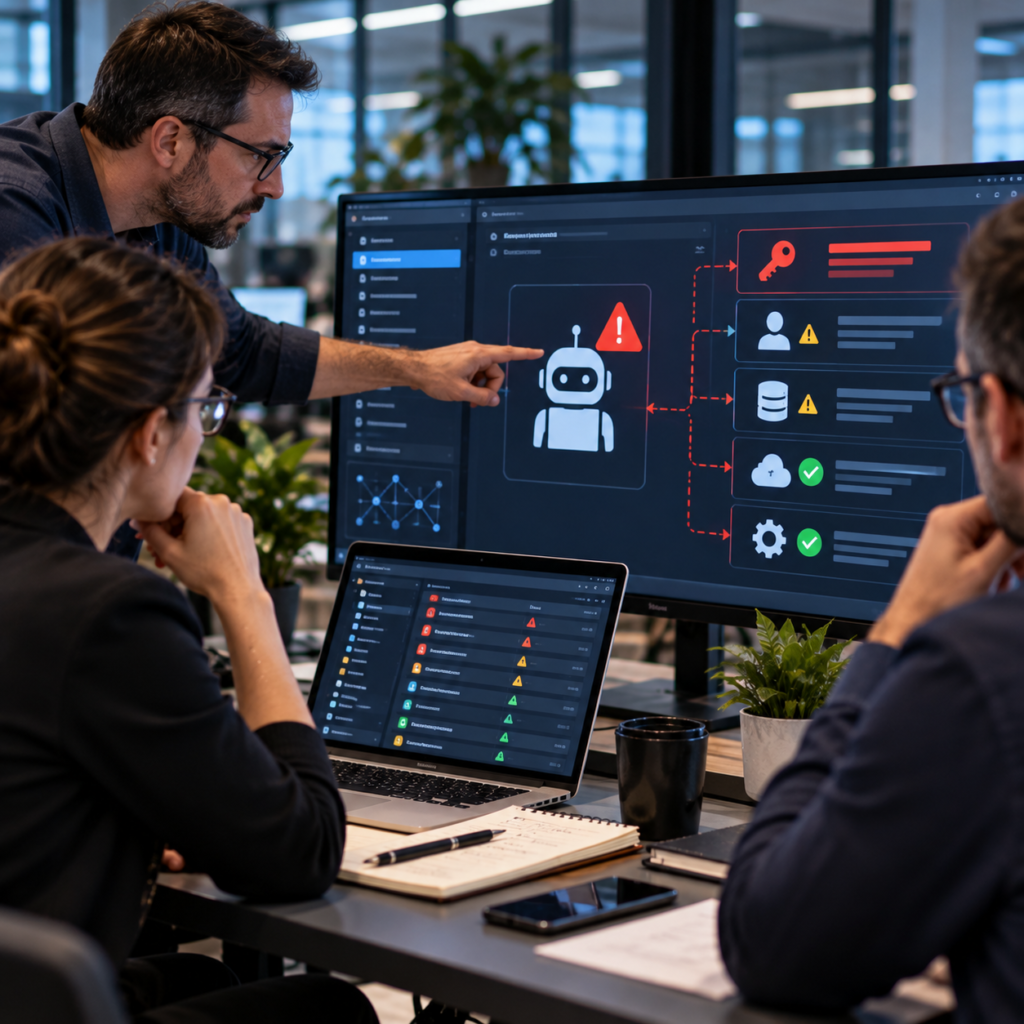
Hire a technology consultant when a defined business problem requires expertise or independent judgement your team does not have. External help can be useful for a migration, recurring service failures or a security assessment, but a consultant is not automatically cheaper than employing someone and cannot take over the owner’s responsibility for decisions.
This guide helps you choose the support model. Once that decision is made, use the consultant brief, quote comparison and handover checklist.
Describe the problem in business terms
Collect examples of the issue, its frequency, who is affected and the cost of leaving it unresolved. “Our reporting is slow” is less useful than “the monthly report takes two days of manual copying and has no reconciliation check.” Include what the team has already tried, the systems involved and any contractual deadline.
For a suspected active security incident, seek qualified incident-response support promptly rather than waiting for a general strategy project. Separate containment and recovery from a later improvement plan.
Match the need to a support model
| Need | Possible model | Question to resolve |
|---|---|---|
| A bounded migration or assessment | Project consultant | Who operates the result after delivery? |
| Recurring maintenance and incidents | Managed service or retained support | What response hours and escalation are included? |
| Daily decisions requiring business context | Internal role, with specialist support as needed | Is the workload continuous enough to justify the role? |
| Unclear cause of a recurring problem | Scoped diagnostic engagement | Will the diagnosis be independent of the proposed sale? |
Compare total effort, not just a day rate
Include the consultant’s work, staff time needed to provide information, subscriptions, implementation, training and ongoing support. A small quoted fee can become expensive if essential migration or recovery work is excluded.
Use an illustrative comparison: a ten-hour assessment plus six hours of internal preparation is a sixteen-hour commitment before implementation starts. Ask whether the resulting report contains enough detail for another competent supplier to act on it. Avoid treating an attractive hourly price as proof of value.
Look for relevant evidence of capability
Ask for comparable work, references you can verify and an explanation of how the consultant would investigate your specific problem. A certificate or vendor partnership can be relevant, but it does not establish experience with your workflow. Ask about subcontractors and whether product commissions influence the recommendation.
For cybersecurity staffing, NIST’s small-business guidance describes internal, external and mixed approaches and emphasises clear responsibilities. The choice depends on the organisation’s needs and resources.
Make a bounded first decision
If the cause or scope is uncertain, consider a limited diagnostic stage with a written question, deliverable, budget and review date. Decide on implementation after assessing that evidence. Keep an internal owner who can approve changes and explain the business constraints.
For capacity-related problems, the IT growth plan helps define the workload before a supplier proposes an upgrade. Find related guides in the Technology section.