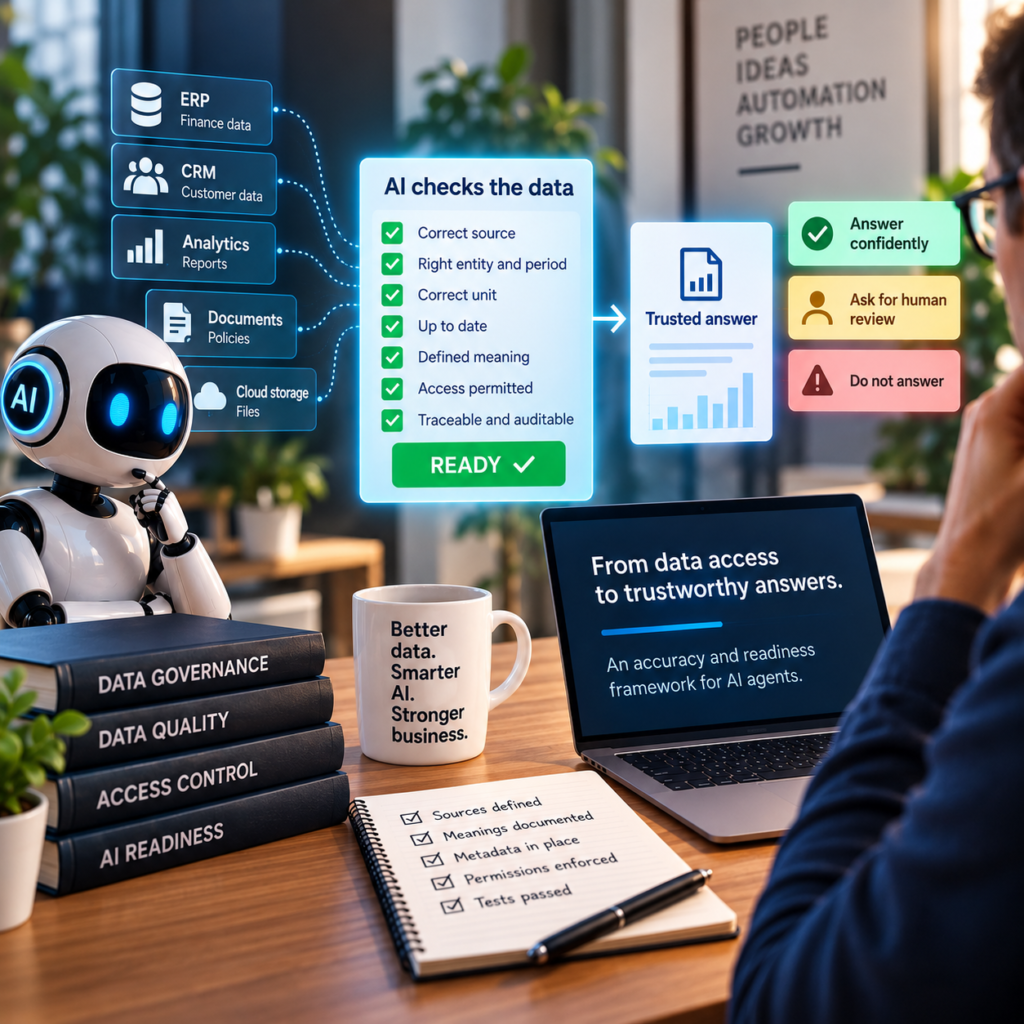
In today’s rapidly changing markets and unpredictable economic landscape, integrating artificial intelligence into financial planning is essential for entrepreneurs and small business owners. Increasingly, business leaders view AI as a practical solution for addressing modern challenges. By leveraging machine learning and AI technologies, companies can make smart, agile decisions that help them navigate economic uncertainty and seize new growth opportunities.
The Transformative Power of AI in Financial Management
The digital revolution has ushered in advanced tools that streamline business operations. One of the most significant trends is the integration of AI into financial planning. For many small and medium-sized enterprises, this shift represents more than just an upgrade—it is a complete transformation in financial strategy creation and execution.
Adopting AI-driven financial planning for business resilience means replacing outdated spreadsheets with advanced algorithms capable of continuous learning and real-time data analysis. This innovative system empowers companies to predict cash flows, optimize spending, and identify financial risks before they escalate. As a result, traditional financial decision-making is being revolutionized by advanced planning methods that ensure business continuity.
One of the most compelling benefits of this approach is AI’s ability to process vast amounts of data in seconds. With machine learning at the core of financial strategies for resilient growth, business owners gain real-time insights that enable proactive decision-making based on current market trends and predictive analytics—not just historical data. This shift from a reactive to a proactive financial management style is revolutionary, especially during volatile economic periods.
Navigating Financial Uncertainty with Machine Learning
The economic environment is constantly evolving, and uncertainty is an inherent part of doing business. Modern technology offers powerful tools to transform unpredictability into strategic advantage.
Machine learning enables dynamic financial models that adjust in real time to changing market conditions. This innovative approach allows businesses to simulate various economic scenarios and choose the best strategies with a level of precision that traditional methods cannot match. Whether forecasting revenue dips, revising budgets, or identifying cost-saving opportunities, the conversion of raw data into actionable insights proves to be a game-changer.
Entrepreneurs who implement these advanced tools report smoother fiscal operations and increased confidence in their long-term plans. Renowned publications like Forbes have showcased how businesses using AI-driven financial planning are better prepared to handle downturns and take advantage of emerging opportunities. Today, integrating AI into financial planning is not a luxury for large corporations—it is a critical strategy for any business aspiring to thrive in the 21st century.
Building a Resilient Financial Future Through Innovation
Integrating AI into financial planning may seem daunting at first, but its advantages extend far beyond automation. Advanced financial planning with AI redefines everyday tasks by incorporating intuitive algorithms that learn from both historical and real-time data. This strategy gives entrepreneurs a competitive edge and drives organizational resilience and success.
The key is to understand your business’s unique financial needs and customize AI tools accordingly. Start by automating routine accounting tasks while gradually incorporating predictive analytics to forecast market trends. This phased approach ensures a smooth transition, enabling your workforce to adapt to new digital tools without disrupting daily operations.
Cloud-based platforms with intuitive interfaces allow even non-technical team members to benefit from advanced digital financial tools. Numerous online resources and consulting services, such as those available on the business insights center at makebusiness.eu, offer step-by-step guides for your digital transformation. For more insights on integrating technology into your operations, explore our article on Digital Transformation in Finance. By embracing these innovations, your business remains agile and ready to adapt to future challenges.
This proactive approach enhances operational efficiency and strategic planning. AI-powered financial models can conduct complex scenario analyses to anticipate challenges like supply chain disruptions or market volatility, creating a robust foundation for both immediate responsiveness and long-term success.
Embracing Change for Sustainable Growth
Sustainable growth is closely tied to effective risk management. In an era where economic shifts and unforeseen challenges are common, even minor strategy adjustments can differentiate between survival and success. Integrating innovative technologies like AI and machine learning prepares businesses to swiftly adapt to change and lay the groundwork for long-term growth.
Successful entrepreneurs continuously refine their financial strategies. An AI-driven approach offers deep insights into cost control, revenue generation, and investment evaluation. This reliable framework streamlines expense management and optimizes workflows while positioning businesses to capitalize on emerging opportunities.
Implementing AI systems requires an investment not only in technology but also in workforce training. Whether through training sessions, workshops, or partnerships with tech experts, the commitment to digital transformation yields returns beyond dollars saved—it cultivates agility and preparedness throughout the organization.
By incorporating robust AI-enhanced financial planning techniques, you create an adaptive business environment. Although the future remains unpredictable, the right technological tools transform risks into growth opportunities. This modern approach keeps your business ahead of the curve, ensuring resilience against global market fluctuations.
Embracing AI-driven financial planning is a strategic investment in your business’s future. As you integrate these cutting-edge technologies, you enhance accuracy, optimize resource allocation, and build a more resilient foundation. In a world where every decision matters, using advanced financial planning with AI is not just an option—it is a strategic imperative for long-term success.
- Adopt AI-driven financial planning to predict and mitigate business risks effectively.
- Leverage machine learning for resilient growth and real-time forecasting.
- Implement advanced AI financial planning for agile, proactive decision-making.
- Invest in technology and workforce training for a sustainable, resilient business model.