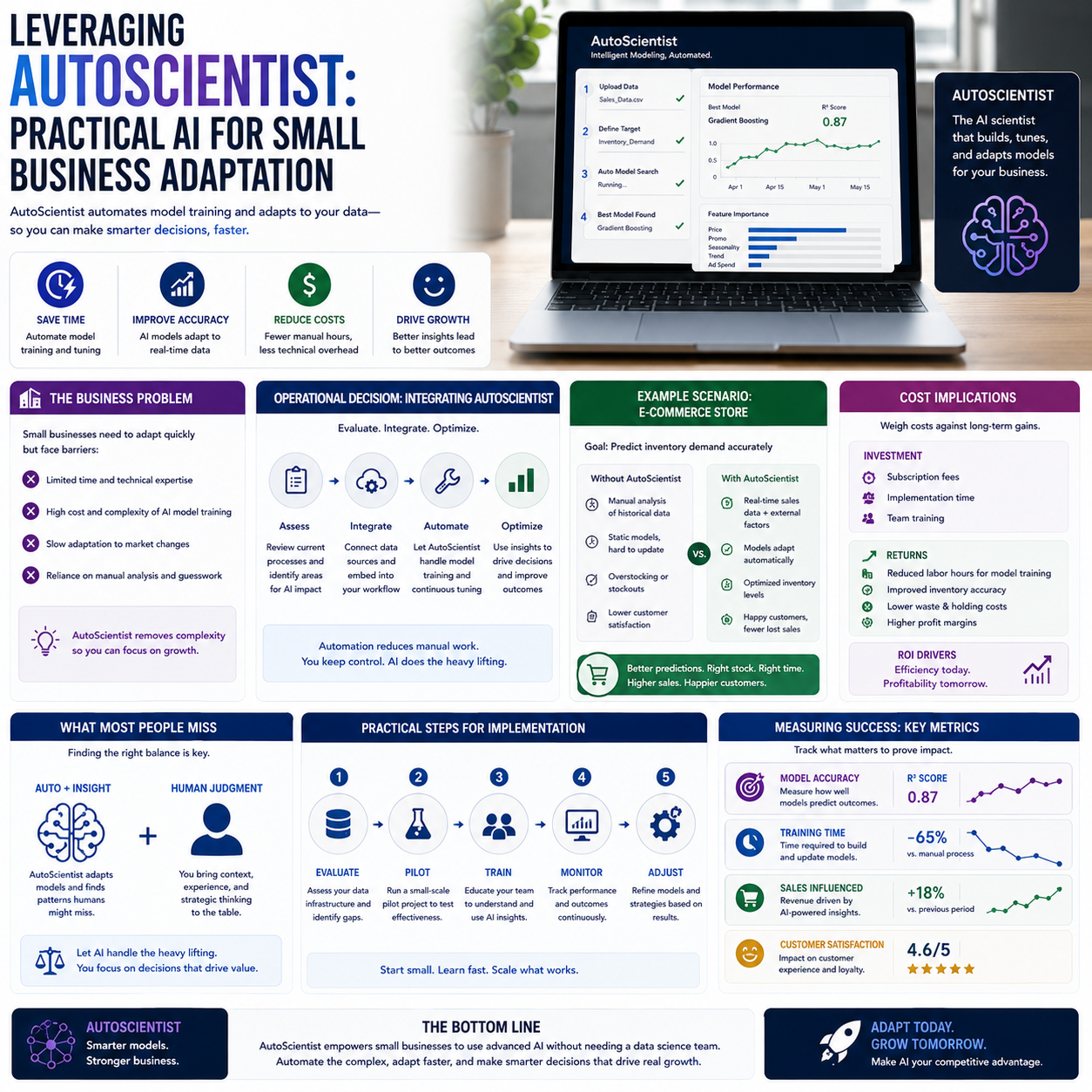
Adaption’s AutoScientist presents a radical shift in how small businesses can leverage AI for operational efficiency. This tool not only automates the crucial process of model training but also allows businesses to customize AI capabilities quickly. By understanding its implications, small business owners can strategically enhance their operational frameworks.
The Business Problem: Adaptability in a Rapidly Evolving Market
Small businesses often struggle with adapting to changing market demands due to limited resources. The traditional approach to AI model training generally requires significant time and expertise, which can be a barrier for smaller operations. With the introduction of AutoScientist, the need for extensive technical infrastructure diminishes, hence leveling the playing field.
Operational Decision: Integrating AutoScientist into Workflow
Integrating AutoScientist into existing workflows involves evaluating current capabilities and identifying areas for improvement. Small business owners must consider how automation can reduce manual input in data processing while ensuring the quality of outcomes.
Example Scenario
A small e-commerce store using AutoScientist can automate inventory prediction models. Instead of relying on historical trends manually, the tool allows the model to adapt based on real-time sales data and external factors like seasonality or promotions. This not only improves inventory management but also enhances customer satisfaction through timely fulfillment.
Cost Implications: Worth the Investment?
Adopting AutoScientist involves initial costs related to subscription and implementation. However, these should be weighed against the potential savings from reduced labor costs in model training and enhanced operational efficiency. Moreover, as businesses streamline their operations, they can also expect higher profit margins due to optimized inventory management and reduced wastage.
What Most People Miss: The Balance Between Human Insight and Automation
While automation is beneficial, small business owners must not overlook the importance of human insight. AutoScientist can dynamically adjust models, but strategic decisions still require a human touch. The balance here is crucial; leveraging the tool for efficiency while maintaining oversight for nuanced decision-making will yield the best business outcomes.
Practical Steps for Implementation
For small business owners looking to implement AutoScientist, consider the following steps:
- Evaluate your current data infrastructure and identify gaps.
- Initiate a pilot project to test the tool’s effectiveness on a smaller scale.
- Train your team on how to interpret the AI’s recommendations.
- Continuously monitor the results and adjust strategies accordingly.
Measuring Success: Metrics to Monitor
Post-implementation, it’s vital to track key performance indicators (KPIs) such as:
- Model accuracy rates
- Reduction in training time
- Sales influenced by AI-driven insights
- Customer satisfaction ratings
By staying on top of these metrics, small businesses can assess the tangible benefits of adopting AutoScientist and make informed decisions about future automation investments.


