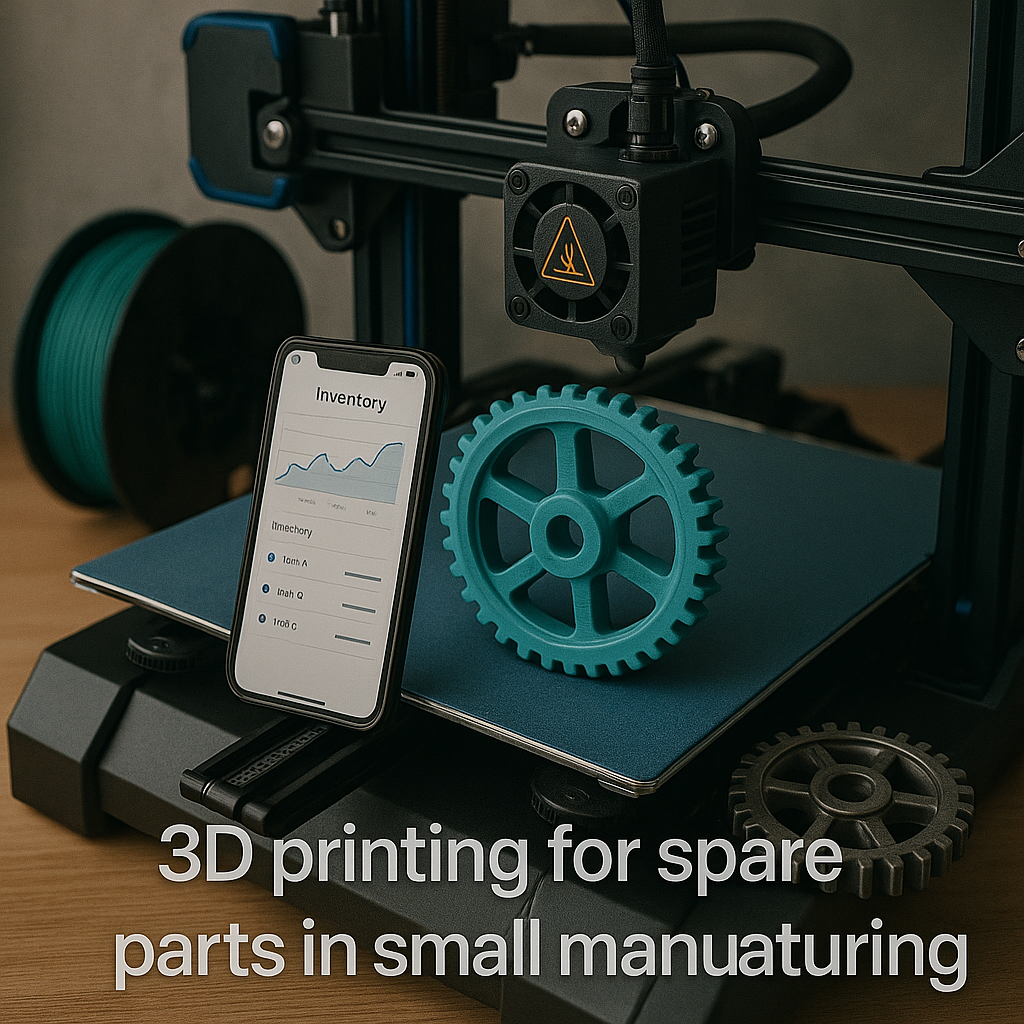
In today’s rapid, competitive market, small manufacturers and entrepreneurs are always looking for innovative methods to boost efficiency and reduce costs. One solution gaining momentum is 3D printing for spare parts. This advanced technology streamlines production by creating custom replacement parts exactly when needed, while reducing waste and eliminating long lead times.
Embracing a New Era of Production Efficiency
Traditional spare parts ordering often means long waits, high expenses, and compromises in quality when standard parts are used. Custom 3D printed spare parts offer a new level of agility to production lines. This innovative approach allows businesses to create components that meet precise specifications instead of relying on ill-fitting off-the-shelf parts.
By producing components that match exact requirements, manufacturers can minimize downtime, enhance performance, and extend the lifespan of critical machinery. On-demand production gives companies a competitive edge, enabling them to navigate supply chain disruptions and respond swiftly to unexpected challenges.
The Impact on Small-Scale Production
Small-scale production environments face unique challenges such as limited budgets, tight spaces, and the need for rapid turnaround times. On-demand 3D printing replacement parts ease these challenges by allowing manufacturers to produce parts as they need them, eliminating the need for large inventories or long waits from traditional suppliers.
This flexible production strategy not only increases operational efficiency but also encourages innovation. Quick prototyping enables rapid testing of new ideas without incurring high upfront costs. Continuous improvement becomes routine rather than occasional.
Entrepreneurs can leverage the versatility of 3D printing to replace failed components or experiment with design modifications that enhance functionality. This flexibility is a game-changer for cost management and operational adaptability.
Cutting Costs Without Compromising Quality
One of the most compelling benefits of 3D printing is its cost-effectiveness. Traditional spare parts supply chains often drive up costs due to expensive materials, production delays, and inventory overheads. Transitioning to cost-effective 3D printing solutions can dramatically reduce these expenses.
By eliminating excess inventory and leveraging affordable materials, businesses enjoy lower production costs and more competitive pricing. This affordability, paired with consistent quality, ensures that spare parts are produced to the highest standards without a premium price tag.
Innovating Supply Chain and Maintenance Strategies
Integrating 3D printing into manufacturing processes transforms traditional supply chains. With on-demand 3D printing replacement parts, maintenance schedules and downtime are managed more efficiently. Instead of waiting for parts to arrive, manufacturers can print components in-house or through local providers, ensuring faster repairs and minimal operational disruption.
This upgraded supply chain enhances a company’s ability to resolve unexpected issues quickly. If a critical machine component fails, waiting for a rare spare can lead to significant production losses. With 3D printing, the necessary part is produced rapidly and accurately, keeping operations on track.
Moreover, the customization offered by 3D printing is invaluable for replacing obsolete or unique parts. Small businesses, often using out-of-production machinery, can now access digital designs to create exact or improved replicas – a practical, cost-effective solution.
Practical Steps to Harness 3D Printing Capabilities
Start by assessing your current maintenance and production demands. Identify parts that frequently wear out and evaluate how 3D printing can address these needs. Working with experts in custom 3D printed spare parts will help you develop a smooth transition plan.
Investing in high-quality 3D printing technology or partnering with reputable providers is essential to achieving reliable, precise components. Business owners seeking further insights on streamlining operations and embracing advanced production methods can explore resources like Make Business’s insights and tools.
Stay informed on industry trends and success stories by following respected publications such as Forbes and Entrepreneur. Their case studies and expert advice provide valuable, real-world examples of how 3D printing has transformed production processes.
Remember, transitioning to a more adaptable, cost-effective manufacturing process is a gradual journey. Each 3D printed part brings you closer to a more resilient, competitive business, making continuous innovation a part of your daily operations.
For entrepreneurs and small business owners, rethinking traditional production models through 3D printing for spare parts offers tangible cost savings and unprecedented flexibility. Whether you’re repairing aging equipment or pioneering new prototypes, this technology opens up a world of possibilities.
Looking ahead, the integration of 3D printing could usher in an era where every component is crafted with precision and care. Companies that adopt on-demand 3D printed replacement parts will be ready to meet market demands, respond swiftly to change, and maintain a lasting competitive edge.
In summary, the transformative potential of 3D printing in manufacturing is reshaping maintenance and production for small manufacturers. With benefits such as customization, cost reduction, and rapid turnaround times, 3D printing is paving the way for more agile, responsive, and future-ready businesses.
- Reducing downtime with precisely tailored replacement parts.
- Enabling small manufacturers to quickly adapt to operational challenges with on-demand 3D printing.
- Lowering overall costs by minimizing inventory and production expenses.
- Enhancing supply chain efficiency and maintenance strategies through rapid 3D printed components.