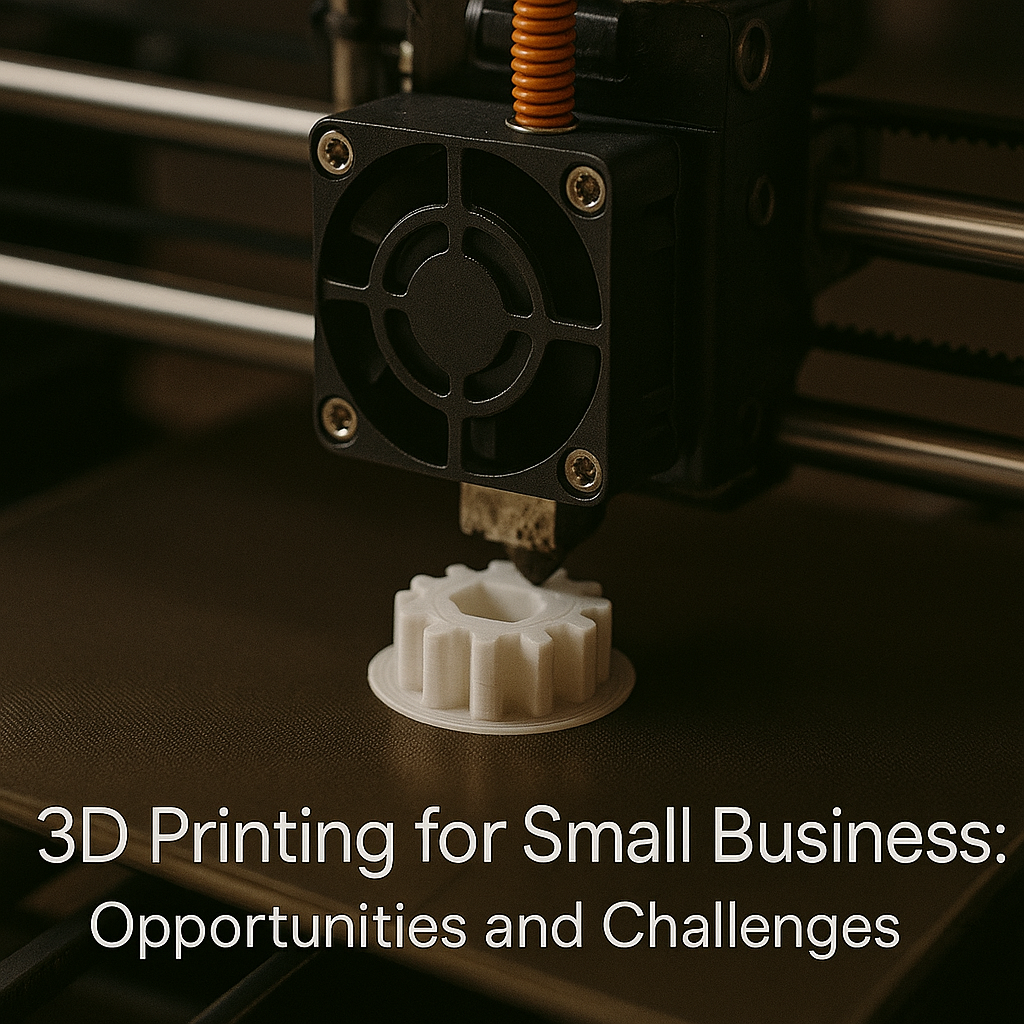
As small businesses search for innovative ways to streamline production and create unique products, 3D printing emerges as a game-changing technology. Entrepreneurs are rapidly adopting this dynamic process to transform manufacturing and design. By leveraging affordable 3D printing solutions, small businesses are not only driving creativity but also reducing costs and accelerating production timelines. This article explores the opportunities and strategies for overcoming challenges when integrating 3D printing into small business operations.
The Transformative Impact of 3D Printing on Small Enterprises
Integrating new technology can be daunting, but 3D printing offers distinct advantages tailored for small business needs. On-demand production allows businesses to create prototypes, parts, or finished products without committing to large-scale manufacturing facilities. This flexibility enables companies to quickly adapt to market trends and respond to customer feedback.
A standout benefit of modern 3D printing is effortless product customization. In today’s market, personalized products are in high demand. Small business owners can now offer tailor-made solutions—from customized promotional items and bespoke jewelry to specialized machine parts—allowing for a level of differentiation once considered unattainable.
Additionally, the low cost of many 3D printing systems makes them accessible to smaller operations. Investing in affordable 3D printing solutions can significantly reduce overhead costs tied to traditional manufacturing methods, such as tooling and warehousing expenses.
Leveraging 3D Printing Technology to Drive Business Innovation
The rapid growth of 3D printing in small business operations highlights its role as a catalyst for innovation. Rather than seeing 3D printing as just another production method, entrepreneurs can view it as a powerful tool to unlock creative potential. Complex designs that were previously impossible or too expensive to produce are now within reach, enabling product lines that meet evolving consumer demands.
Rapid prototyping is one area where 3D printing truly shines. It allows entrepreneurs to test product ideas and gather feedback without the delays typical of traditional manufacturing. This agility not only speeds up time-to-market but also helps refine designs based on real-world insights.
Moreover, 3D printing supports streamlined inventory management. Instead of maintaining large stocks of parts and products, businesses can print items on-demand, reducing storage costs and waste. This efficient approach also appeals to eco-conscious customers.
Businesses that integrate 3D printing have reported notable improvements in product quality and production speed. A Forbes article highlights several case studies where agile product development has driven tangible benefits for small enterprises.
Navigating the Challenges of Adopting 3D Printing in Small Businesses
Despite its many benefits, small business owners must also address potential hurdles when adopting 3D printing. A common concern involves maximizing the technology’s benefits without incurring unforeseen costs. Striking the right balance between investment and return is crucial.
Selecting the right 3D printing technology is a primary challenge. With numerous options available, it is essential to assess your business’s specific requirements. Some printers excel in rapid prototyping, while others are ideal for producing durable final products. For those seeking affordable 3D printing solutions, researching technical specifications and long-term maintenance costs is critical.
Another challenge is acquiring the technical skills necessary to operate and maintain 3D printing equipment. While many modern systems feature user-friendly interfaces, there is still a learning curve for setup and troubleshooting. Investing in proper training and partnering with experts can ease these challenges. Online communities and local workshops—often organized by institutions like Make Business—offer valuable technical support and networking opportunities.
Material selection also plays a significant role in the overall quality of the final product. Deciding whether to use materials that are durable, flexible, or eco-friendly can influence both design and performance. Collaborating with reputable suppliers and conducting thorough research can help mitigate costly trial-and-error processes.
Finally, ensuring that digital designs are accurately translated by the printer is vital for consistent quality. Issues with print resolution, tolerances, or design errors are common, but can be overcome with rigorous quality control and testing procedures.
Strategies for Successful Integration of 3D Printing
Entrepreneurs looking to integrate 3D printing should start by evaluating existing business processes to identify where the technology can add the most value. Whether it’s for rapid prototyping, product customization, or on-demand manufacturing, identifying these opportunities can streamline operations and boost customer satisfaction.
Budgeting is another crucial step. Although initial costs may seem steep, many affordable 3D printing solutions offer competitive pricing without sacrificing performance. Weighing the upfront investment against long-term savings from reduced waste and improved production efficiency is key. The digital workflow provided by 3D printing can transform traditional manufacturing into a more agile, adaptable operation.
Networking with industry peers and suppliers can also offer insights that go beyond conventional market research. Professional forums, trade shows, and webinars are excellent venues to learn about the latest advances and best practices. Conversations with other entrepreneurs experienced in 3D printing can provide practical advice and even potential partnership opportunities.
Staying updated with technological advancements ensures that your business remains competitive. Regular equipment upgrades, software updates, and periodic training sessions for staff can help maintain this edge. Embracing continuous improvement is crucial for successfully integrating any new technology.
As small businesses explore 3D printing’s vast potential, balancing innovation with pragmatic cost management is essential. By aligning initial investments with ongoing learning and process optimization, companies can lead their industries with high-quality, customized products that meet diverse market demands.
With abundant resources, expert communities, and increasingly affordable technology, there has never been a better time for small business owners to consider how 3D printing can revolutionize their operations. Embracing both creative and operational benefits, entrepreneurs are well-positioned to drive growth and innovation.
Small businesses that proactively address the challenges of 3D printing stand to gain the most. Strategic planning, leveraging affordable solutions, and understanding the nuances of the technology can pave the way for sustained success in today’s fast-evolving market.
- 3D printing offers on-demand production and exceptional product customization.
- Affordable 3D printing solutions help reduce manufacturing costs and streamline operations.
- Careful evaluation of technology options and staff training are key to overcoming challenges.
- Networking, continuous learning, and strategic planning are essential for leveraging 3D printing successfully.


