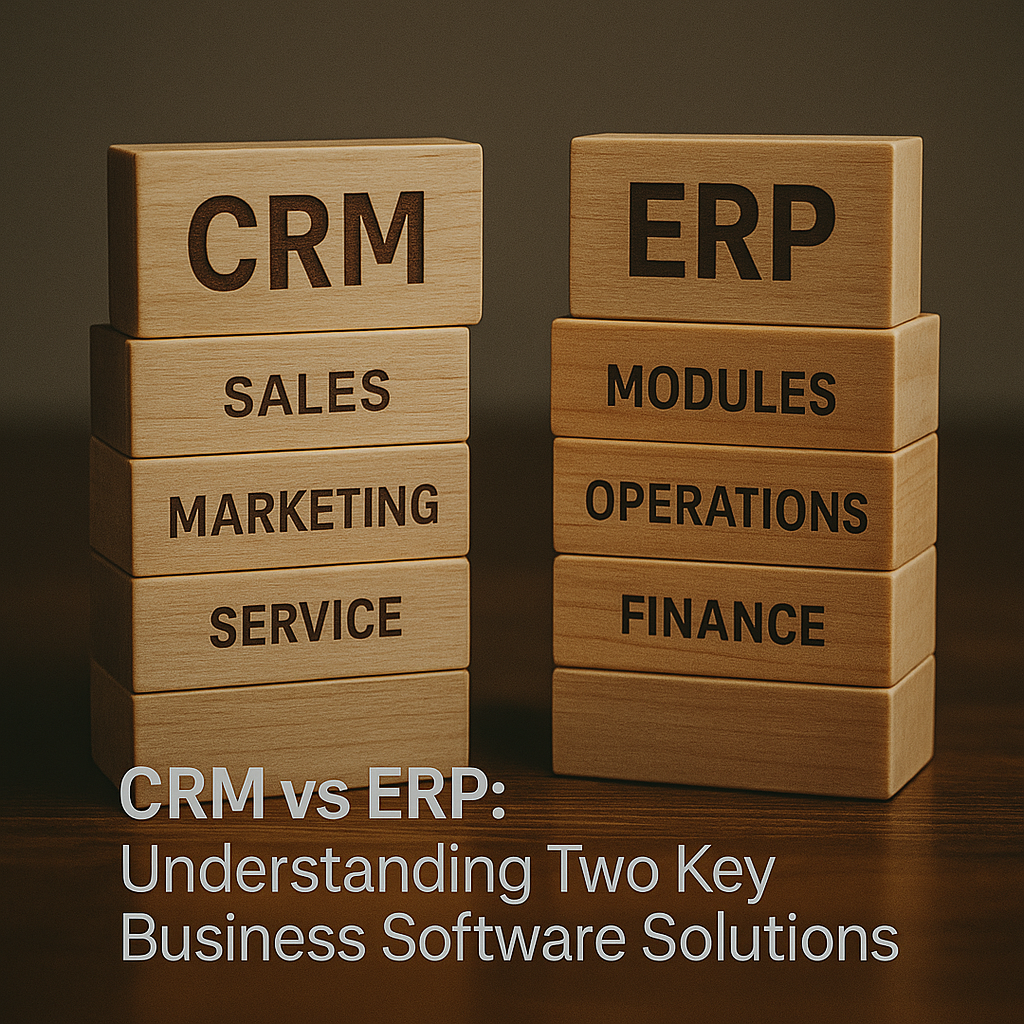
Today’s business owners recognize technology not as a mere support tool but as a strategic asset that drives growth and streamlines operations. Choosing between a Customer Relationship Management (CRM) system and an Enterprise Resource Planning (ERP) solution can be challenging, as each offers unique benefits. In this article, we explain how these systems work, the value they bring, and how integrating them can propel your business forward.
A Closer Look at Business Software Solutions
For entrepreneurs and small business owners, effective management of customer interactions and operational processes is crucial. CRM systems are designed to manage customer data, track interactions, and nurture relationships. They simplify marketing, automate follow-ups, and consolidate sales intelligence. In contrast, ERP solutions integrate functions such as finance, human resources, inventory, and supply chain management into one cohesive system.
In today’s competitive landscape, timely and accurate insights into customer behavior and internal operations are invaluable. Whether your focus is enhancing customer engagement or optimizing back-end operations, knowing the differences between CRM and ERP systems is essential for creating a more efficient business model.
What a CRM System Brings to Your Business
A CRM system is built around the idea of fostering strong customer relationships. For entrepreneurs focused on sales and customer retention, the advantages of a CRM are clear. It serves as a centralized repository for customer data, including communication history, service requests, and purchase patterns—critical information for tailoring marketing efforts and delivering personalized service.
For example, segmenting customers based on purchasing behavior enables targeted promotions and more effective campaigns. Built-in analytics and reporting features help monitor marketing performance and track emerging trends. Such insights not only refine your strategies but also build lasting customer loyalty. In the modern digital marketplace, harnessing this data can provide a significant competitive edge. Additionally, integrating sales strategies with technology can optimize conversions, as illustrated in How to Build a Sales Funnel That Converts Visitors into Customers.
Moreover, a CRM automates routine tasks like follow-up emails and reminder scheduling, reducing human error and ensuring timely customer communications. With many CRM systems now cloud-based, you can access essential data from virtually anywhere—whether in the office or on the go.
How ERP Solutions Streamline Business Operations
ERP software integrates all aspects of your business into one comprehensive system. From finance and human resources to supply chain management, ERP solutions provide a holistic overview of your organization. For small business owners, having all this data in one place minimizes redundancies and eliminates the complexities of managing multiple software systems.
The strength of an ERP system lies in its centralized database, which enhances financial reporting, inventory management, and overall operational efficiency. Instead of reconciling data manually across various platforms, an ERP system offers real-time information for seamless strategic planning.
Many ERP solutions are also customizable, allowing you to select modules most relevant to your operations. For instance, a small retailer may benefit from focused inventory and sales modules, while a service-based business may prioritize customer support and finance. As highlighted by Forbes, companies that invest in integrated ERP systems often experience improved operational efficiency and significant cost savings.
Bridging the Gap: Integrating CRM and ERP Systems
While CRM and ERP systems serve distinct purposes, their integration creates a powerful synergy. Linking these platforms provides a complete 360-degree view of both customer interactions and internal operations. A CRM system supplies detailed customer insights, while an ERP system ensures robust operational support. Together, they enhance efficiency and empower more strategic decision-making.
For example, integration enables your sales team to access both customer preferences and current inventory levels. This synergy leads to accurate order processing, timely deliveries, and ultimately, higher customer satisfaction. Additionally, synchronized data improves inventory forecasting, ensuring that your business operations align with market demands.
When planning an integration, consider your business size and operational complexity. Many solutions are designed specifically for small and medium-sized businesses, offering scalability and ease of use without overwhelming overhead. Affordable, scalable options are available on platforms like Make Business, which offers insights and tools to help you find the ideal software solution.
Consulting with a technology expert can further refine your integration strategy. A tailored plan ensures that your investment not only meets current needs but also scales with your growing business. Establishing an adaptable infrastructure for both customer relationship management and overall operational efficiency is key to long-term success.
The Future of CRM and ERP Systems in Small Businesses
Technological advancements are increasingly blurring the lines between CRM and ERP systems. For instance, if you want to further automate and enhance your campaigns, consider exploring How to Use AI to Automate Your Marketing Campaigns. Cloud-based, mobile-friendly solutions now offer greater flexibility and convenience, enabling remote access to business data—a crucial advantage for entrepreneurs who are often on the move.
Integrating artificial intelligence and machine learning further enhances these systems. For CRMs, predictive analytics and AI-driven insights improve sales forecasting and personalize customer interactions. For ERPs, these technologies optimize inventory management and maintenance schedules, keeping your operations efficient and competitive.
Additionally, many providers now support third-party integrations, ensuring seamless data synchronization with existing marketing, customer service, or e-commerce platforms. This comprehensive connectivity minimizes data silos and streamlines workflows, benefiting every department with real-time, accurate information.
Ultimately, the choice between CRM and ERP isn’t about one over the other; it’s about leveraging the strengths of both to create a robust business ecosystem. Entrepreneurs and small business leaders who understand these nuances will be better equipped to drive growth and operational success.
In today’s high-demand marketplace, the right software solutions are essential for meeting customer expectations and ensuring efficient operations. Whether you focus on enhancing customer interactions with a dedicated CRM or streamlining your entire operation with an ERP system, aligning technology with your business strategy is critical. Consider the scalability, integration capabilities, and user-friendliness of each system to secure long-term success.
By integrating these technological solutions, you not only boost productivity but also establish a cohesive framework for strategic decision-making. When every element of your business—communication, operations, and customer relationships—is connected, the potential for growth is limitless. Embrace these solutions to simplify complex processes and secure a competitive edge in your industry.
Ultimately, effective technology investments must align with your specific business goals. Weighing the benefits of CRM and ERP systems from a holistic perspective helps create an environment where technology simplifies operations and clarifies both customer and internal processes. Embrace these strategies to free up valuable time, streamline tasks, and drive sustainable business growth.
- CRM systems enhance customer data management and boost sales and marketing effectiveness.
- ERP solutions integrate key business functions for overall operational efficiency.
- Integrating CRM and ERP systems offers a comprehensive 360-degree view of your business.
- Modern advancements such as cloud technology and AI are expanding the capabilities of both systems.