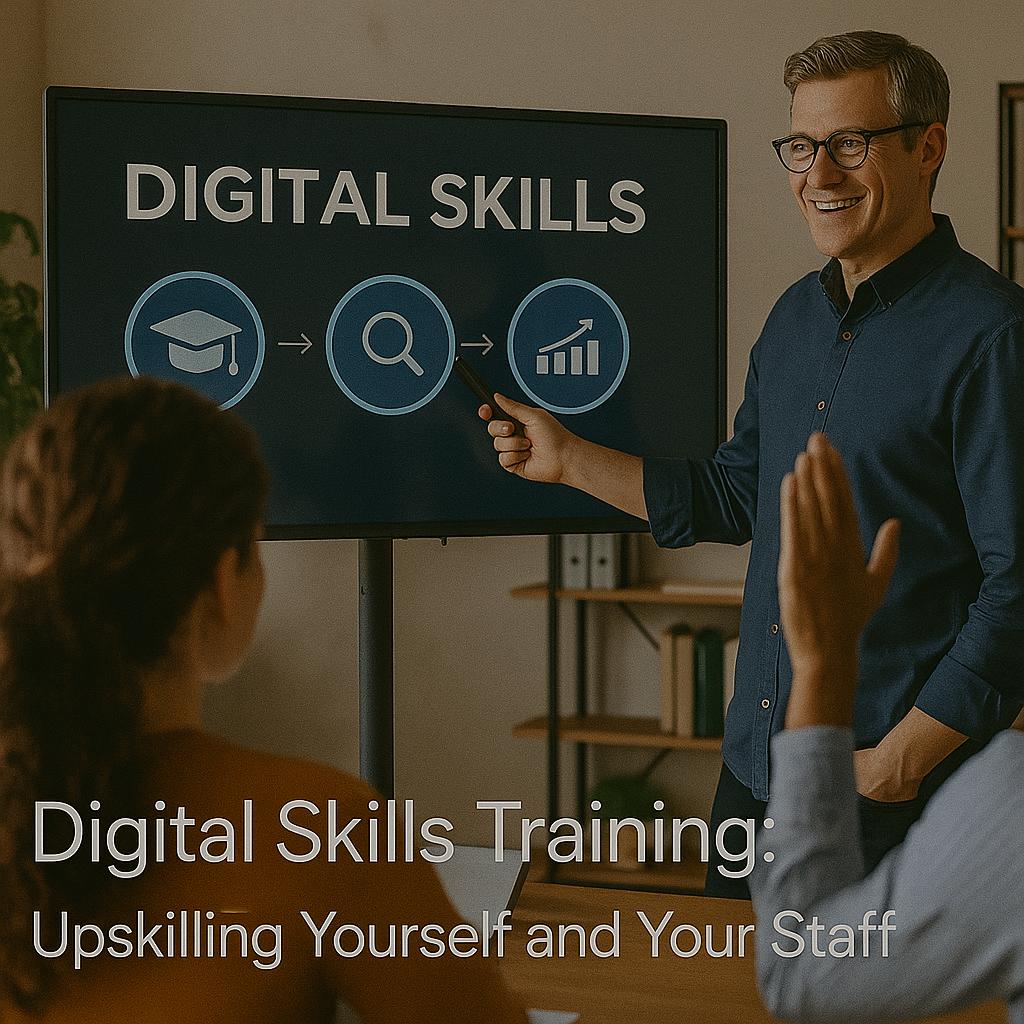
In today’s fast-paced digital world, staying competitive means continuously upgrading your skills and investing in your team. Whether you’re a solo entrepreneur or leading a small team, digital skills training unlocks new opportunities and helps you navigate evolving market demands. With a wealth of online platforms and advanced tools available, finding the right training has never been easier. By investing in comprehensive digital skills training for employees, you create a growth-driven environment that positions your business for long-term success.
Empower Your Business with Digital Upskilling
Digital skills are essential to a thriving business strategy. With access to flexible online upskilling courses for professionals, business leaders can select training options that fit their schedules and meet their team’s unique needs. Investing in digital training enhances productivity and drives innovation across your organization.
The benefits extend beyond technical expertise. Improved communication, better problem-solving, and increased adaptability contribute to enhanced workflow and strategic performance. Whether mastering digital marketing, project management software, or a new CRM system, these skills help your team adapt quickly to market trends and customer needs.
Small businesses and startups increasingly embrace digital training programs to advance careers. Investing in staff development signals that you value each employee, fostering a culture of growth and commitment.
Effective Strategies for Implementing Training Programs
Integrating digital skills training into your business strategy can be simple and tailored to your organization’s needs. Consider these strategies to maximize your learning opportunities:
1. Identify Key Areas for Growth
Begin by evaluating your current digital landscape. Identify gaps that, if addressed, could boost revenue or streamline operations. Whether you need to improve data analytics, social media management, or basic IT skills, understanding these gaps helps you select the right courses. Comprehensive digital skills training for employees equips your team to build a more robust digital strategy.
2. Choose Flexible Training Options
Modern digital platforms offer flexible learning solutions that fit busy schedules. Online upskilling courses for professionals provide live sessions, video tutorials, and interactive workshops, allowing employees to learn on their own time without disrupting daily operations. This flexibility ensures that every staff member can upgrade their skills effectively.
3. Blend Learning with Real-World Projects
Apply new skills immediately by incorporating real-life projects into your training routine. For instance, after completing an online digital marketing course, your team can launch a small campaign to test and refine their new techniques. This hands-on approach delivers immediate feedback and enhances the overall value of your training program.
By fostering a culture of continuous improvement, you build a team that is prepared not only for current challenges but also for future innovation. For additional tips on building a learning culture, visit Make Business.
Boost Career Advancement with Digital Training
Digital skills training programs for career advancement benefit both employers and employees. Business owners prioritize these programs to improve operational efficiency, while employees see them as a direct investment in their career growth. Upskilling can lead to promotions, salary increases, and broader responsibilities—fostering a win-win environment.
Many professionals turn to online digital upskilling courses to stay ahead of industry trends. Learning about emerging topics like artificial intelligence, machine learning, and advanced cybersecurity can significantly enhance your team’s innovative capabilities. Recent research by Entrepreneur shows that companies investing in employee development experience improved performance and higher retention rates.
Supporting your team’s professional growth creates a loyal and motivated workforce, reducing turnover and strengthening your company’s identity. Well-trained teams are also more agile in adapting to new technologies and market shifts—a crucial advantage for small businesses competing against larger organizations.
Plan Your Long-Term Digital Transformation
Short-term wins are valuable, but a long-term strategy ensures your digital skills investment delivers lasting returns. Map out your company’s future goals and determine how digital expertise aligns with that vision. Use industry benchmarks and trends to anticipate future digital demands and tailor your training plans accordingly.
Adopting practices such as cloud computing, automating routine tasks, and analyzing customer data are essential for ongoing success. Regular training sessions, feedback loops, and updates will keep your business agile and competitive. Quick adaptation to training insights transforms challenges into growth opportunities.
Digital transformation is not just about technology—it’s about cultivating a culture of continuous learning and collaboration. Companies that embrace this mindset are better prepared to navigate rapid technological changes and market shifts.
For entrepreneurs and small business owners, the journey to digital excellence starts with smart investments in talent and technology. Prioritizing comprehensive digital skills training and supporting continuous professional development creates a winning combination for sustained growth, innovation, and resilience.
Addressing digital talent gaps today paves the way for future success. Whether you opt for intensive career advancement programs or flexible online upskilling courses, every step toward digital transformation enhances overall competence and competitive advantage.
In a constantly evolving digital landscape, staying proactive in digital education is crucial. By adapting to new tools, trends, and technologies, you empower your business and your team to meet tomorrow’s challenges head-on.
- Embrace digital skills training to elevate individual and business performance.
- Select flexible, engaging online upskilling courses designed for professionals.
- Invest in comprehensive digital training for employees to drive innovation and career growth.
- Develop a long-term strategy that aligns digital transformation with your business objectives.


