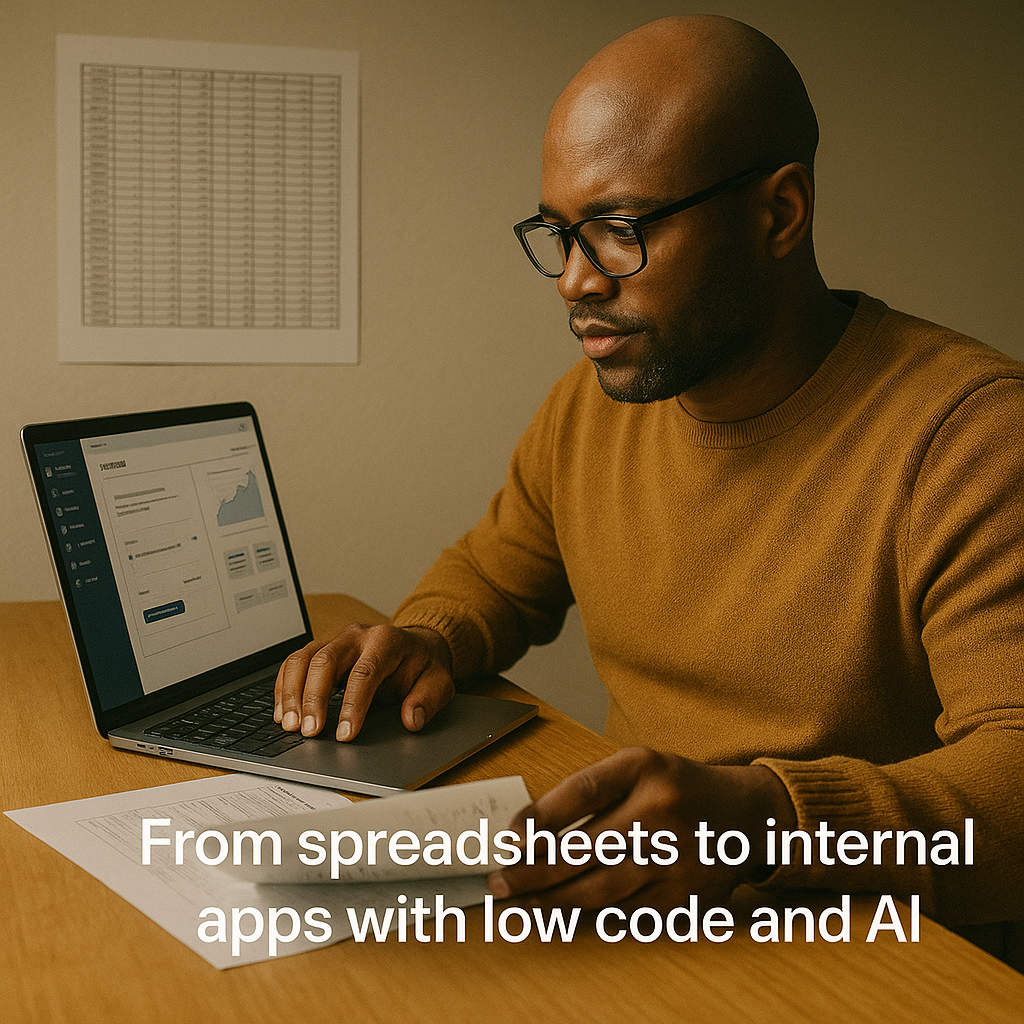
Welcome to the digital era, where outdated spreadsheets are quickly being replaced by automated internal apps powered by low-code and AI. Entrepreneurs and small business owners have long depended on spreadsheets for managing data, but as organizations grow, these tools can become inefficient. Discover how integrating low-code platforms with AI is revolutionizing operations, streamlining workflows, and driving sustainable growth.
Embrace the Benefits of Low-Code and AI
Low-code platforms significantly lower the barrier to creating custom internal applications. Instead of spending countless hours on hand-coding, business owners can use these tools to develop tailored applications swiftly and efficiently. When enhanced with AI, these platforms usher in a new era of digital innovation.
The primary advantages of accelerating internal app development with low-code and AI are speed and intelligence. Intuitive drag-and-drop interfaces, reusable components, and pre-built templates allow for rapid design, testing, and deployment. Meanwhile, AI automates routine tasks, analyzes real-time data, and predicts emerging business trends. This powerful combination simplifies everything from customer relationship management to inventory monitoring, eliminating the complexities of traditional coding.
Migrate from Spreadsheets to Automated Solutions
Although spreadsheets remain a staple for many small businesses, their limitations become evident as operations expand. Spreadsheets can be error-prone, hard to update, and challenging to scale in real time. Fortunately, low-code solutions make it easy to migrate spreadsheets into automated internal apps. This transition involves analyzing current workflows, identifying repetitive tasks, and designing apps that automate data entry, error checking, and reporting.
Designed for non-technical users, modern low-code platforms guide you through transferring data and logic while ensuring high standards of security and performance. By moving away from manual spreadsheets, businesses can significantly reduce errors and allocate time to strategic initiatives.
Many business owners have already embraced the switch, reporting improved productivity and faster, more informed decision-making thanks to real-time, accurate data. This transformation not only reduces operational inefficiencies but also enhances overall business agility.
Empower Business Processes with AI-Driven Internal Apps
AI-driven low-code internal applications are transforming how organizations manage and optimize their business processes. In fact, modern enterprises are exploring how AI-driven internal apps can automate repetitive tasks and deliver actionable insights from historical and real-time data. For instance, AI can analyze transaction patterns to forecast inventory needs, turning standard internal apps into indispensable business tools.
These intelligent systems also enable personalized experiences for teams. Whether it’s automating workflow management or updating internal dashboards, low-code environments offer the flexibility to adapt and enhance applications as your needs evolve. Moreover, AI reveals hidden patterns in data, offering predictive analytics that assist with risk management and market forecasting.
Empowering business processes with AI and low-code isn’t solely about automation—it’s about transforming traditional systems into dynamic, continuously improving platforms. With AI-powered insights and adaptable development tools, businesses of all sizes can innovate without relying heavily on expensive IT resources.
Planning and Execution: Strategies for Success
Transitioning from basic spreadsheets to sophisticated internal apps requires careful planning. Begin with a comprehensive audit of your current processes to identify repetitive, time-consuming, or error-prone tasks that could benefit from automation. Rapid prototyping with low-code and AI allows you to test functionality in real-world environments and refine your applications with continuous feedback.
Setting measurable goals is critical. Whether your focus is on reducing operational costs, speeding up data processing, or boosting customer satisfaction, clearly defined benchmarks will help track your progress. Choose a low-code platform that offers flexibility and scalability, ensuring your internal apps evolve alongside your business needs. For additional insights on digital transformation strategies, explore articles on Make Business.
Industry leaders like Forbes report that companies leveraging low-code and AI experience rapid improvements in process efficiency and cost savings, further validating this forward-thinking approach for digital transformation across organizations.
Real-World Impact and Future Prospects
Small and medium enterprises worldwide have transformed their operations by adopting low-code platforms integrated with AI. These businesses enjoy streamlined workflows, reduced error rates, and improved team collaboration. By automating routine tasks, employees can focus on innovation and strategic planning, ultimately fostering a culture of creativity and adaptability.
Looking to the future, advancements in AI will further enhance low-code development platforms. Upcoming features, such as natural language processing, advanced analytics, and predictive maintenance, will continue to bridge the gap between business needs and technical solutions. As these technologies evolve, entrepreneurs will have even more opportunities to implement automated internal solutions and maintain a competitive edge in the digital marketplace.
The journey from spreadsheets to internal applications is more than a technology upgrade—it represents a strategic shift in mindset. By embracing low-code and AI, business owners set the stage for ongoing innovation and success in an ever-changing digital landscape.
- Low-code platforms enable the rapid development of custom internal apps, reducing both time and cost.
- Migrating from spreadsheets to automated internal apps improves data reliability and operational efficiency.
- Integrating AI with low-code applications offers predictive insights and enhanced automation.
- Strategic planning and ongoing feedback are essential for a successful digital transformation.


