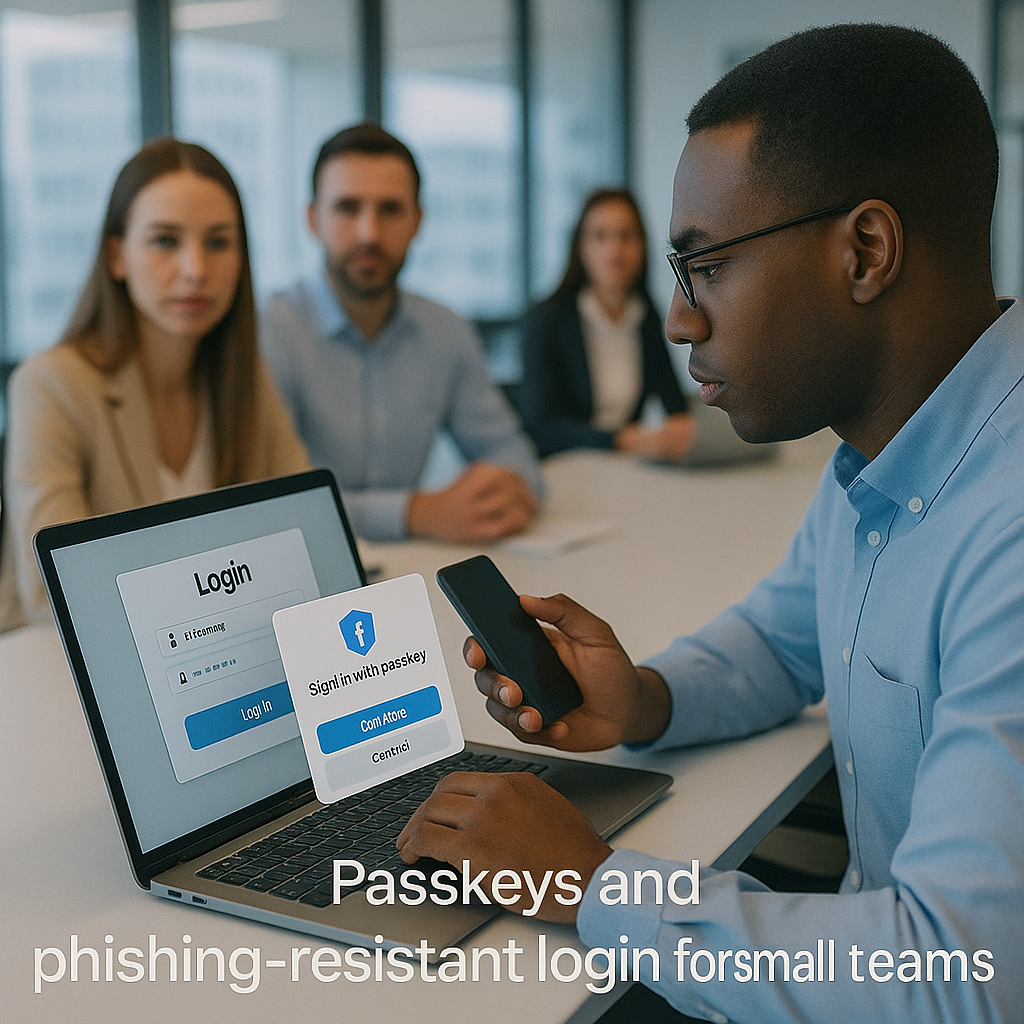
Entrepreneurs and small business owners understand that protecting sensitive information is crucial for building trust and ensuring business continuity. Traditionally, advanced cybersecurity measures were reserved for large corporations, but recent breakthroughs in digital authentication mean that smaller teams can now enjoy enterprise-level security. One such breakthrough is the use of passkeys for phishing-resistant logins. In this article, we explore how secure passkey authentication works for small teams, why it is essential for modern businesses, and its real impact on enhancing team security.
Why Modern Authentication Methods Matter
In today’s fast-evolving digital landscape, traditional password-based logins are no longer sufficient to combat modern cyber threats. Passwords can be easily shared, stolen, or guessed, leaving businesses vulnerable to phishing attacks. Modern authentication methods backed by strong cryptographic techniques offer a far more secure alternative. For small businesses managing multiple roles with limited IT support, switching to secure passkey authentication reduces the hassle of frequent password resets and lowers the risk of credential theft.
Unlike conventional passwords, passkeys are extremely challenging for cybercriminals to compromise. They leverage a twofold advantage: utilizing a device’s built-in security features—such as biometric scanners or hardware encryption modules—and eliminating the need to remember complex, frequently changing passwords. With robust security measures in place, passkeys act as a powerful deterrent to phishing attempts.
For small teams, every member’s productivity is vital. Reducing the risk of phishing not only safeguards sensitive client and financial data but also minimizes downtime and service disruptions, directly boosting operational efficiency.
How Passkey Technology Works for Small Teams
Passkey technology employs sophisticated encryption techniques that require a unique digital handshake between a user’s device and the business’s server during every authentication instance. This dynamic process creates a complex challenge that hackers cannot easily replicate. In practice, secure passkey authentication means that each team member’s device generates a unique cryptographic key that stays on the device. Even if an attacker intercepts the data, the encryption renders it useless.
This approach is especially beneficial for small business operations. Not only does it streamline the user experience, but it also reduces the administrative burden typically associated with password resets or recovery. Passkey technology integrates smoothly into modern workflows without necessitating costly hardware investments or major IT overhauls.
Additionally, passkeys are designed to evolve with emerging cybersecurity threats. As hackers develop new tactics, using a robust authentication system that prevents credential reuse and interception will be a critical asset for maintaining long-term team security.
Implementing Phishing-Resistant Passkey Solutions
If you are an entrepreneur looking to upgrade your login systems, the first step is to assess your current authentication infrastructure. Determine whether your existing systems can integrate passkey technology or if you need to upgrade or switch service providers. Many modern authentication platforms offer solutions tailored specifically for small teams, ensuring that you do not have to invest in a full-scale overhaul to benefit from enhanced security measures.
Businesses that adopt these systems often report fewer security breaches. Even if a phishing email reaches an employee, the underlying passkey authentication renders it ineffective. This shift is not just a defensive measure—it is an investment in more intuitive, streamlined digital security. Switching to advanced authentication methods supports innovative growth and scalability by reducing vulnerabilities and enhancing operational efficiency.
Many small business owners find that secure passkey authentication also simplifies the onboarding process for new employees. Rather than navigating lengthy training on password policies and recovery procedures, team members can quickly adapt to mobile or biometric authentication. This allows more focus on product development, client relationships, and strategic growth.
For further guidance on integrating robust digital solutions, consider visiting resources like leading business solution providers.
Benefits Beyond Security
Adopting passkeys and phishing-resistant logins goes beyond reducing security risks; it also brings significant operational advantages. Eliminating recurring password problems minimizes time spent on IT support and troubleshooting. In fast-paced work environments, this efficiency directly boosts productivity.
Employees benefit from a simplified login process, avoiding the frustrations of complicated password policies or frequent system lockouts. Instead, team members enjoy a seamless experience that harnesses the latest in cybersecurity innovations, positioning technology as an enabler rather than a barrier.
Enhanced security measures also build customer confidence. In a world where data breaches can irreparably damage reputations, showcasing a commitment to advanced cybersecurity through cutting-edge authentication methods reassures customers and partners alike. Industry leaders like Forbes highlight resilient authentication systems as a competitive edge in today’s crowded market.
Moreover, robust security measures can lead to potential savings in insurance premiums and compliance costs over time. By reducing the risk of expensive data breaches, businesses can reallocate resources toward innovation and growth, turning cybersecurity investments into long-term benefits.
Transitioning to a secure and efficient authentication system benefits small teams on multiple levels. It establishes a solid foundation for future security protocols while providing a scalable and adaptable framework to address emerging threats. Though the initial setup may require some fine-tuning, the long-term rewards—enhanced security, improved user experience, and robust business continuity—are clear.
- Encryption-based passkeys dramatically reduce the risk of phishing attacks
- Secure authentication methods enhance both team safety and productivity
- Small teams can simplify login processes while ensuring robust data protection
- Investing in modern authentication builds customer trust and drives business growth


