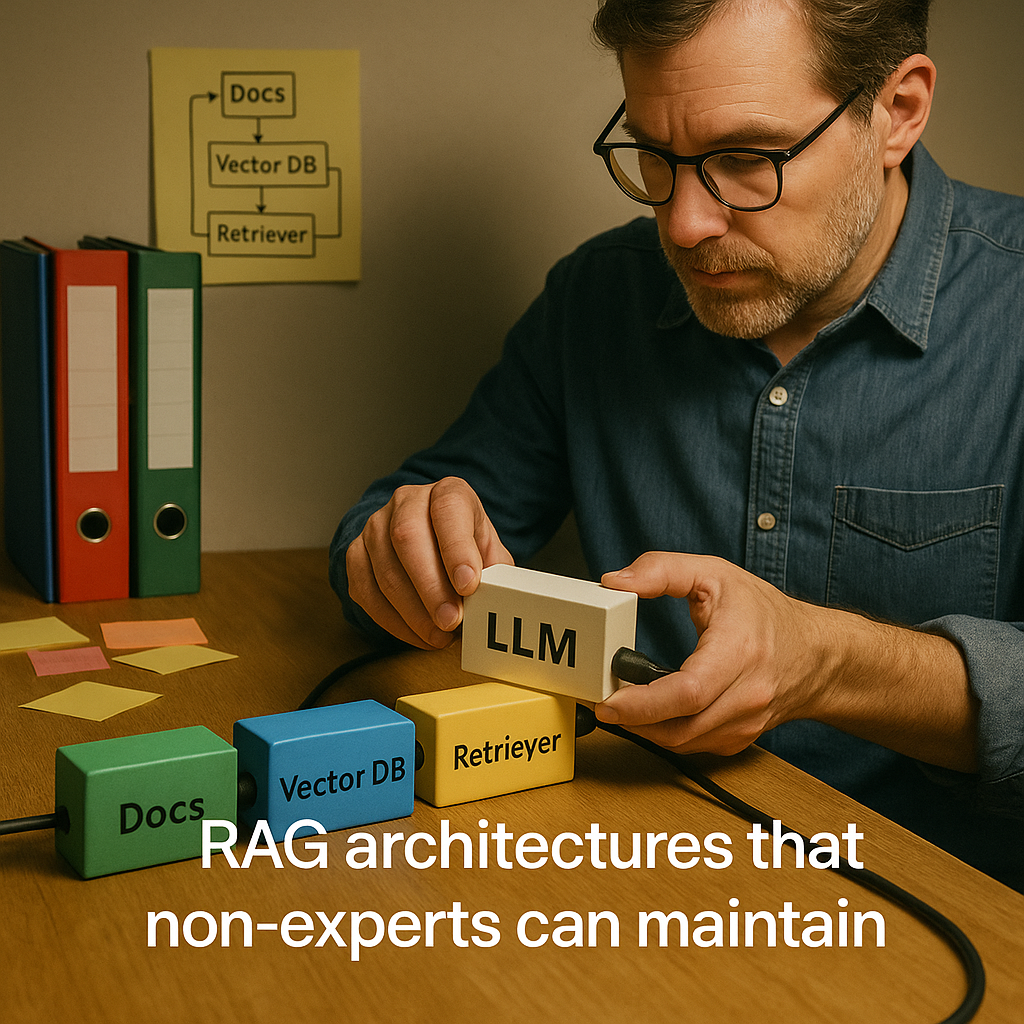
In today’s fast-paced digital landscape, small businesses and entrepreneurs are constantly seeking innovative ways to boost efficiency and enhance customer engagement. One emerging technology generating significant buzz is Retrieval Augmented Generation (RAG) architecture. Despite its technical name, there are RAG systems that even non-experts can maintain, offering substantial business benefits without requiring advanced technical skills.
Understanding RAG Architectures in Plain English
RAG architectures blend traditional search techniques with advanced artificial intelligence to deliver context-aware, tailored responses. They retrieve information from your data sources and generate meaningful content that is directly relevant to user queries. For business owners, this means you can implement systems that not only search your database for key information but also deliver business-relevant insights and responses.
Imagine an AI-driven support system that handles customer inquiries by extracting key data from your FAQ database and generating clear, personalized responses. This scenario perfectly illustrates how simple RAG architecture maintenance can work for non-technical users. User-friendly interfaces and automated workflows make it easy for anyone to manage and keep the system running efficiently.
Why User-Friendly RAG Systems Matter for Small Businesses
Choosing a RAG system should not mean settling for complex, hard-to-maintain solutions that only developers can understand. Small business owners benefit most from beginner-friendly RAG system guides that simplify processes and allow for quick adaptation. The goal is to make technology work for you, not the other way around.
Many entrepreneurs already work with robust business intelligence tools. Enhancing these systems with AI should be straightforward—not overly complicated. Easy-to-maintain RAG architectures provide a clear and efficient path to incorporating smart automation into daily operations, whether it involves improving customer service with AI chatbots or generating real-time market reports from diverse data sources.
Platforms designed for non-technical users make taking control of your business technology effortless. For additional insights on integrating technology into your operations, visit MakeBusiness.eu for expert advice and industry-backed strategies.
How to Get Started with RAG Architectures Without the Technical Jargon
Implementing a RAG system does not require mastering technical jargon or complex setup procedures. Start small by identifying a pilot project where data retrieval combined with content generation can yield immediate benefits. This might include automating repetitive website queries, creating interactive FAQs, or generating personalized email responses based on customer behavior.
Today’s platforms feature intuitive dashboards with visual aids such as charts, checklists, and alert systems—designed specifically for non-experts. This simplicity allows business owners to experiment with RAG technology without deep knowledge of algorithm design or coding practices.
Maintenance is equally straightforward. Regular checks—such as verifying data accuracy and monitoring AI-generated responses—are integrated into everyday routines. With clear guidelines and automated alerts, keeping your system updated and effective becomes part of your regular business operations.
Keeping Your System Relevant and Effective
AI-powered technology is not a set-it-and-forget-it solution. Regular updates are essential to maintain the effectiveness of your RAG system as new products, services, or market conditions emerge. Modern RAG architectures are built for adaptability, with updates delivered in small, manageable increments during off-peak hours to minimize disruptions.
The use of intuitive interfaces and defined responsibilities ensures that even non-technical users can manage these updates with ease. Many systems provide dedicated customer support to assist with upgrades and troubleshooting, which keeps your business operations running smoothly and maximizes the benefits of AI integration.
Integrating RAG with Your Existing Business Systems
Adopting new technology can seem daunting, but integrating user-friendly RAG architectures into your existing systems is often a straightforward process. Many RAG solutions are designed as plug-and-play tools that seamlessly connect with your customer relationship management systems, websites, and email platforms without major overhauls.
This seamless integration allows you to leverage AI technology while retaining the familiar interfaces your team trusts. As your business grows, these systems can expand with your needs, adding extra data sources and functionalities in a smooth, scalable manner.
Insights from industry leaders, including those featured on Forbes, emphasize that the most successful tech integrations are those that blend effortlessly into daily operations. This approach is central to effective RAG architecture maintenance for non-technical users.
Future-Proofing Your Business with Adaptable Technology
Staying ahead in a competitive market requires embracing the latest technological trends. For businesses without large IT departments, user-friendly RAG system guides provide the reassurance needed to confidently adopt new solutions. Simple, adaptable systems streamline operations today and prepare your business for future technological advancements.
Regular training and timely updates, offered by many service providers, ensure your team remains competent in handling the system without relying on costly external support. As you become more familiar with the technology, you’ll discover new opportunities to enhance customer engagement, reduce costs, and drive growth.
Investing in a system that balances advanced AI capabilities with ease of use is a smart move. Over time, even non-technical users will develop an instinctive understanding of maintenance, thanks to intuitive design and robust support resources.
The promise of easy-to-maintain RAG architectures is particularly relevant in today’s business climate, where efficiency and responsiveness set successful companies apart. By integrating these systems into your operations, you can focus on strategic growth rather than wrestling with technical challenges.
Adopting a RAG system doesn’t require a steep learning curve. Many available solutions demystify the process and present technical tasks in a simple, easily managed format. With clear guidance, regular monitoring, and scheduled updates, your system will run reliably and support your business goals.
In summary, as the digital age evolves, businesses that blend smart automation with a human touch will enjoy a distinct competitive advantage. With easy-to-maintain RAG architectures available today, transforming customer interactions and optimizing business processes has never been more achievable. Embrace advanced technology with a user-friendly approach to keep your business agile, responsive, and ready for the future.
- RAG systems combine data retrieval with AI-generated content to enhance business communication.
- User-friendly interfaces make advanced technology accessible to small business owners.
- Regular maintenance and updates are simple with intuitive dashboards and automated alerts.
- Integrating RAG into existing systems improves customer engagement and operational efficiency.