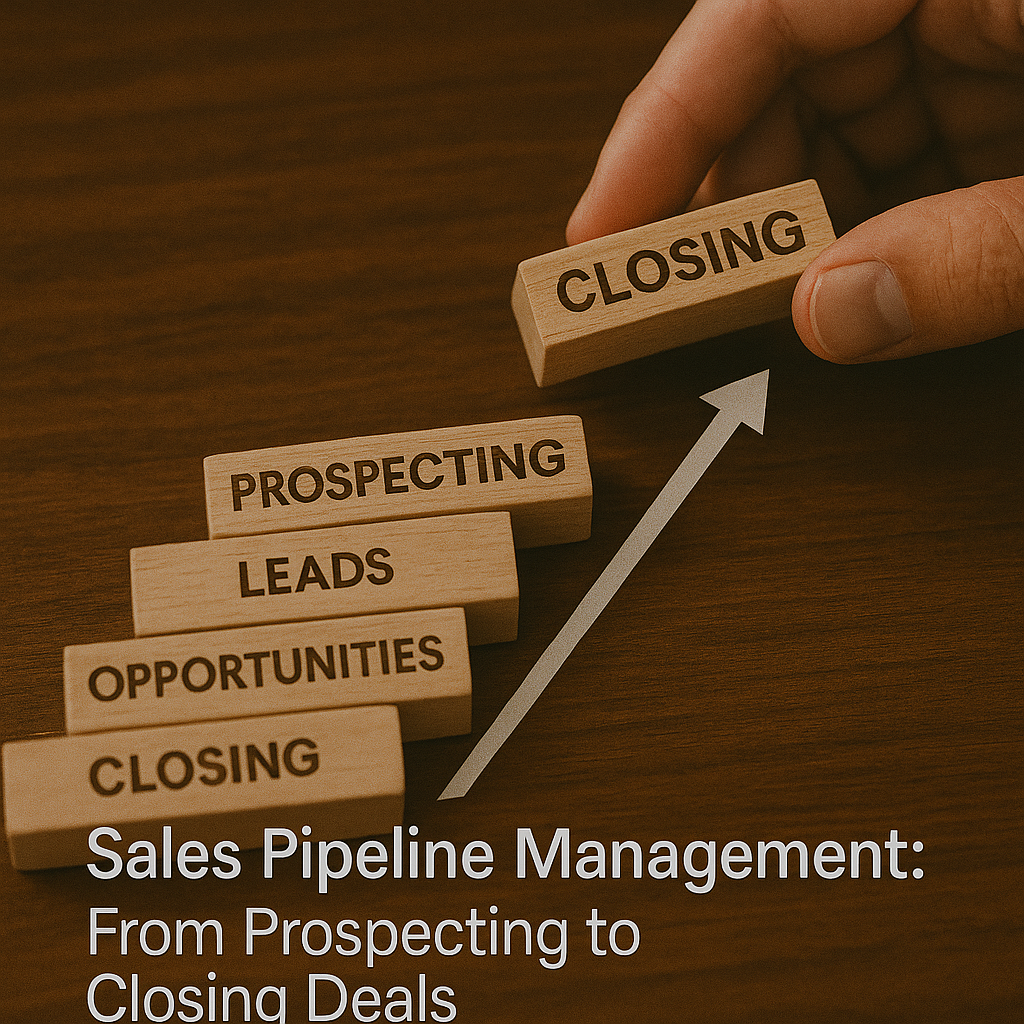
Sales pipeline management transforms strangers into loyal customers. For entrepreneurs and small business owners, mastering the process of guiding prospects from initial contact to closing is essential. Whether you’re launching a startup or refining your sales operations, an effective pipeline brings clarity, structure, and growth to your business.
Understanding the Sales Pipeline Process
A sales pipeline visually represents the journey to convert potential leads into paying customers. It offers a structured framework that helps you track progress, identify areas for improvement, and make informed decisions.
Advanced sales pipeline management techniques for prospecting to closing allow you to move beyond chance, using refined processes, data-driven insights, and targeted outreach strategies. With a well-defined pipeline, you eliminate guesswork and equip your business for success, especially in competitive B2B markets.
This structured approach typically encompasses stages such as lead generation, initial contact, qualification, proposal, negotiation, and finally, closing. Each stage requires a tailored strategy designed to meet your prospects’ unique needs while keeping you ahead of the competition.
Implementing a Step-by-Step Approach
Effective sales success is built on robust planning and methodical execution. A step-by-step guide to sales pipeline prospecting and deal closing simplifies complex processes into actionable steps. Here’s how to get started:
1. Optimize Lead Generation
Leads are the lifeblood of any sales operation. Begin by identifying where your target audience seeks solutions like yours. Leverage social media, networking events, and content marketing to increase awareness of your offerings. Tools such as LeadPages or LinkedIn Sales Navigator can help you source quality leads.
A strong digital presence combined with consistent branding plays a key role in enhancing lead generation efficiency. Aim to connect with individuals or organizations that can truly benefit from your product or service.
2. Qualify Your Prospects
Not every lead aligns with your business goals. Early qualification saves time and resources. By asking the right questions about a prospect’s needs, budget, and timeline, you can determine who is most likely to convert.
Advanced sales pipeline management techniques thrive on precision. Thoroughly understanding a prospect’s requirements paves the way for a mutually beneficial relationship, ensuring that only the most promising leads advance to more resource-intensive stages.
3. Nurture Relationships and Build Trust
As prospects progress through your pipeline, nurturing relationships becomes increasingly important. Personalized emails, interactive webinars, and regular check-ins keep potential clients engaged and build trust—the foundation of any successful sale.
Utilize digital marketing strategies and trusted platforms like business growth strategies for insights on nurturing client relationships. Leverage case studies and testimonials to educate your prospects on how your product or service addresses their unique challenges.
4. Close with Effective Negotiation
Transitioning from discussion to commitment requires a balanced approach to persuasion and understanding. A clear, step-by-step process for sales pipeline prospecting and deal closing is vital. Prepare well-documented offers and proposals that outline benefits, deliverables, and timelines.
Effective negotiation is built on active listening and transparent communication. Ensure that both parties feel involved in creating a fair agreement. This transparency accelerates the closing process and sets the stage for long-term business partnerships.
Strategies for B2B Sales Pipeline Optimization
B2B sales often involve larger investments and longer decision-making periods. Tailored B2B sales pipeline optimization strategies for closing deals address these challenges effectively. Consider these tactics:
Understand the buyer’s journey. In B2B environments, multiple stakeholders with diverse priorities are involved. Tailor your messaging to address the concerns of both executives and operational teams.
Integrate Customer Relationship Management (CRM) systems to boost efficiency. A CRM tracks every interaction, providing real-time data to refine your strategies. With automated follow-ups and lead scoring, you can concentrate on the most promising leads while ensuring no opportunity is missed.
Commit to ongoing learning. Staying updated on the latest sales methodologies through training sessions, webinars, and industry conferences can provide valuable insights. Resources like Forbes offer innovative sales techniques that can inspire adjustments to your approach.
For small business owners, these optimization strategies lead to enhanced customer satisfaction. When every stage is refined, customers enjoy a more personalized journey, resulting in improved retention and long-term value.
Incremental improvements can have a profound impact on efficiency and overall sales performance. Each adjustment contributes to a more robust and agile sales pipeline.
Embracing Change and Continuous Improvement
The dynamic sales environment demands adaptability. Emerging technologies and evolving buyer behaviors require small business owners and entrepreneurs to constantly reassess and improve their processes. Regular pipeline analysis reveals both areas for enhancement and strategies that work well.
Adopting advanced sales pipeline management techniques is not a one-time update but an ongoing commitment to improvement. This might involve periodic training, re-evaluating sales targets, or leveraging new software tools to boost performance.
Platforms like MakeBusiness.eu offer expert advice, practical tools, and the latest trends to help you stay ahead. Regular performance reviews and feedback sessions with your sales team are key to maintaining a dynamic pipeline that adapts to market changes.
Investing in continuous improvement ensures that every interaction with a prospect becomes an opportunity to learn, grow, and drive success. A dynamic sales pipeline not only enhances efficiency but also contributes to sustained business growth.
By embracing a structured, technology-driven approach and committing to ongoing learning, small business owners can navigate the challenges of modern sales and achieve remarkable results.
Explore valuable insights and tailored tips for small business success at MakeBusiness.eu. Their expert guidance can help you refine your sales strategies and achieve continuous growth.
- Develop a structured sales pipeline that effectively guides prospects from first contact to closing.
- Follow a step-by-step guide to streamline sales pipeline prospecting and deal closing.
- Implement B2B sales pipeline optimization strategies with CRM and data-driven decision making.
- Commit to continuous learning and improvement to stay agile in today’s dynamic sales landscape.


