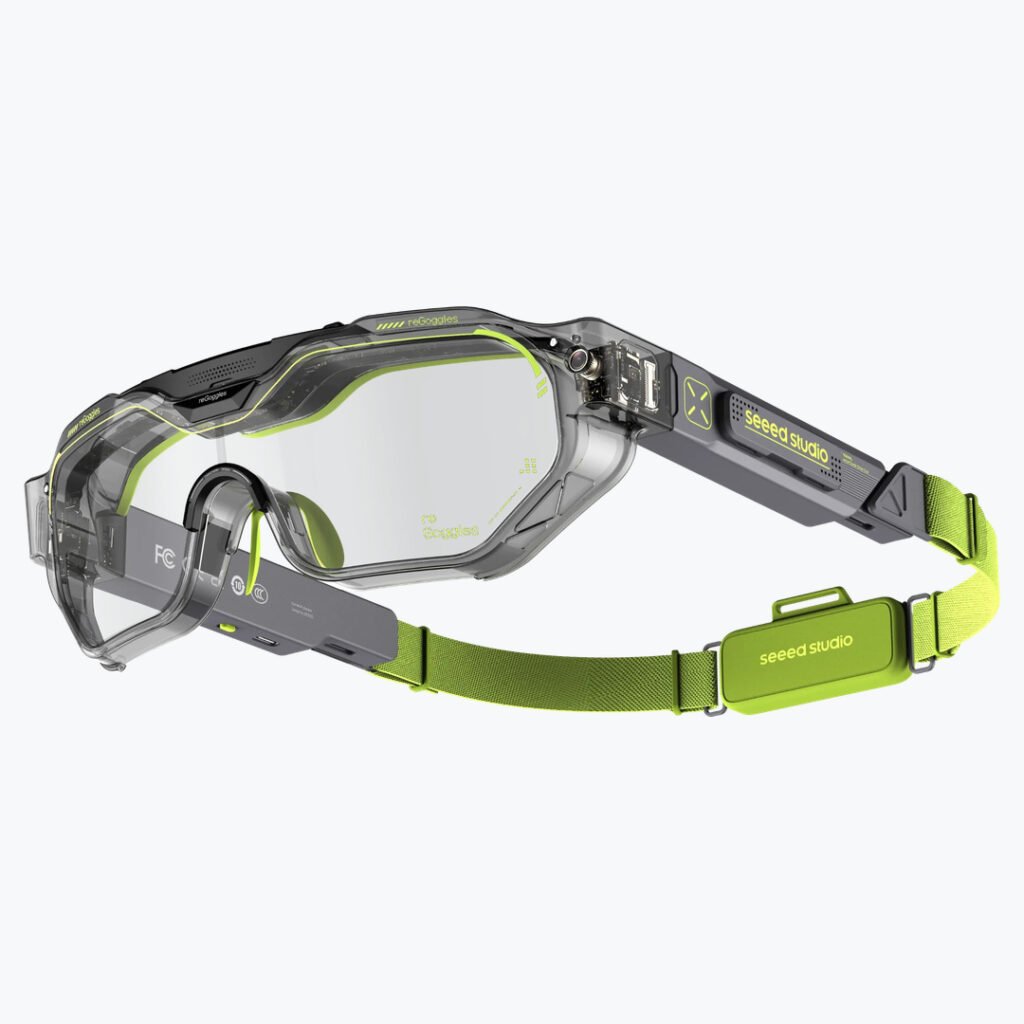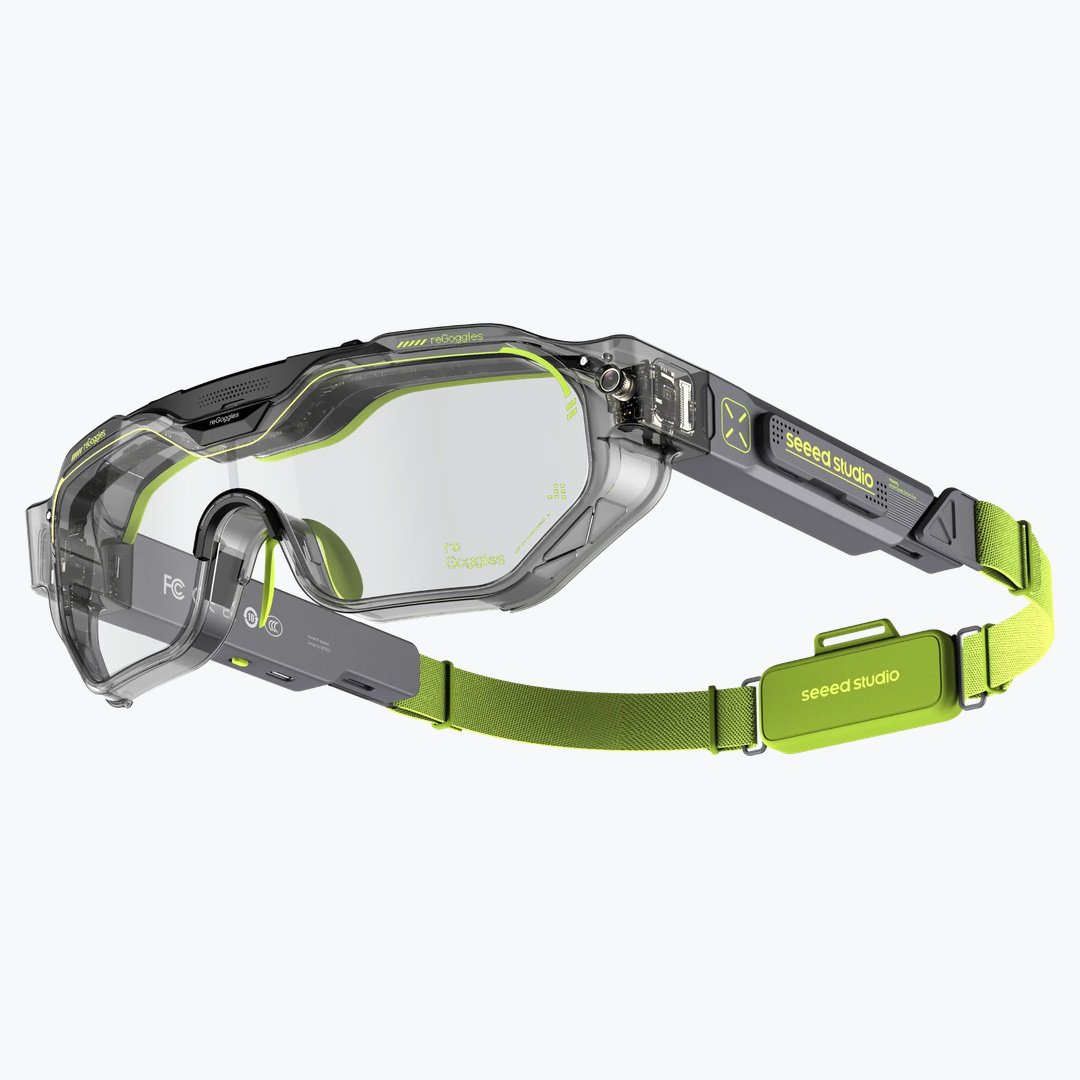
Seeed Studio is presenting reGoggles as an open smart-goggles platform for industrial AI assistance and first-person data capture. The company says its core functionality is in place, but the platform remains under active development. First test units are expected in early 2027, according to Seeed’s introductory announcement.
That status matters to industrial teams evaluating the planned Early Builder Program. reGoggles is not a generally available or independently validated product. The practical decision is therefore not whether to buy finished smart glasses, but whether early technical access could justify the engineering, safety and governance work required for a prototype pilot.
What Seeed has confirmed
Seeed describes reGoggles as extensible and intended to give developers flexibility. Its reGoggles product page identifies the Allwinner V881 as the platform’s main processor and states that firmware on the main chip and interfaces for integration are open. Seeed has also announced an upcoming Early Builder Program for developers, engineers, industrial teams and technology partners.
These statements establish the project’s direction, but not its readiness for workplace deployment. The cited material does not provide independent performance results, safety validation or completed industrial-pilot evidence. Describing firmware and interfaces as open also does not establish which repositories, build tools, drivers, licenses or modification rights participants will receive.
Technical access to verify
A pilot agreement should identify a reproducible hardware and software configuration. Industrial teams should request written answers to the following questions:
- Compute architecture: What processing runs on the Allwinner V881, and what requires a phone, edge server or cloud service? What memory, storage, acceleration resources and sustained thermal limits will the test unit have?
- Cameras and sensors: Which cameras, microphones, motion sensors or other inputs are included? What are their operating modes, calibration requirements, data formats and hardware-disable options?
- Display and controls: What information can the wearer see, and which voice, touch or physical controls work while wearing industrial gloves?
- Battery: What runtime is expected under defined workloads? Teams also need charging times, battery-replacement procedures and documented behavior during low-power or thermal events.
- Connectivity and offline operation: Which wireless and wired interfaces are supported? Can essential workflows operate without internet access, and what happens to queued data after a connection returns?
- APIs and source access: Which firmware, drivers, schematics, SDKs, APIs and examples will participants receive? What licenses apply, and can teams build, sign, install and roll back their own firmware?
These details determine whether reGoggles can support a real workflow rather than a controlled demonstration. They also expose dependencies that could prevent use in restricted networks or facilities where imagery cannot leave the site.
Safety, privacy and deployment controls
Industrial wearables sit close to the user’s eyes and may collect information about workers, equipment and customers. Before field use, a pilot owner should complete its own workplace-risk, privacy and security reviews rather than treating builder-program participation as product approval.
- PPE and ergonomics: Ask whether test units are compatible with required helmets, prescription eyewear, respirators and hearing protection. Weight distribution, heat, visual obstruction, cleaning and comfort over a complete shift need defined evaluation methods.
- Environmental limits: Request operating temperature, humidity, dust, water and impact limits for the exact prototype revision. Pilot teams should not assume the device is suitable for hazardous or controlled environments.
- Cybersecurity: Establish secure-boot, encryption, authentication, update, vulnerability-reporting and software-support arrangements. Administrators should be able to revoke and erase a lost unit.
- Privacy: Determine when recording is active, how bystanders are notified, where data is stored and who can retrieve it. Retention, deletion and access rules should be settled before first-person data is collected.
- Repairability: Ask which components can be replaced, whether spares and service documentation will be available, and how failed prototypes will be handled during a time-sensitive trial.
- Certification plans: Request the intended markets, planned safety and radio approvals, target dates and limitations on workplace use before certification.
Questions for the Early Builder Program
The program’s operational terms may matter as much as the hardware. Seeed should clarify what participants receive, including the number and revision of test units, documentation, engineering access, software tools, replacement arrangements and any participation cost. Teams should also ask what they must contribute: feedback, code, integrations, use-case data, public case studies or scheduled testing time.
The early-2027 test-unit target needs a more precise allocation and delivery process before a business reserves engineering capacity. Pilot owners should request milestones, change-notification procedures and criteria for delaying or ending unsafe or unproductive tests.
Ownership terms require particular attention. Agreements should state who owns captured pilot data, annotations, integrations, firmware changes and other modifications; what Seeed may reuse; and whether either party can publish results. Confidentiality and deletion obligations should survive the pilot.
Finally, Seeed should explain how it defines progression from builder hardware to production: design-freeze criteria, validation stages, manufacturing and support plans, expected compatibility between revisions, and whether pilot software can migrate without substantial rework. Until those points are documented, reGoggles is best assessed as an engineering collaboration opportunity rather than deployable industrial equipment.
Sources and transparency
This assessment is based on Seeed Studio’s reGoggles announcement and official product page. All capabilities and timing are attributed to the manufacturer. MakeBusiness.eu has not tested reGoggles, and no independent performance, safety or regulatory validation was supplied.