Entrepreneurs and small business owners often face a crucial decision: invest in organic search engine optimization (SEO) or launch paid advertising campaigns. Both approaches have distinct advantages, but understanding their strengths and limitations is key when working with tight budgets and limited time. This article breaks down the effectiveness of small business SEO vs. paid advertising, compares various strategies for growth, and offers actionable insights to help you choose the right approach for your business goals.
Understanding Organic SEO and Paid Advertising
Organic SEO and paid advertising are two essential facets of digital marketing. Organic SEO focuses on optimizing your website, creating valuable content, and building a robust backlink profile to naturally improve your search engine rankings. In contrast, paid advertising leverages platforms like Google Ads, Facebook Ads, or LinkedIn Sponsored Content, offering immediate visibility and targeted traffic.
For small business owners, the choice often depends on the balance between speed and sustainability. Paid advertising can drive fast traffic and prompt conversions, while organic SEO represents a long-term investment in online visibility. Evaluating cost-effective SEO vs. paid advertising for small businesses depends on your immediate needs and long-term objectives.
Exploring the Effectiveness of Each Approach
When comparing small business SEO vs. paid advertising effectiveness, consider these factors:
Speed and Immediate Impact
Paid advertising delivers quick results, making it ideal for businesses seeking to generate fast traffic, promote seasonal products, or launch new offerings. With transparent metrics and real-time adjustments, paid campaigns provide measurable performance. However, in competitive markets, the cost can be high, and the immediate boost may fade once the ad spend stops.
Long-Term Value and Credibility
Organic SEO builds momentum gradually. As your site moves up the search engine rankings, it not only gains more traffic but also earns user trust. By investing in high-quality content and strong SEO practices, your business can enjoy sustained visibility and credibility—benefits that paid ads rarely replicate. Many businesses blend both strategies, leveraging paid ads for immediate impact and SEO for long-term growth.
Cost Considerations for Small Businesses
Budget is a critical factor. Paid advertising requires a continuous financial commitment to maintain visibility, whereas a well-optimized website can attract visitors without recurring costs. Organic SEO often involves investments in time, content creation, and technical updates. Choosing between cost-effective SEO vs. paid advertising for small business growth depends on whether you prioritize short-term cash flow or long-term strategic success.
Aligning Strategies With Your Business Goals
The first step in selecting between organic SEO and paid advertising is to define your business objectives and timelines. If you need rapid, measurable results for a product launch or promotional campaign, a targeted paid advertising strategy may be the answer. Conversely, if your focus is on gradual growth and building brand authority, investing in SEO offers a more sustainable solution.
Many small businesses find that a hybrid approach delivers the best results. For instance, you might use paid ads to attract immediate visitors and then engage them with a blog rich in SEO-optimized content. This combined strategy ensures that even if a paid campaign’s performance declines, your organic efforts continue generating leads and building trust.
For more insights on creating a comprehensive digital marketing strategy, visit Make Business resources for expert guidance on integrating organic and paid channels.
Overcoming Challenges and Measuring Success
Both SEO and paid advertising require continuous monitoring, analysis, and adjustment. One challenge with organic SEO is coping with unpredictable search engine algorithm updates that may affect your rankings. On the other hand, paid advertising offers more control with real-time data and analytics, allowing for swift adjustments to optimize campaign performance.
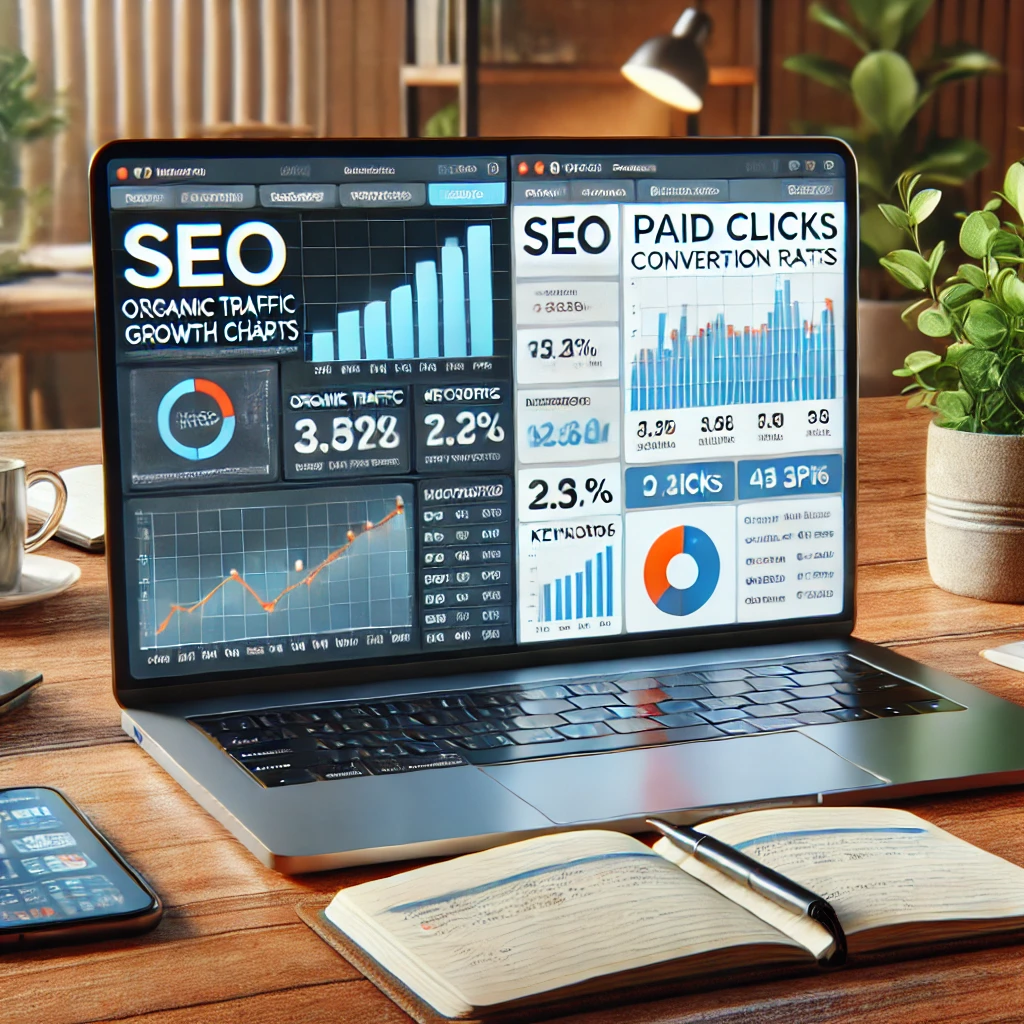
Balancing cost-effective SEO vs. paid advertising for small business growth is a nuanced process. Paid channels provide immediate feedback on performance but demand ongoing investment, while organic SEO builds a stable traffic base without recurring costs. Establish clear metrics—such as cost per click (CPC) for paid campaigns or organic traffic growth for SEO—to evaluate success and adjust your strategies accordingly.
Industry experts like Forbes emphasize that a blended approach often harnesses the strengths of both methods, ensuring robust digital marketing performance across varying market conditions.
Utilize sophisticated analytics and tracking tools to determine which strategy drives better engagement and delivers a tangible return on investment (ROI). Ultimately, your choice between organic SEO and paid advertising should reflect your budget, market landscape, and long-term business ambitions.
For many growing enterprises, the answer isn’t choosing one method over the other but integrating both. A dual strategy maintains momentum and minimizes the risk of reduced visibility during market fluctuations. The key is to remain flexible, learn from performance data, and let both channels complement each other.
Whether you prioritize quick wins with paid advertising or sustainable growth through organic SEO, start with a clear strategy, allocate resources wisely, and be ready to adapt as the market evolves.
- Paid advertising delivers immediate results, while SEO builds long-lasting credibility.
- Balancing cost-effective SEO and paid advertising is crucial for long-term success.
- Continuous monitoring and optimization are key to overcoming the challenges of both strategies.
- A hybrid approach can maximize traffic acquisition and brand trust simultaneously.