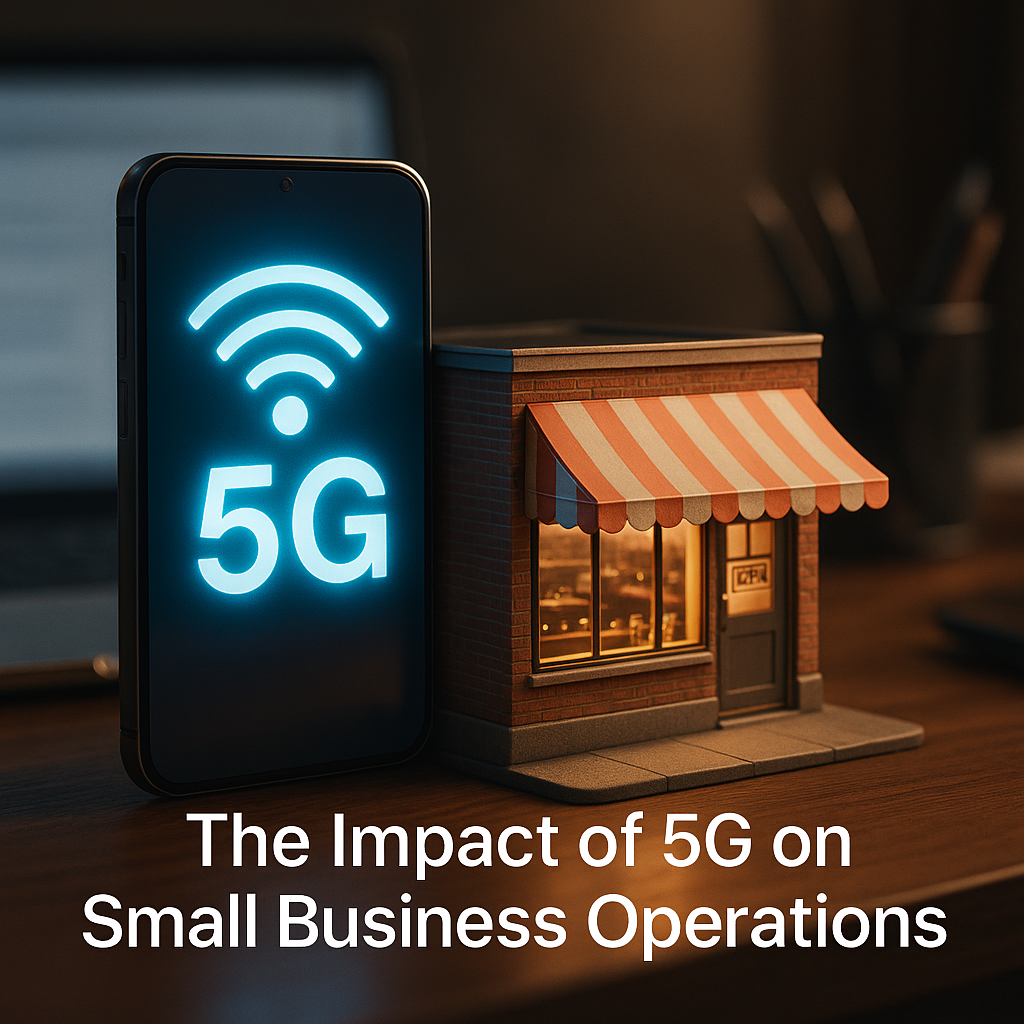
In the fast-evolving digital era, technology is reshaping how small businesses operate. Business owners are constantly seeking innovative solutions to streamline processes, reduce costs, and enhance overall performance. Among these advancements, 5G networks stand out as a game changer. Beyond delivering faster internet speeds, 5G opens up new possibilities for modernizing operations and staying ahead of the competition.
The Ripple Effect of 5G on Daily Operations
One of the most significant impacts of 5G on small business operations is its ability to enhance day-to-day tasks. Many small businesses depend on cloud computing for data storage, communication, and analytics. With 5G’s high speeds and low latency, real-time cloud interactions become more efficient. Tasks that once took minutes can now be completed almost instantly, paving the way for more agile operations. Whether deploying real-time customer support, processing transactions, or updating inventory systems, every aspect of business operations benefits from 5G.
Additionally, 5G strengthens remote work efforts. Faster, more reliable internet connectivity enables seamless collaboration among team members working from various locations. This robust connection minimizes delays and frustrations associated with outdated networks, allowing teams to work more productively and communicate effectively.
Optimizing Small Business Performance with 5G Networks
5G technology offers small businesses the opportunity to rethink workflow efficiency and performance measurement. By integrating smart technologies such as the Internet of Things (IoT), augmented reality (AR), and artificial intelligence (AI), companies can gain deeper insights into business and customer behavior. These innovations, when combined with the power of 5G, provide a clearer picture of operational performance and customer interactions. For more insights on leveraging advanced connectivity, check out our Cloud Computing Transformation article.
Consider the customer experience: enhanced connectivity allows businesses to offer interactive, technology-driven solutions. For example, a retail store can use AR to enable customers to virtually try on clothing or visualize home furnishings in their own space—all in real time. This blend of traditional service with cutting-edge technology demonstrates how 5G accelerates small business growth.
Moreover, the ability to transfer large volumes of data quickly fuels enhanced business analytics. Entrepreneurs can analyze consumer behavior, monitor sales performance in real time, and adjust marketing strategies swiftly. A recent Forbes article highlights how real-time data insights can drive targeted growth strategies across businesses of all sizes.
The Birth of New Business Models in the 5G Era
As connectivity improves, new business models are emerging that leverage 5G’s capabilities. Small business owners can now innovate not only in products and services but also in operational strategies, support, and marketing. Mobile payment systems, cloud-based software solutions, and remote diagnostic services in healthcare are just a few examples benefiting from 5G’s ultra-fast speeds.
This enhanced connectivity creates exciting opportunities for startups and established businesses alike. Companies can experiment with models once regarded as too technologically challenging. For instance, a small food delivery service can use smart routing applications powered by 5G to reduce wait times and boost efficiency, enhancing the overall customer experience.
Another clear benefit of 5G is how it improves supply chain management. Smaller companies, previously hindered by inefficient logistics, can now utilize real-time tracking and scheduling tools, reducing delays, lowering overhead costs, and optimizing resource allocation. Improved connectivity fosters transparency across the supply chain, ensuring superior service for customers.
Integrating 5G into Your Business Strategy
Adopting 5G requires careful planning and strategic implementation. Business owners should begin by assessing their current digital infrastructure and identifying areas that will benefit most from enhanced speeds and reduced latency. Instead of a complete overhaul, a gradual integration—such as modernizing payment systems or updating customer relationship management tools—can make the transition smoother and more cost-effective.
For practical advice on technology investments and business modernization, entrepreneurs can explore resources on dedicated business advice sites, such as Make Business. These platforms offer insights into building sustainable growth through smart technological integration. You might also be interested in our post on Digital Business Modernization for further strategies on integrating innovative technologies.
Beyond upgrading existing systems, business owners should also consider emerging technologies tailored for 5G networks. Using smart sensors to monitor equipment in real time, deploying AI to forecast market trends, or adopting scalable video conferencing solutions can significantly enhance operations. These innovations not only optimize small business performance with 5G networks but also open up new revenue streams and service improvements.
With enhanced connectivity, digital security becomes even more crucial. As cyber threats evolve, investing in robust cybersecurity measures is essential for protecting data and maintaining customer trust. Staying updated with the latest security protocols ensures your business remains safeguarded against emerging risks.
Partnerships and collaborations also play a key role in successful 5G integration. Many technology providers and local business networks offer training sessions and workshops to help teams understand and implement 5G technologies. These initiatives empower your workforce to quickly adapt and fully leverage the benefits of enhanced connectivity.
Every small business is unique. While 5G offers a wealth of possibilities, its true impact depends on how effectively it is integrated into your specific operational model. Coupling strategic investments in technology with ongoing training and support can help your business remain agile and competitive.
As 5G technology matures, early adopters in the small business community are already enjoying rapid growth, improved efficiency, and increased customer satisfaction. With careful planning and execution, the next-generation connectivity of 5G can provide your business with a significant competitive edge.
- 5G revolutionizes daily operations with higher speeds and reduced latency.
- Enhanced cloud interactions and improved remote work capabilities boost productivity.
- Innovative, technology-driven business models open up new growth opportunities.
- Strategic integration of 5G optimizes performance and strengthens cybersecurity.