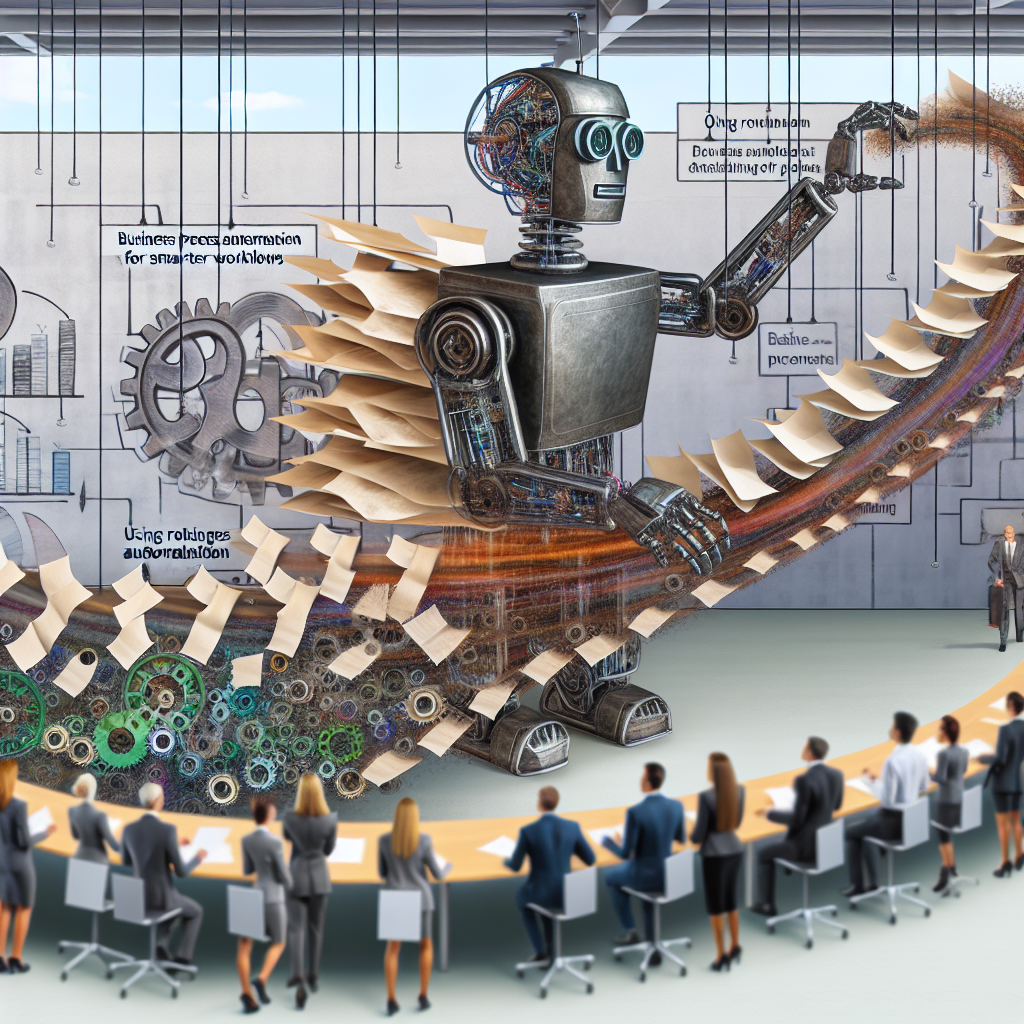
Modern business moves quickly. Entrepreneurs and small business owners face constant pressure to streamline operations while staying innovative. Now, with rapid advancements in artificial intelligence, business leaders can redefine their strategies. Increasingly, companies are leveraging AI business process automation to simplify operations, boost efficiency, and outperform competitors.
The Shift Towards Intelligent Business Processes
Artificial intelligence is transforming the way we work. Today’s companies are embracing smarter workflows through AI integration, not merely to replace routine tasks, but to reimagine entire processes. AI transforms manual, time-consuming workflows into automated solutions that enhance efficiency, improve accuracy, and free up time for creative problem-solving.
Traditional workflows involving repetitive manual tasks are both time-consuming and error-prone. With AI-powered business workflow optimization, entrepreneurs can quickly pinpoint inefficiencies, leading to faster decision-making, reduced operational costs, and improved customer experiences. AI-driven tools support functions like data analysis, supply chain management, predictive maintenance, financial forecasting, and customer relationship management.
This shift is about intelligent transformation. Companies are learning not just to do things faster, but to do them smarter. AI systems continuously evolve by learning from patterns, improving predictions, and optimizing workflows in real time. This approach is especially appealing to small businesses aiming to scale without incurring significant overhead costs.
Implementing AI Technologies in Everyday Operations
Incorporating AI into business processes might seem daunting, but it starts by taking small, manageable steps. Begin by identifying routine tasks that can be automated. For example, many marketing teams use natural language processing to generate social media content and emails, while accounting departments deploy AI to reconcile invoices and track expenses.
Customer support is another ideal starting point. AI-powered chatbots and virtual assistants are no longer futuristic—they provide 24/7 service, reduce response times, and ensure consistency in handling customer queries, allowing human staff to tackle more complex issues.
Successful AI integration is not a one-size-fits-all solution. Tailor AI to your organization’s unique requirements by mapping out workflows and identifying persistent bottlenecks. Then, select AI solutions designed to address these challenges. Many businesses have quickly seen benefits such as reduced processing times, fewer errors, and a competitive edge in the market.
For further insights on why AI is critical to business growth, explore case studies on Forbes, which illustrate the direct benefits of smart AI applications.
Enhancing Efficiency with Tailored AI Solutions
One significant advantage of AI in business process automation is its adaptability. Rather than relying on off-the-shelf solutions, companies can use AI-powered workflow optimization to create systems that adjust based on real-time data. This customization ensures that business operations evolve with changing market conditions, maintaining resilience and agility.
Many small business owners worry about the costs of custom AI solutions. However, today’s technology offers a variety of scalable and cost-effective AI tools designed for small and medium enterprises. These solutions integrate seamlessly with existing platforms to streamline communications, automate data entry, and even manage scheduling—all without significant added expenses.
Importantly, implementing AI is about enhancing human capabilities, not replacing them. By automating repetitive tasks like data entry and report generation, employees are empowered to focus on strategic planning and creative initiatives. This shift not only boosts operational efficiency but also cultivates a more engaged and innovative workforce.
Opportunities and Challenges in AI Adoption
While the advantages of AI integration are substantial, the transition presents challenges. Data privacy is a primary concern. When adopting AI technologies, it is crucial to handle sensitive business data securely and work with providers to implement robust security measures that comply with regulations.
Another challenge is ensuring your team has the necessary skills for an AI-driven environment. Transitioning may require employees to learn new roles or upgrade their skills. Emphasize change management through training sessions, workshops, and phased implementations to help your team adapt smoothly.
Investing in AI early can deliver a competitive advantage. Despite initial hurdles, many businesses have enjoyed significant market gains by adopting AI strategies. The key is choosing the right tools that align with your company’s overall technology roadmap. For additional resources on scaling with AI, visit Make Business for comprehensive digital transformation strategies.
In most cases, the long-term benefits of AI-integrated workflows far outweigh the challenges. Improved turnaround times, increased productivity, and better decision-making make it clear that shifting to smarter workflows is essential for sustainable growth.
Building a Future-Ready Business
The role of AI in business will only continue to expand. For small business owners and entrepreneurs, planning for an AI-enhanced future is not just a technological upgrade—it’s a strategic necessity. Companies that adopt AI-powered workflow optimization are positioning themselves to thrive in an increasingly competitive marketplace.
Embracing AI means recognizing that it is a tool designed to amplify human potential. By automating repetitive tasks, teams can dedicate more time to creative thinking, strategic planning, and strengthening customer relationships. Early AI adopters often develop robust data-driven cultures that lead to quicker, more informed decision-making and long-term success.
The path to AI integration is iterative. Pilot projects in specific departments, gathering feedback, and scaling gradually is a practical approach. This step-by-step strategy ensures that AI-driven changes align with overall business objectives, delivering measurable results along the way.
As AI systems continue to learn and improve, they provide increasingly precise recommendations. This continuous optimization extends across various business facets—from supply chain management to customer behavior analytics—resulting in a resilient operational model that meets current market demands and prepares for future challenges.
Whether you’re refining marketing strategies, optimizing back-office functions, or enhancing customer service, transitioning to AI-enhanced processes is a forward-thinking move. Investing in AI today can pave the way for remarkable business growth tomorrow. Embrace the change to not only keep up with the market but to redefine intelligent business operations.
As you begin your digital transformation journey, remember that support is available from online communities, industry experts, and technology partners. By staying informed, investing wisely, and choosing scalable solutions, you can build a competitive, efficient, and future-ready business.
- Transition from manual tasks to automated processes with AI integration.
- Implement scalable, cost-effective AI tools tailored to your business needs.
- Invest in training and change management to ensure a smooth AI transition.
- Adopt a strategic approach to AI business process automation for sustainable growth.


