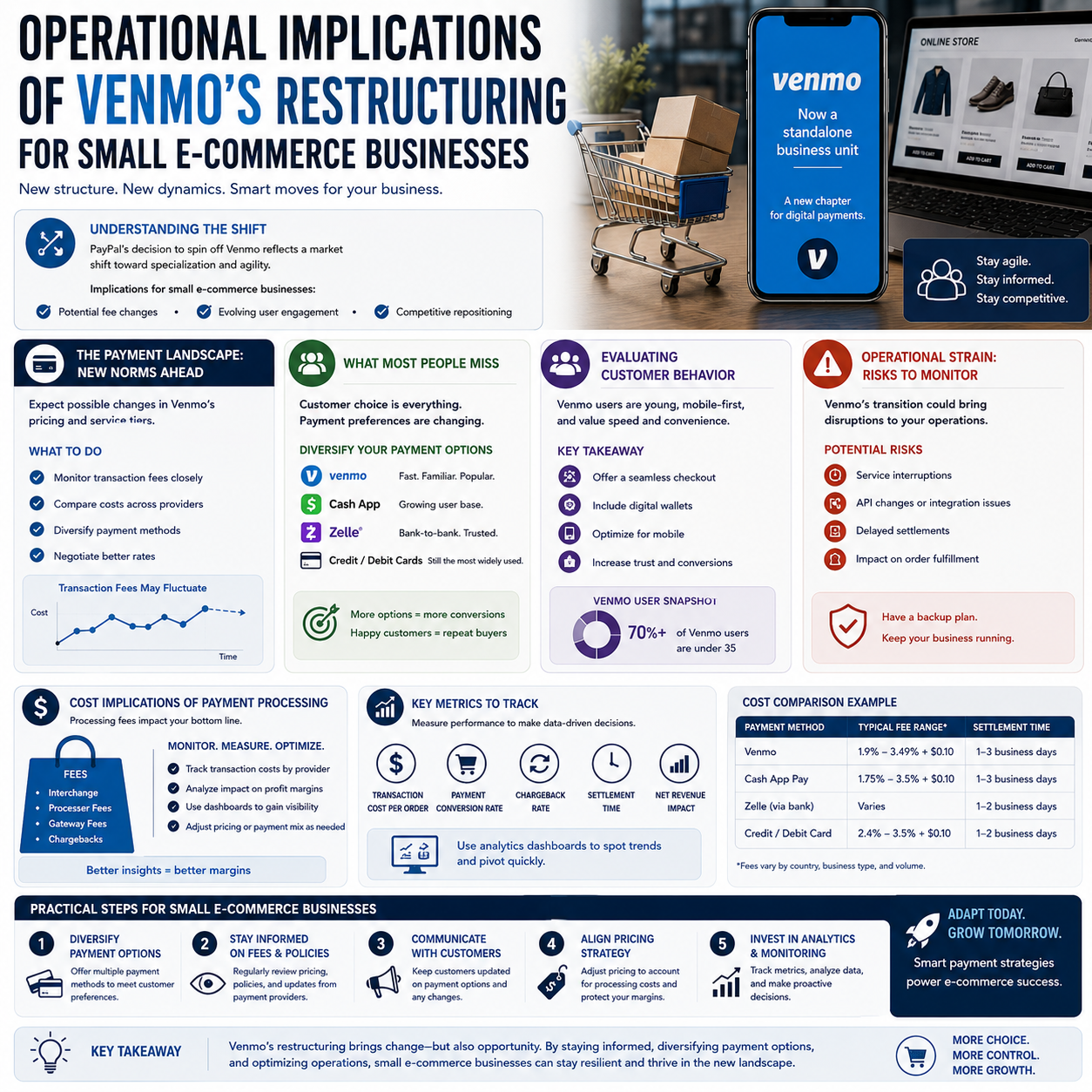
The recent decision by PayPal to restructure Venmo as a standalone business unit presents a unique set of challenges and opportunities for small e-commerce businesses. This change comes at a time when many merchants are reassessing their payment strategies and looking for tools that enhance customer experience while optimizing operational costs.
Understanding the Shift
PayPal’s move to spin off Venmo suggests a significant operational shift in how digital payment systems will operate in the e-commerce landscape. This potential separation is not merely a corporate maneuver; it reflects deeper market trends where specialization and agility are favored. Small e-commerce owners need to understand the implications of this shift on transaction fees, user engagement, and competitive positioning.
The Payment Landscape: New Norms Ahead
With Venmo evolving as its own entity, small businesses should prepare for changes in transaction processing fees. As Venmo transitions, there might be fluctuations in costs associated with using their payment platform, particularly if they introduce new service tiers or modify existing structures. Owners should monitor transaction costs closely and consider diversifying payment methods to mitigate risks if fees become unfavorable.
What most people miss
Many founders overlook the significance of customer choice in payment options. As Venmo potentially alters its service model, users may gravitate towards alternative platforms like Cash App, Zelle, or traditional credit methods. Businesses that diversify their payment offerings stand a greater chance of retaining customers who prefer different digital wallets or payment methods.
Evaluating Customer Behavior
The Venmo user base is predominantly younger, tech-savvy consumers who appreciate fast, convenient payment processes. For e-commerce businesses targeting this demographic, it is critical to adapt offerings accordingly. Implementing a seamless payment experience that includes Venmo, while also incorporating other digital wallets, can cater to consumer preferences and drive sales conversions.
Operational Strain: Risks to Monitor
As Venmo takes steps toward independence, small businesses should brace for possible service interruptions or changes in API integrations. Many e-commerce platforms rely on Venmo to facilitate quick transactions. Any disruption could negatively impact order processing and customer satisfaction. It’s advisable for businesses to maintain contingency plans, such as backup payment gateways, to avoid potential downtimes during this transition.
Cost Implications of Payment Processing
Each payment processor carries its own fees and terms of service, and these can affect the profit margins of your products. The increased operational costs associated with Venmo’s adjustments might compel you to evaluate the pricing structures within your business. Measuring and monitoring transaction costs using financial dashboards can provide valuable insights and tell you when to pivot methods based on ongoing expenses.
Practical Steps Forward
As Venmo navigates through this transformation, small e-commerce operators should take decisive steps to capitalize on the potential changes. Firstly, refine your payment process to include a variety of payment options while staying tuned to fees from each service. Maintain open communication with your customers regarding payment changes to uphold trust and engagement.
Secondly, align your pricing strategy with potential shifts in payment processing costs to ensure that your margins are not squeezed. Finally, investing in analytic tools to measure transaction metrics can help you pivot quickly in response to any unfavorable changes in the market.


