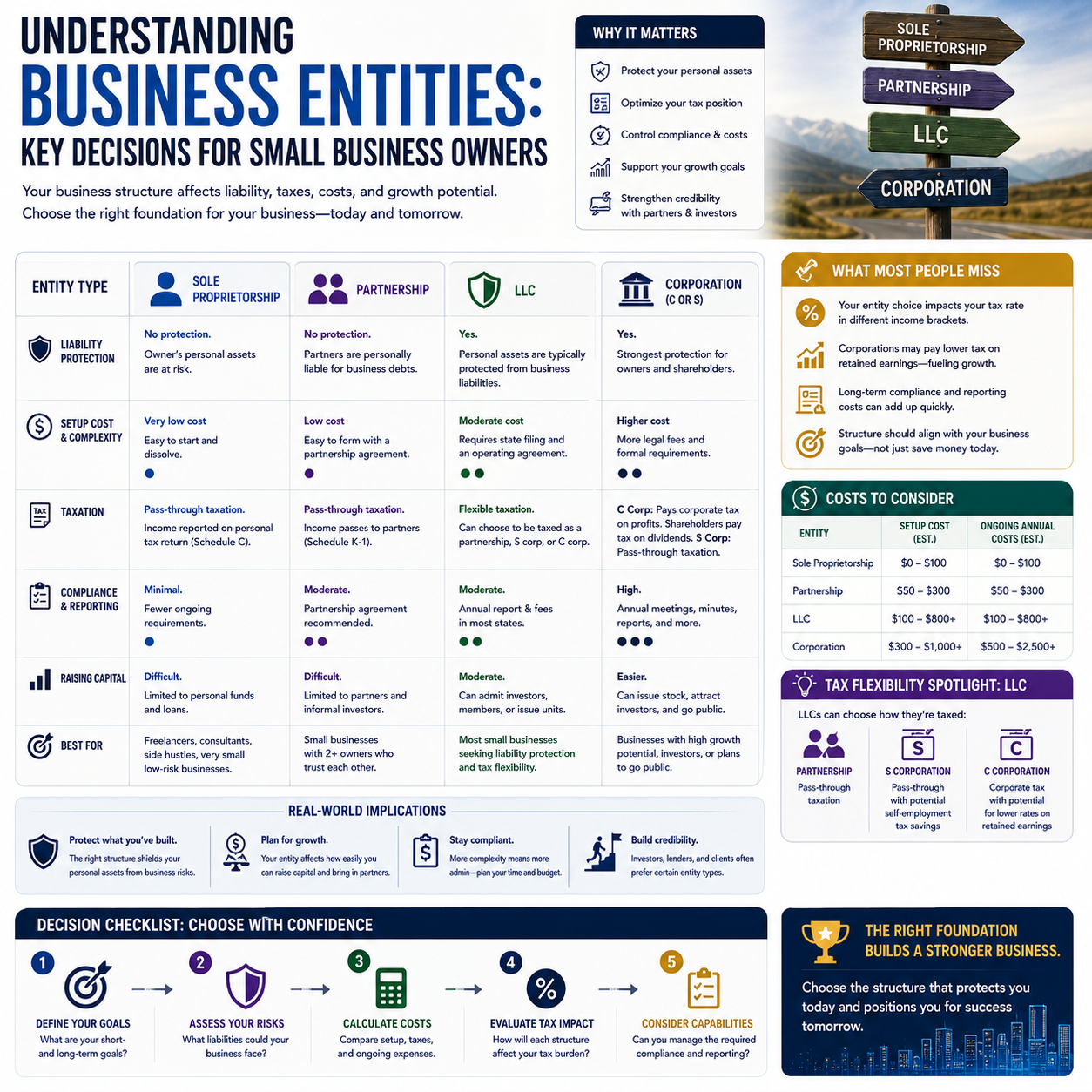
Business structure is more than just a legal formality; it’s a strategic decision that influences your operational efficiency, tax obligations, and risk exposure. Understanding the different business entities is vital for founders and small business owners who are either starting out or reassessing their current structure.
Impact on Liability and Personal Assets
Choosing between sole proprietorship, partnership, LLC, and corporation has profound implications for personal liability. For instance, a sole proprietorship exposes the owner’s personal assets to business debts. In contrast, an LLC typically protects personal assets from business liabilities, offering peace of mind particularly in higher-risk industries.
Cost Considerations in Business Structuring
The costs associated with establishing and maintaining different business entities vary significantly. Sole proprietorships usually have minimal setup costs and simpler tax filings, while corporations may incur higher legal fees and ongoing compliance costs. Understanding these costs can affect your cash flow planning.
What to Watch For
Many small business owners underestimate the long-term costs linked to annual reporting and compliance for corporations. The long-term viability of a business entity also hinges on its operational alignment with business goals—not just immediate expenses.
Tax Implications by Structure
Different business entities also face different tax obligations. For instance, sole proprietorships report income on personal tax returns, which might result in higher taxes if the income exceeds certain thresholds. LLCs can choose to be taxed as partnerships or corporations, providing flexibility that may lead to tax savings.
What Most People Miss
A common oversight is not considering how the choice of business entity affects your tax rate in various income brackets. For example, owners of a corporation can benefit from lower corporate tax rates on retained earnings, a decision that could impact growth strategy.
Operational Efficiency and Compliance Burdens
Entities like LLCs and corporations require more administrative work, which can slow down operations if not managed effectively. Small business owners must weigh these compliance burdens against the potential benefits such as easier capital raising and enhanced company credibility.
Real-World Implications in Decision-Making
When deciding on a business entity, you should assess not just your current needs but also future growth perspectives. For instance, if you plan to attract investors, a corporation might be more appealing than an LLC due to its structure and share issuance capabilities.
Checklist for Making the Right Choice
- Identify your immediate and long-term business goals.
- Assess the potential risks involved in your business operations.
- Calculate the cost implications for each entity type.
- Evaluate the tax liabilities you may face with different structures.
- Consider your administrative capabilities in managing compliance requirements.
By analyzing these critical areas, small business owners can make a more informed choice, not just based on current realities but with a view towards future growth and stability.