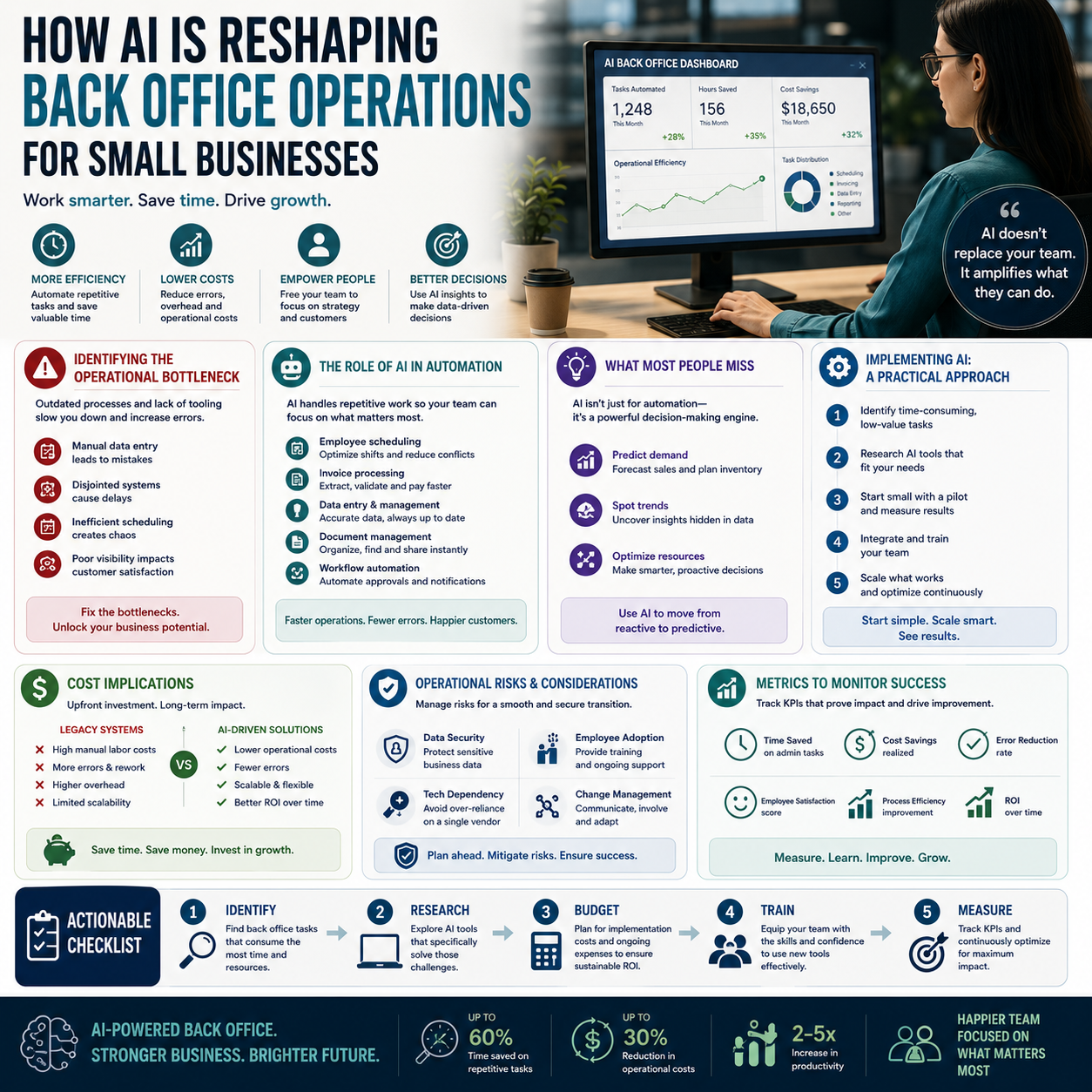
The integration of AI solutions into back office operations can reshape the efficiency and productivity of small businesses. As automation technologies evolve, the focus has shifted from mere task completion to effectively augmenting human capabilities while minimizing operational burdens. Understanding how to leverage these tools can help founders and business managers streamline their processes and focus on growth.
Identifying the Operational Bottleneck
Many small businesses encounter significant challenges in their back office operations due to outdated processes and a lack of technological support. Relying solely on human resources for administrative tasks can lead to delays and errors, which, in turn, affects customer satisfaction and overall productivity. For instance, inadequate scheduling systems can create chaos in response times, making it difficult for businesses to manage customer inquiries efficiently.
The Role of AI in Automation
AI solutions like Basata aim to alleviate the administrative burdens that often hinder small businesses. By automating repetitive tasks such as employee scheduling, invoice processing, and data entry, small operators can refocus their human resources on strategic decision-making and customer engagement. This not only speeds up operational efficiency but also dramatically reduces the risk of errors associated with manual entry.
What most people miss
Many small business owners overlook the nuanced capability of AI tools to analyze data trends that inform operational decisions. For instance, instead of just automating tasks, businesses can utilize AI to forecast demand based on historical sales data. This can optimize inventory management, reducing both excess stock costs and stock-outs.
Implementing AI: A Practical Approach
Small businesses should approach AI adoption with a clear methodology. Begin by identifying the most time-consuming tasks in your operations that consume valuable resources without a significant return on investment. After pinpointing these areas, research suitable AI tools that align with your specific needs. For example, integrating a system that automates payroll processes could save hours of administrative work per month, leading to substantial cost savings.
Cost Implications
While integrating AI solutions requires initial investment, the long-term savings can be significant. Consider the costs of maintaining a legacy system versus adopting an AI-driven solution. A tool integrated into a cloud-based platform could reduce overhead costs associated with personnel and operational inefficiencies. Additionally, automating back office tasks could free up funds for product development or marketing expenditures.
Operational Risks and Considerations
Transitioning to AI solutions does not come without risks. Small business leaders must consider potential challenges such as data security, the need for employee training on new systems, and the potential for dependency on technology. A robust change management strategy is essential to mitigate these risks and ensure a seamless transition. Regularly involved stakeholder feedback can help tailor solutions to suit evolving business needs.
Metrics to Monitor Success
To gauge the effectiveness of AI implementation, establish key performance indicators (KPIs) that reflect operational efficiency. For example, monitor metrics like time saved on administrative tasks, employee satisfaction scores, and overall productivity metrics. This data can provide tangible evidence of the return on investment for AI technologies.
An Actionable Checklist for Integration
1. Identify the back office tasks that consume the most time and resources.
2. Research AI tools that specifically address these needs.
3. Develop a budget that accounts for both implementation and ongoing expenses.
4. Ensure employee training programs are in place to support the transition.
5. Establish metrics to track the successful integration of AI tools.