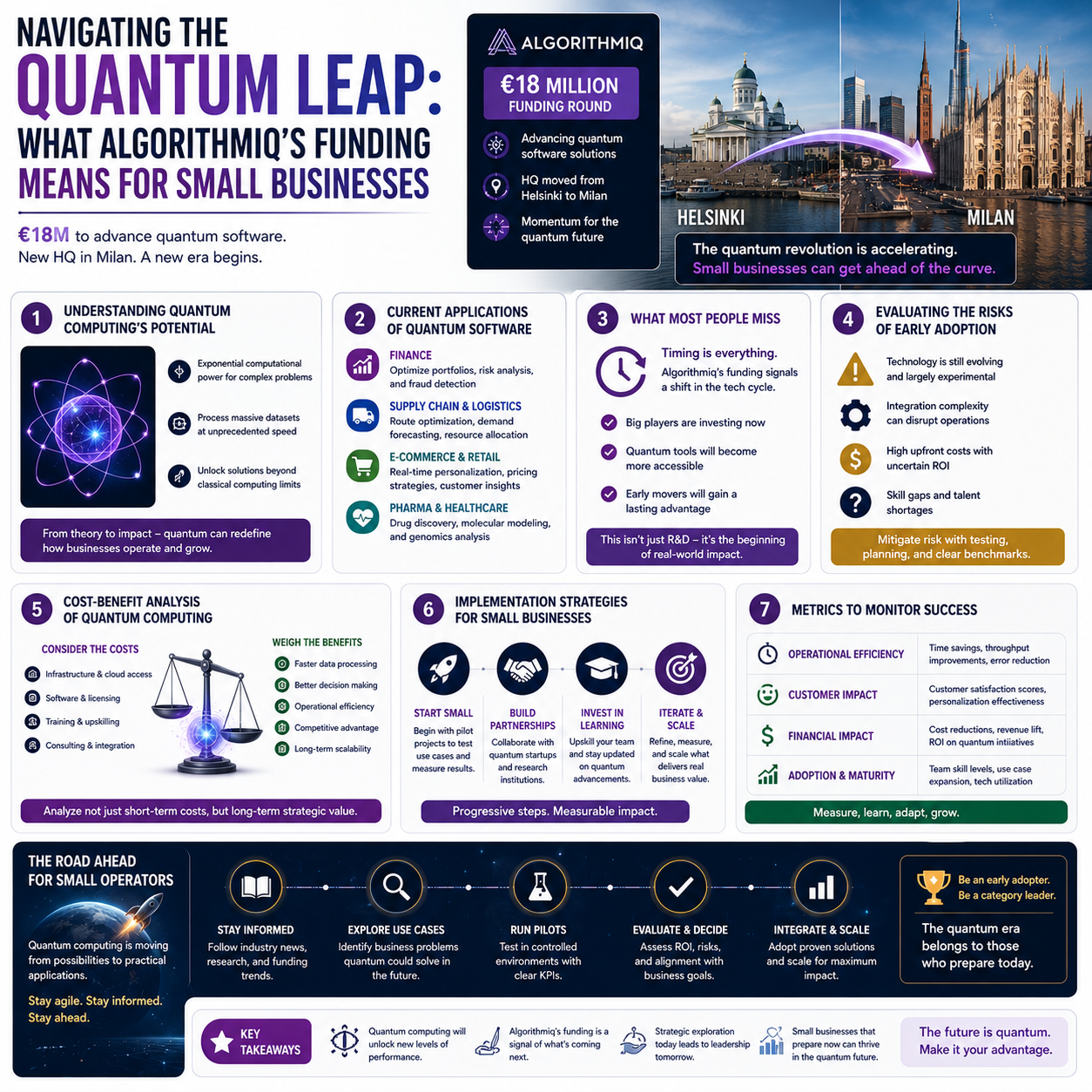
Algorithmiq’s recent €18 million funding round—notably, a shift of its headquarters from Helsinki to Milan—highlights a significant trend in quantum computing, which may hold transformative potential for small businesses across various sectors. As the company develops quantum software solutions, understanding how these advancements interplay with current technological frameworks is vital for operators looking to stay competitive.
Understanding Quantum Computing’s Potential
Quantum computing represents a seismic shift in computational power, fundamentally different from classical computers. For small businesses, the implications could involve accessing capabilities that dramatically enhance processing speed and data analytics. The advent of quantum algorithms could streamline operations ranging from supply chain optimization to complex problem-solving in logistics.
Current Applications of Quantum Software
While still in nascent stages, various industries are beginning to experiment with quantum solutions. For instance, companies in finance look towards quantum for optimizing portfolio management through faster data processing. Similarly, e-commerce platforms might leverage quantum computing for better customer insights, analyzing consumer behavior with unprecedented speed. Small businesses should monitor these developments to identify which quantum applications could best serve their operational models.
What Most People Miss
One aspect often overlooked is the timing of these innovations. Algorithmiq’s investment activity signifies a pressing update in the tech cycle—a critical lookout for small business owners. As big players invest in quantum technology, the ripple effects will likely afford smaller firms earlier access to groundbreaking tools designed to level the playing field against larger competitors.
Evaluating the Risks of Early Adoption
While the prospect of integrating quantum solutions appears enticing, small business owners must be cognizant of the associated risks. The technology is still largely experimental; premature adoption without thorough testing can lead to operational disruptions and financial losses. It’s essential to establish a defined set of KPI benchmarks to evaluate the effectiveness and return on investment of quantum solutions.
Cost-Benefit Analysis of Quantum Computing
Integrating quantum technology into business operations won’t come cheap. The investment involved in both the infrastructure and training personnel to handle such technology must be carefully weighed against the potential benefits. Conducting a cost-benefit analysis will help small business owners decide whether the anticipated enhancements in efficiency and processing capabilities justify the upfront costs. This financial decision-making must reflect not just immediate gains but also long-term strategic positioning.
Implementation Strategies for Small Businesses
For small businesses considering the leap into quantum, strategy is key. Here are several implementation strategies:
- Start Small: Pilot projects can limit exposure while allowing for exploration of tangible benefits.
- Partnerships: Joining forces with tech startups working in quantum solutions could provide access to resources and expertise.
- Continual Learning: Keeping abreast of developments in quantum technology through regular training can empower small business teams to adapt more seamlessly.
Metrics to Monitor
As with any strategic decision, it’s important to track specific metrics after integrating quantum solutions. Focus areas should include operational efficiency (e.g., time savings, error reduction), customer satisfaction scores, and financial implications (cost reductions vs. investment in technology).
The Road Ahead for Small Operators
Ultimately, the trajectory set by Algorithmiq’s funding signifies that quantum software is on the horizon for small businesses—an opportunity that may disrupt traditional models and methodologies. Operators must remain agile and informed, ready to adapt their strategies as quantum technology becomes more accessible. Leveraging the insights from such funding shifts could very well position small businesses ahead of the curve, ready to harness a new wave of technological advancements.