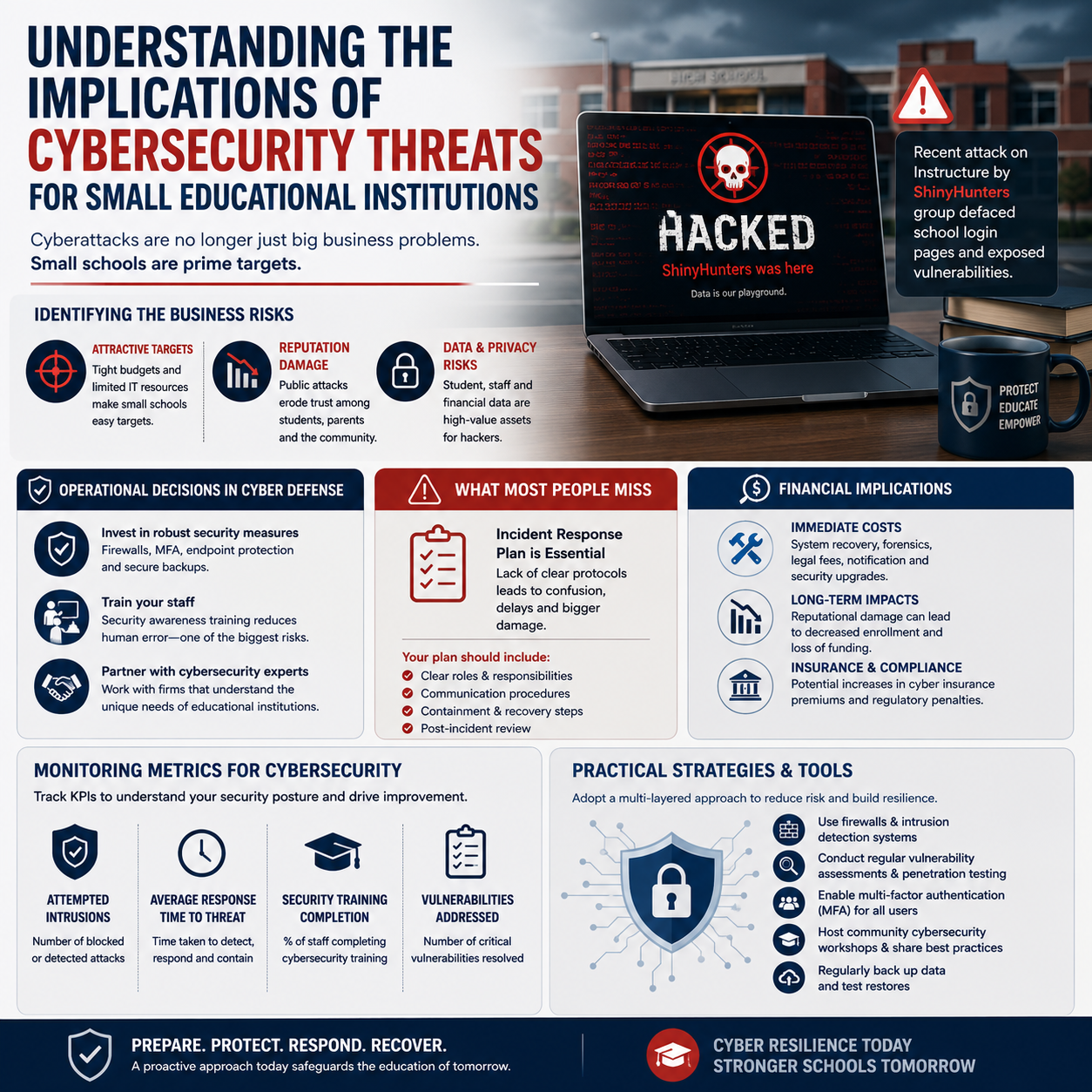
The recent hack involving Instructure highlights the increasing threat of cyberattacks on educational institutions, particularly small schools that may lack adequate resources to defend against such breaches. The ShinyHunters group has made headlines by defacing school login pages, raising critical questions around how small organizations should respond.
Identifying the Business Risks
Small educational institutions often operate on tight budgets with limited IT personnel. This is a significant risk factor as it makes them attractive targets for cybercriminals looking to exploit vulnerabilities. When hackers showcase their capabilities through public defacements, they not only damage an institution’s reputation but also erode trust among students and parents.
Operational Decisions in Cyber Defense
Small businesses must make informed operational decisions regarding their cybersecurity frameworks. This includes investing in robust security measures, training staff on cybersecurity awareness, and potentially collaborating with cybersecurity firms that specialize in educational institutions.
What most people miss
A critical step often overlooked is implementing an incident response plan. Small institutions frequently lack clear protocols for communication and action during a cyber incident, which can lead to chaotic responses and further damage.
Financial Implications
The financial impact of a successful cyber attack is multifaceted. Beyond immediate repair costs—such as restoring systems and securing data—schools face long-term financial repercussions. Damage to reputation can lead to decreased enrollment and the subsequent loss of funding.
Monitoring Metrics for Cybersecurity
Establishing key performance indicators (KPIs) is vital for gauging security effectiveness. These might include metrics like the number of attempted intrusions, the average response time to a threat, and the number of training sessions completed by staff. Tracking these can provide invaluable insights into the state of an organization’s cybersecurity health.
Practical Strategies and Tools
To guard against threats like those faced by Instructure, small educational institutions should consider adopting a multi-layered security approach. This can include:
- Utilizing firewalls and intrusion detection systems.
- Conducting regular vulnerability assessments.
- Engaging in community-focused cybersecurity workshops to share best practices.
By implementing these tools alongside a structured crisis response plan, small institutions can substantially reduce their risk exposure and enhance their resilience against cyber threats.


