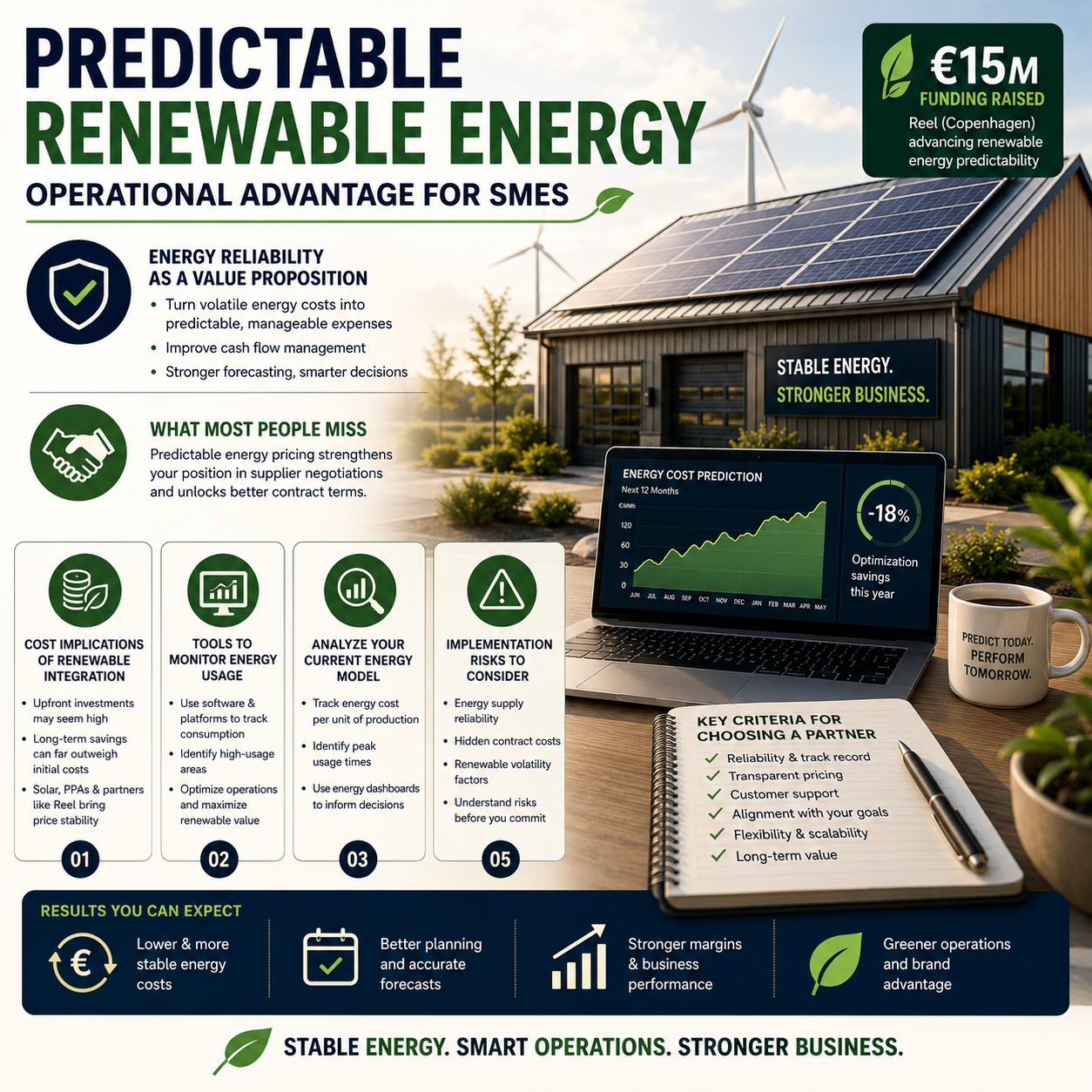
With the recent €15 million raise by Copenhagen’s Reel to enhance renewable energy predictability, small businesses should consider the operational implications of integrating such solutions into their workflows. This funding ground signals a significant shift towards making renewable energy more accessible and reliable for SMEs, potentially reshaping operational decision-making in energy consumption.
Energy Reliability as a Value Proposition
The rise of volatile energy prices puts pressure on small businesses, particularly in energy-intensive sectors. By utilizing a provider like Reel that focuses on predictability, SMEs can transform energy from a fixed cost burden into a manageable and predictable expense. This predictiveness could lead to enhanced cash flow management and better forecasting capabilities.
What most people miss
Many small business owners overlook the impact that predictable energy pricing can have on negotiating better terms with suppliers. By stabilizing energy costs, businesses can shift their focus to more lucrative negotiations, allowing them to leverage their energy predictability in contracts.
Cost Implications of Renewable Energy Integration
Implementing a reliable renewable energy solution often involves upfront costs that may deter small business owners. However, the potential for long-term savings through lower operational expenses can outweigh these initial investments. For example, integrating solar panels or signing long-term contracts with firms like Reel can provide stability in energy pricing, which is crucial amid fluctuating market conditions.
Tools to Monitor Energy Usage
Small businesses can leverage various tools and platforms to monitor their energy consumption. Software solutions that track energy usage can help businesses identify high usage areas and optimize their operations accordingly. Integrating these tools with renewable energy sources ensures that businesses not only consume energy wisely but also capitalize on the predictability offered by firms like Reel.
Analyzing Your Current Energy Model
Before transitioning to a predictable renewable energy model, SMEs should assess their current energy consumption patterns. This assessment involves establishing key metrics such as energy cost per unit of production and identifying peak usage times. Tools like energy management dashboards can provide insights that inform decision-making.
Implementation Risks to Consider
Transitioning to renewable energy solutions is not without risks. Small business owners should consider factors such as reliability of energy supply, potential hidden costs in contracts, and the volatility associated with renewable energy sources. Understanding these risks is vital for an informed business decision.
Decision Criteria for Choosing a Renewable Energy Partner
Selecting the right partner for renewable energy services is crucial. Factors to consider include reliability metrics, pricing structures, customer support, and alignment with your business goals. A comprehensive evaluation can ensure you select a vendor that meets not just your energy needs but also complements your operational objectives and financial strategy.