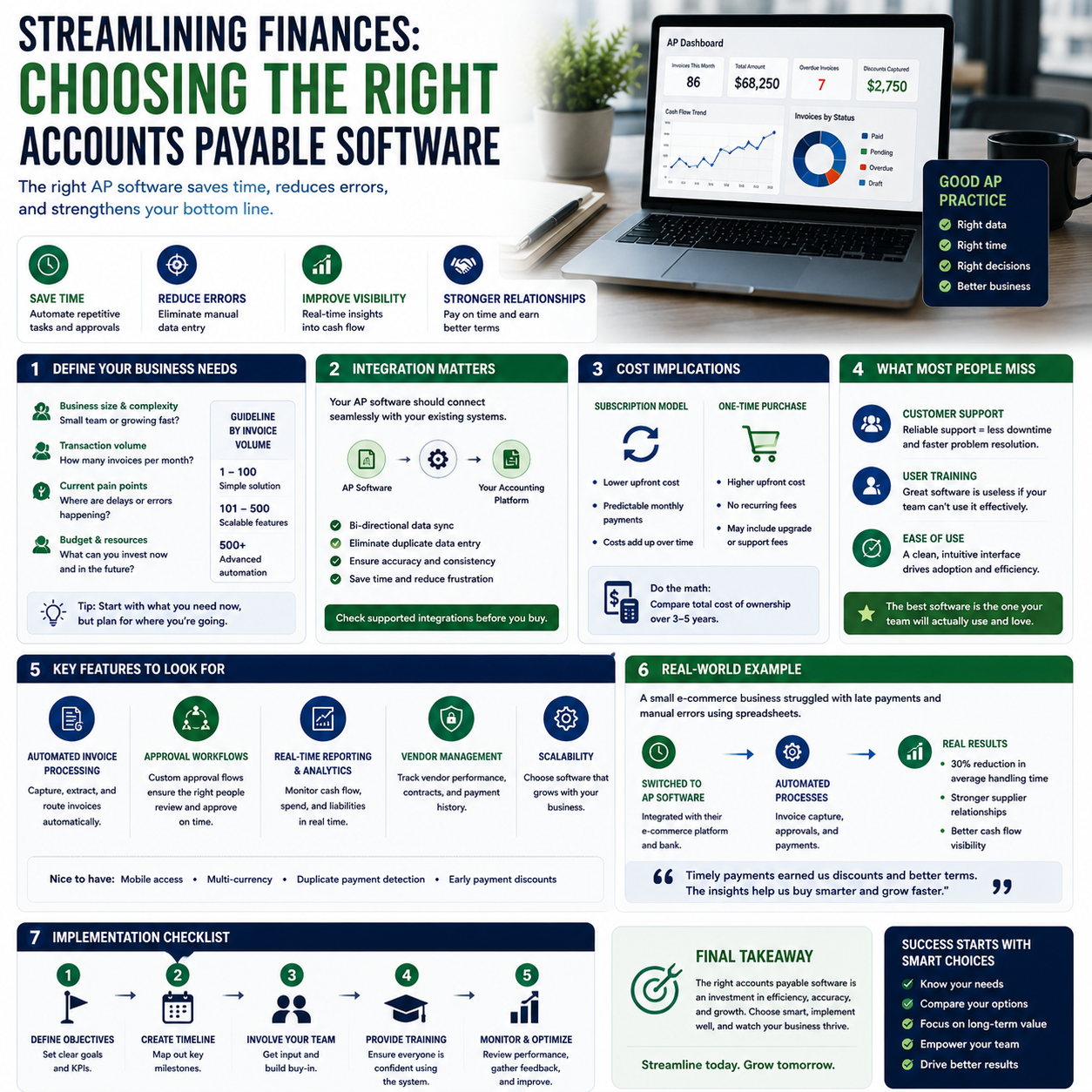
For small businesses, managing cash flow and expenses efficiently is crucial for survival and growth. A robust accounts payable (AP) software can play a pivotal role, helping owners reduce manual errors, improve financial reporting, and streamline procurement processes. But with countless options available, how can a founder navigate these choices?
Defining Your Business Needs
Before diving into the software options, it’s essential to delineate the specific needs that your business has. Consider the size of your business, transaction volume, and existing accounting systems. Conducting an internal review can help identify gaps in your current processes.
Assessing Transaction Volume
Small businesses may not deal with large transaction volumes like multinational companies, but this doesn’t minimize the importance of effective AP management. Evaluate how many invoices you process per month. If your business processes under 100 invoices monthly, a simpler solution may suffice.
Integration with Existing Systems
Another critical consideration is how well the AP software can integrate with your existing software, such as your accounting platform. Ensure that the software facilitates smooth data transfer to avoid redundant data entry.
Cost Implications
Choosing the right accounts payable software is not just about features; it’s also about understanding the cost implications for your business. Software costs can vary significantly based on functionality and scalability.
Subscription vs. One-Time Purchase
Many providers offer both subscription-based pricing and one-time purchase options. Subscription services might seem more affordable initially, but they can accumulate significant costs over time. Calculating the total cost of ownership for each option will reveal which is more feasible in the long run.
What Most People Miss
When selecting accounts payable software, businesses often overlook the significance of customer support and user training. Robust customer support can save your team considerable time and headaches. Ensure you choose a provider that offers reliable customer service. Additionally, a user-friendly interface and training programs can significantly reduce the learning curve for your team.
Functionality: Key Features to Look For
Understanding which features are essential can differentiate between basic software and a comprehensive solution.
Automated Invoice Processing
Automated invoice processing helps reduce manual entry errors and speeds up the approval process. This feature is especially useful for small businesses aiming for efficiency.
Real-Time Reporting and Analytics
Choose software that offers real-time reporting capabilities. This feature provides insights into your cash flow and spending patterns, enabling better financial planning and decision-making.
Choosing the Right Solution: A Practical Example
Consider a small e-commerce business that previously managed accounts payable using spreadsheets. After experiencing issues with delayed payments and errors, they decided to implement accounts payable software.
The founder started by evaluating several systems, ultimately choosing one that integrated seamlessly with their existing e-commerce platform. The new system allowed for automated invoice processing, which saved the team several hours each month.
After switching, the business saw improvements in relationship management with suppliers, leading to better payment terms and discounts due to timely payments. The analytics features provided valuable insights into cash flow, aiding more strategic inventory purchases.
Implementing Your Chosen Software
Once you select an AP software solution, implementation must be handled carefully to maximize benefits. Involve your finance team in the setup and ensure proper training is provided to mitigate potential pitfalls.
Checklist for Successful Implementation
- Define clear objectives and KPIs for the software’s performance.
- Set a timeline for implementation.
- Engage your team in the decision-making process to ensure buy-in.
- Provide training sessions to familiarize everyone with the new system.
- Monitor performance in the initial months, making adjustments as necessary.
Choosing the correct accounts payable software is not merely about finding a tool but ensuring it aligns with your business processes and financial goals. Focusing on functionalities, costs, and the implications of integration will set your small business up for sustainable financial management.