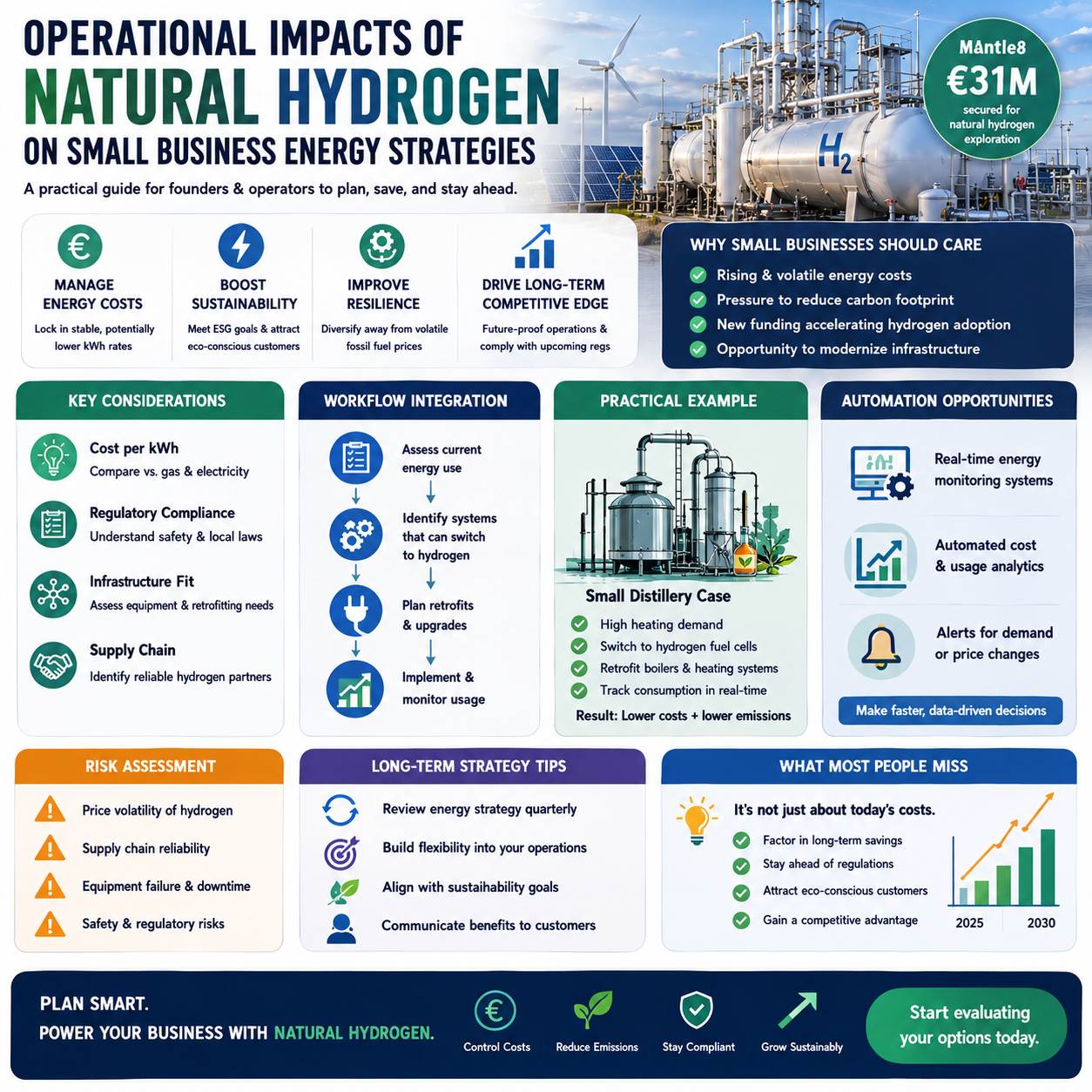
With Mantle8 securing €31 million for advancing natural hydrogen exploration, small business owners need to assess how this emerging energy source could fit into their operational strategies. As energy costs rise and sustainability becomes a priority, understanding the practical implications of natural hydrogen is essential for maintaining competitive advantage.
Energy Cost Management
Energy expenses can consume a significant portion of a small business’s budget. For instance, the implementation of natural hydrogen technologies might offer a scalable solution, particularly for businesses that heavily rely on energy-intensive operations, such as manufacturing or logistics. By exploring partnerships with natural hydrogen suppliers, small operators can potentially lock in favorable rates compared to traditional energy sources.
What to Watch For
Monitoring the development and commercialization of natural hydrogen technologies is critical. Businesses should focus on key metrics such as the cost of hydrogen per kilowatt-hour (kWh) compared to traditional energies like natural gas or electricity. Additionally, understanding the regulatory landscape regarding hydrogen use will be crucial for compliance and operational planning.
Workflow Integration
For businesses considering natural hydrogen integration, the questions arise: How can this be incorporated into existing energy workflows? Small operators should assess their current infrastructure and operational dependencies. Transitioning to a hydrogen-based energy system could require significant adjustments, such as retrofitting equipment or altering supply chains.
Practical Example
Consider a small distillery that consumes large amounts of energy for its operations. If it were to adopt a hydrogen fuel cell to power its heating systems, it would need to evaluate whether its boiler systems are compatible and what modifications would be necessary. These operational changes will have cost implications that require careful budgeting and potential financing options.
Automation Opportunities
The integration of hydrogen technology presents opportunities for automation in monitoring energy consumption and costs. Automated systems can provide real-time data analysis, enabling small business owners to make swift adjustments based on demand or fluctuations in energy costs.
Risk Assessment
Transitioning to natural hydrogen is not without risks. Businesses must evaluate supply chain reliability, potential equipment failures, and compliance with necessary safety standards. Additionally, fluctuations in hydrogen prices could impact the cost-effectiveness of this energy source. It is imperative to incorporate risk management strategies into the planning process.
Long-term Strategy Planning
Given the volatility in energy prices and the evolving landscape of sustainable energy solutions, small businesses must embed flexibility into their operational strategies. Regular reviews of energy sources and cost structures should be built into the business model, allowing for quick pivots in response to market changes.
What Most People Miss
One common oversight among small business owners is focusing solely on immediate costs; however, it’s essential to also consider long-term savings and sustainability impacts. Strategic investments in clean energy solutions like natural hydrogen not only help comply with future regulations but can also attract environmentally-conscious consumers, potentially increasing revenue in the long run.