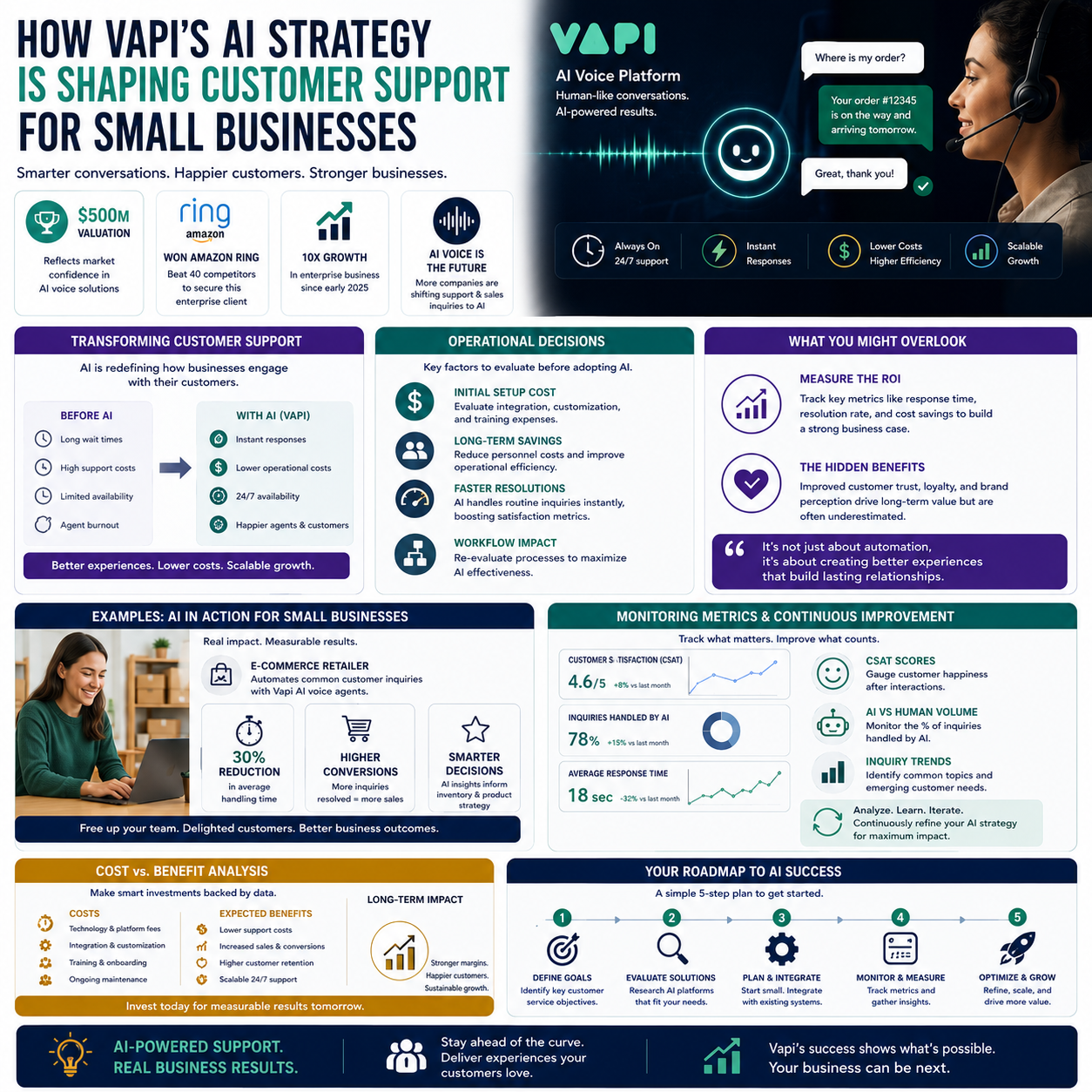
Vapi, an AI voice startup, recently achieved a $500 million valuation after impressively positioning itself against 40 competitors to secure Amazon Ring as a client. This strategic win not only underscores the importance of effective AI solutions but also highlights shifts in customer service dynamics that small businesses can leverage.
Transforming Customer Support
The landscape of customer service is evolving, predominantly driven by the integration of AI technologies. Vapi reports a tenfold growth in its enterprise business since early 2025, as companies increasingly transition customer support and sales inquiries to AI-driven systems. This transformation illuminates the operational changes that small business owners can make to remain competitive.
Operational Decisions for Small Business Owners
For small businesses, the decision to adopt AI solutions like Vapi’s can be critical. This isn’t just about technology adoption; it’s about re-evaluating workflows, costs, and customer engagement strategies. Founders contemplating this shift have to consider:
- The initial setup cost of integrating AI into existing systems.
- Long-term savings in personnel costs and enhanced operational efficiency.
- The speed at which customer questions can be resolved, impacting satisfaction metrics.
What You Might Overlook
What most people miss when exploring AI for customer service is the tangible metric of ROI from these systems. Measuring the decrease in average response time and the improved resolution rates can provide strong business cases to stakeholders. Furthermore, the qualitative benefits—such as enhanced customer trust and loyalty—often go unnoticed but can significantly influence long-term business viability.
Examples of AI Implementation in Small Businesses
Consider a small e-commerce retailer using Vapi’s AI platform for customer inquiries. By automating responses to common questions such as order statuses or product information, the retailer could free up human staff to focus on more intricate customer interactions. The shift may lead to:
- A reduction of up to 30% in average handling time, allowing the business to serve more customers efficiently.
- Increased sales conversions as customer inquiries are handled promptly, facilitating a smoother buying journey.
- Enhanced customer feedback loops, informing future inventory or product decisions based on what buyers are asking about most frequently.
Monitoring Metrics and Continuous Improvement
Implementing an AI system requires careful monitoring of various performance metrics beyond just sales figures. Small business owners should regularly assess:
- Customer satisfaction scores post-interaction.
- The volume of support inquiries handled by AI versus human agents.
- Trends in inquiry types that can inform product or service adjustments.
By analyzing these metrics, businesses can iterate on their AI strategies and identify gaps in service that might require human oversight. Tracking these specific elements allows for a clear picture of how AI is reshaping customer interactions.
Calculating Costs vs. Benefits
Finally, it’s essential for small business operators to perform a cost-benefit analysis before diving into AI adoption. This involves calculating:
- The upfront costs of technology and training.
- Expected revenue increases from improved customer experiences.
- Long-term financial impacts from potential staff restructuring and related overheads.
A holistic analysis will provide clearer insights into whether investing in AI solutions like Vapi aligns with the business’s strategic objectives.