New York: London: Tokyo:

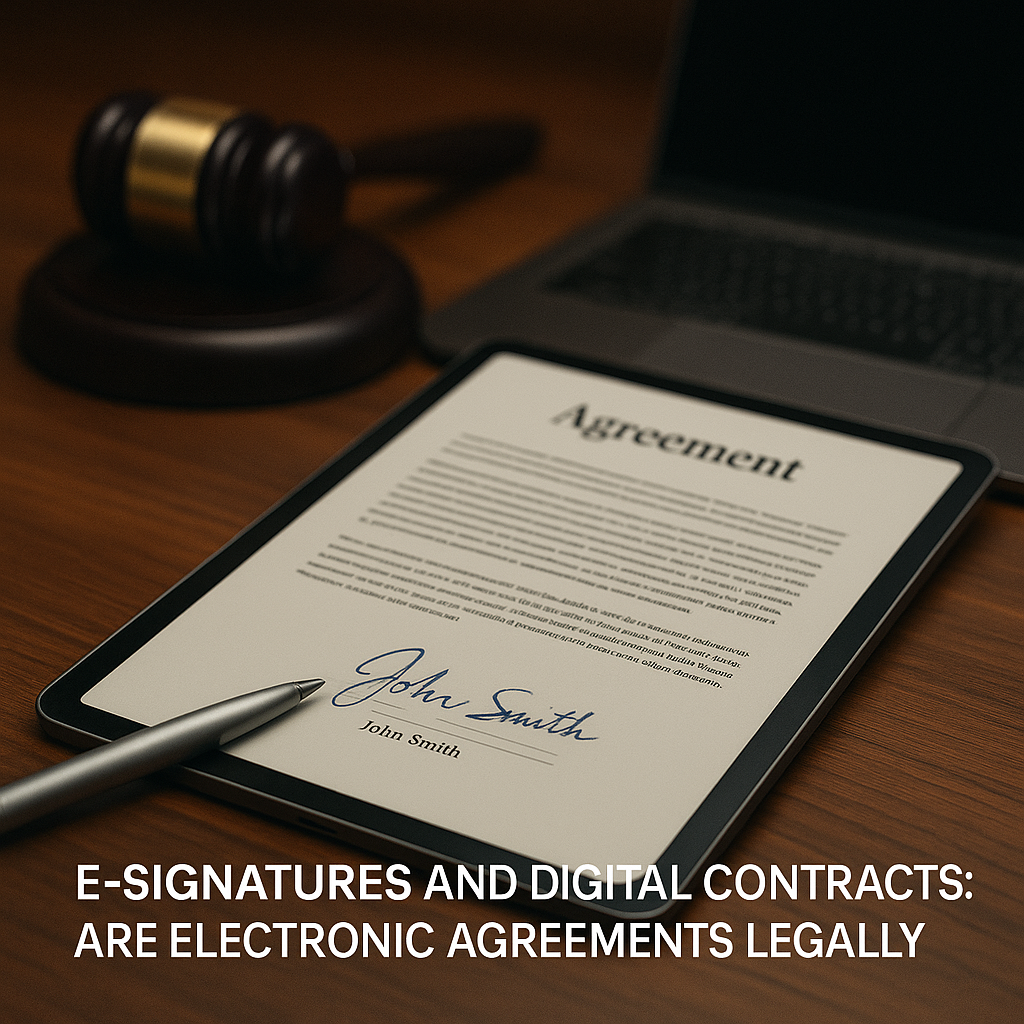
E-Signatures and Digital Contracts: Are Electronic Agreements Legally Binding?

The digital age is transforming how we do business—from communicating with clients to signing contracts. Entrepreneurs and small business owners increasingly rely on electronic signatures and digital contracts for their speed and convenience. However, many still wonder about their legal enforceability. Understanding how digital documents are recognized in courts is essential for any modern business owner.

Demystifying Electronic Signatures and Digital Contracts

Electronic signatures and digital contracts go far beyond a modern version of traditional paperwork. They signal a shift toward faster, more efficient transactions. For those asking are electronic agreements legally binding in business, the answer is a confident yes, provided certain conditions are met. Advanced security features such as secure authentication, time stamps, and audit trails ensure that these digital records are legally valid.

Unlike scanned paper documents, digital contracts are created, executed, and stored using cutting-edge technology, enhancing both security and accessibility. By leveraging the enforceability of electronic signatures in digital contracts, businesses streamline processes and reduce the need for physical storage. With evolving legal frameworks across jurisdictions, many regions now explicitly recognize the validity of electronic records.

Understanding the Legal Landscape

Business owners often question whether digital agreements adhere to the same legal standards as traditional contracts. Fortunately, regulations have evolved alongside technology. Legal requirements for e-signatures and digital contracts typically include electronic consent, secure signature capture, and reliable identity verification. Fulfilling these criteria minimizes challenges to enforcement.

In the United States, the Electronic Signatures in Global and National Commerce Act (ESIGN) and the Uniform Electronic Transactions Act (UETA) provide a solid legal foundation. These laws establish that electronic records and signatures have the same legal standing as paper documents when all parties consent to electronic transactions. Similar legal certainty exists in other regions, confirming that digital contracts are both modern and legally robust.

In the European Union, the eIDAS Regulation (Electronic Identification, Authentication, and Trust Services) sets high standards for electronic transactions. Both US and EU laws emphasize that, despite their digital nature, the authenticity and intent behind these contracts remain critical. With proper diligence, digital contracts can be as binding and reliable as traditional paper agreements.

How to Ensure Your Digital Documents Are Legally Sound

Even though legal frameworks favor digital agreements, entrepreneurs must take proactive steps to secure their enforceability. An essential element is the method of capturing signatures. Using reputable e-signature software that complies with legal standards adds security and builds trust in your digital transactions.

Ensure your chosen solutions meet both local and international legal requirements. Many businesses benefit from platforms offering multi-factor authentication and encrypted data storage to protect against unauthorized access or tampering.

Maintaining detailed records and audit trails is crucial. Information such as the date, time, IP addresses, and associated metadata supports the authenticity of a transaction. Keeping comprehensive records strengthens your position in any potential legal disputes regarding the enforceability of digital contracts.

Practical Implications for Entrepreneurs and Small Business Owners

The transition to digital contracting is not only a legal or technological shift—it also offers practical benefits for entrepreneurs and small business owners. Quick and secure execution of agreements leads to faster turnaround times, enhanced customer experiences, and reduced operational costs. When pondering are electronic agreements legally binding in business, the answer is clear: digital contracting is both secure and efficient.

Digital solutions also provide global accessibility and scalability. Entrepreneurs working with international clients, suppliers, or partners can bridge geographical gaps easily with legally enforceable digital documents. This global reach eliminates bureaucratic delays that often accompany physical document exchanges.

Switching from paper to digital may seem like a significant leap, but integrating reliable electronic signature solutions is straightforward. When implemented correctly, digital contracts not only speed up processes but also enhance security and support environmentally sustainable practices.

For further insights on modern business strategies and digital transformation, explore articles on business strategies that highlight procedural innovations and digital compliance trends. These resources offer a roadmap to transitioning your operations into a legally sound, fully digital environment.

While no system is entirely foolproof, growing legal acceptance of electronic signatures and digital contracts reassures business owners worldwide. Prestigious outlets like Forbes frequently share success stories where digital contracting has streamlined operations and minimized legal obstacles, demonstrating how technology and law can complement one another.

Adopting digital signatures is not just keeping up with trends—it’s a strategic move to stay competitive. Ensuring your electronic contracts are executed and stored securely minimizes disputes and reflects a forward-thinking business approach. Whether you are a startup or an established enterprise, embracing digital technologies can provide the agility needed in today’s fast-paced market.

A savvy business owner ensures every digital signature is supported by robust legal practices. This commitment includes understanding digital document retention, electronic verification standards, and maintaining comprehensive records. With the right tools and proactive strategies, your digital contracts can be as secure and binding as traditional agreements.

In summary, the move toward digital contracting is backed by evolving legal standards, technological innovations, and comprehensive frameworks for enforceability. By aligning your digital processes with these established legal requirements, you secure your agreements and pave the way for a more agile, efficient, and forward-thinking business model.

  • Electronic agreements are legally binding when proper protocols are followed.
  • Reputable e-signature platforms ensure the integrity of digital contracts.
  • US and EU regulations robustly support the enforceability of digital contracts.
  • Entrepreneurs benefit from faster transactions and lower operational costs.

Before You Launch an E-commerce Referral Program, Build the Margin Controls First

A referral program can look cheap until it starts paying rewards on orders that were already discounted, returned, cancelled or bought by the same customer […]

Sales commission spreadsheets break before revenue does: a RevOps playbook for small teams

Dolfin, a Barcelona-based AI-native sales compensation platform, has raised a €2.1 million seed round to expand its product development and international reach. The more useful […]

Proactive AI Agents Need an Operations Budget, Not Just a Prompt Library

AI tools are moving from answering prompts to watching work, predicting needs and taking initiative. That shift matters less as a novelty and more as […]

Operational Impacts of Natural Hydrogen on Small Business Energy Strategies

With Mantle8 securing €31 million for advancing natural hydrogen exploration, small business owners need to assess how this emerging energy source could fit into their […]

Leveraging AutoScientist: Practical AI for Small Business Adaptation

Adaption's AutoScientist presents a radical shift in how small businesses can leverage AI for operational efficiency. This tool not only automates the crucial process of […]

Streamlining Finances: Choosing the Right Accounts Payable Software

For small businesses, managing cash flow and expenses efficiently is crucial for survival and growth. A robust accounts payable (AP) software can play a pivotal […]

How Vapi's AI Strategy is Shaping Customer Support for Small Businesses

Vapi, an AI voice startup, recently achieved a $500 million valuation after impressively positioning itself against 40 competitors to secure Amazon Ring as a client. […]

Understanding Business Entities: Key Decisions for Small Business Owners

Business structure is more than just a legal formality; it's a strategic decision that influences your operational efficiency, tax obligations, and risk exposure. Understanding the […]

Navigating the Quantum Leap: What Algorithmiq's Funding Means for Small Businesses

Algorithmiq's recent €18 million funding round—notably, a shift of its headquarters from Helsinki to Milan—highlights a significant trend in quantum computing, which may hold transformative […]