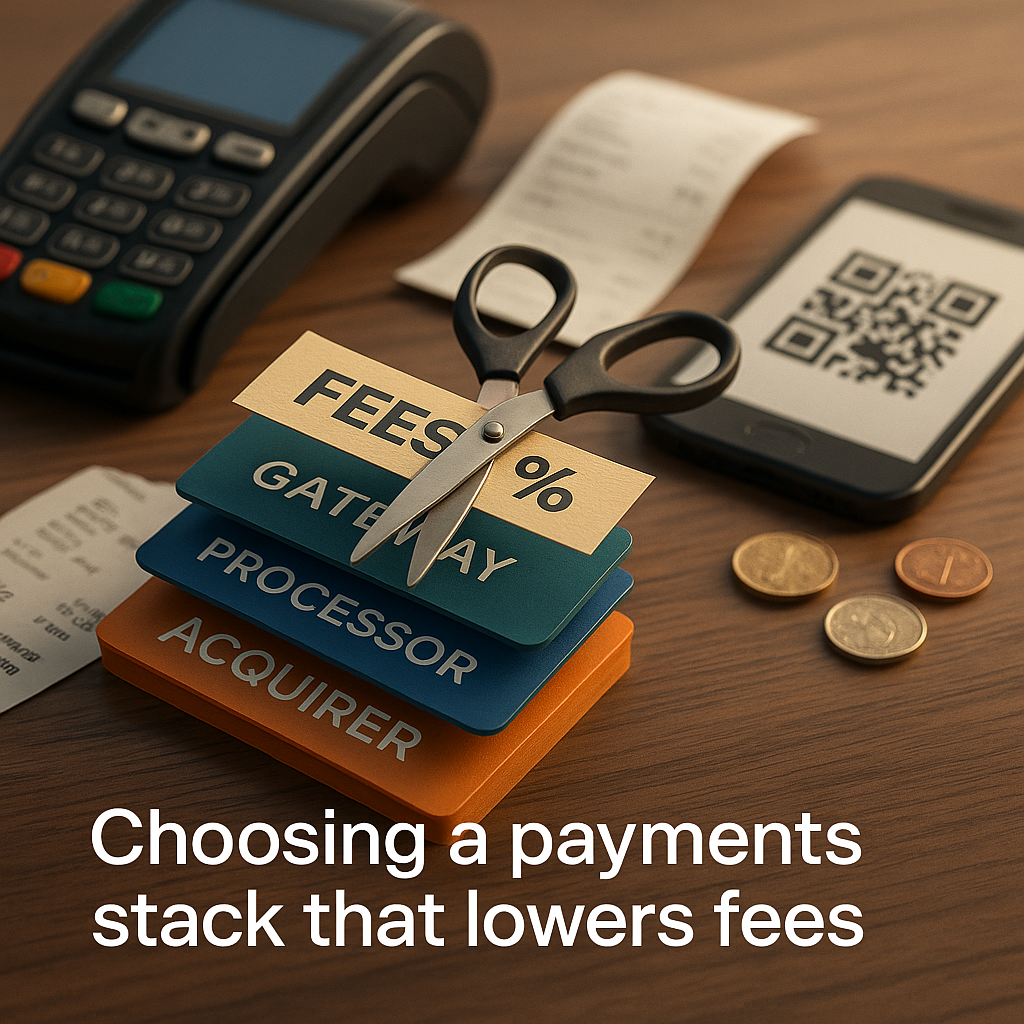
Modern entrepreneurs and small business owners face the dual challenge of rising transaction fees and managing multiple payment solutions. If you’re looking to choose a payments stack that lowers fees, you’re not alone. With numerous options available, understanding the fundamentals of an efficient payment ecosystem is the first step toward reducing operational costs and maximizing your revenue.
Understanding the Role of a Payments Stack
A payments stack is more than a tool for processing credit cards or digital payments—it’s a comprehensive system that integrates payment processors, gateways, fraud prevention, and accounting software. The goal is to reduce transaction fees while maintaining security and an excellent customer experience. When evaluating the best payment processing stack for minimizing fees, it’s crucial to assess each component and its fit within your overall operations.
Typically, an effective stack includes a payment gateway, a fraud detection system, and a point-of-sale (POS) solution for brick-and-mortar businesses. Each element works together to speed up secure transaction processing, minimizing chargebacks and costly errors.
For resource-conscious entrepreneurs, the right stack can mean the difference between marginal savings and significant cost reductions. It’s important to find a balance between affordability and functionality, ensuring that you meet compliance standards and access advanced features without unnecessary extras.
Key Factors Impacting Transaction Fees
Transaction fees are influenced by several factors, making it essential to understand these elements when choosing a payments stack that lowers fees. One of the most important is the pricing model offered by the provider. Some charge a flat fee per transaction, while others use a percentage-based model. Assessing your average transaction size and frequency can help you determine which pricing structure is most cost-effective for your business.
Processing technology is another critical factor. Fast, reliable technology not only boosts customer satisfaction but also reduces delays that may incur additional fees or penalties. High-risk transactions may trigger extra fees, so reviewing the risk management features of a payments stack is vital to keep overall costs in check.
Integration ease with your existing business software is equally important. Whether you use e-commerce platforms or customer relationship management (CRM) systems, a seamless connection reduces time spent on troubleshooting and lowers operational costs.
Exploring Smart Payments Stack Options to Reduce Transaction Fees
Reducing fees begins with a careful evaluation of available payment solutions. Compare different offerings using online comparison tools and expert reviews to find the ideal stack for your business needs. Trusted sources like the Forbes Tech Council often highlight emerging trends and technologies to inform your decision-making process.
When reviewing providers, pay close attention to contract terms. Avoid long-term or exclusive agreements that may limit flexibility as your business grows. Be cautious of hidden fees and request a clear breakdown of all potential charges before making a decision.
Reliable customer support and maintenance are key. A payment system prone to glitches or downtime can damage both your finances and reputation. Sometimes paying a bit more upfront can save you from operational issues and unexpected costs down the line.
Regularly audit your payment processing performance to identify inefficiencies or changes in transaction volumes that affect fee structures. Modern systems often include analytics features, giving you real-time insights to adjust your strategy and maintain cost efficiency.
Strategies for Making Informed Decisions
Before selecting a new payment system, conduct a thorough analysis of your current processes to pinpoint areas where fees are draining revenue. Look for issues such as high-risk transactions, cross-border fees, or outdated technology that might be causing errors. This analysis will help you identify the specific features you need in a payments stack to lower transaction fees.
Engage with industry peers and experts to gain insight into the performance of different payment solutions. Many entrepreneurs share their experiences on business networks and specialized forums, providing valuable real-world case studies on upgrading payment stacks for cost savings.
Plan for scalability from the outset. While start-up solutions may offer low fees, they may not support rapid growth. Scalable solutions might initially charge slightly higher fees but deliver enhanced security, faster processing, and better integration with your business systems. Features like recurring billing, mobile payments, and multi-currency support are especially important for businesses with international customers.
Consider leveraging integrated platforms that bundle payment processing with invoicing or accounting functions. This approach can eliminate redundant costs and reduce manual errors, making every saved minute and dollar important in your quest to lower fees.
For further guidance, explore the comprehensive guide to payment solutions on MakeBusiness.eu. This resource is designed for entrepreneurs and small businesses seeking to optimize payment systems and reduce overhead costs.
When you are ready to choose a provider, compile a list of potential options and conduct a thorough side-by-side comparison. Ask key questions about dispute management, fraud prevention, and system reliability to ensure the provider meets your business requirements.
Finally, don’t hesitate to negotiate terms. Many payment processors are willing to discuss options, especially with resourceful small businesses that display a strong understanding of the market. Even the best payment processing stack for minimizing fees can often be improved through thoughtful negotiation and leveraging growth potential. In today’s competitive landscape, even modest savings can have a significant impact.
By adopting a forward-thinking mindset and regularly reviewing your payment processes, you can transform your payment system from a mere expense into a strategic advantage. The challenge is not only to reduce fees but also to develop a system that evolves alongside your business.
In summary, addressing high transaction fees requires a detailed and strategic approach to payment infrastructure. With advancements in automation, transparent fee structures, and enhanced fraud prevention, you can build a payments stack that lowers fees and boosts overall operational efficiency. This proactive strategy is an investment in your company’s future growth and long-term profitability.
- Evaluate the complete payments ecosystem, not just individual components.
- Consider pricing models, integration ease, and scalability when selecting a solution.
- Regularly review transaction processes to uncover opportunities for fee reduction.
- Leverage expert advice and negotiate terms for cost-effective payment solutions.


