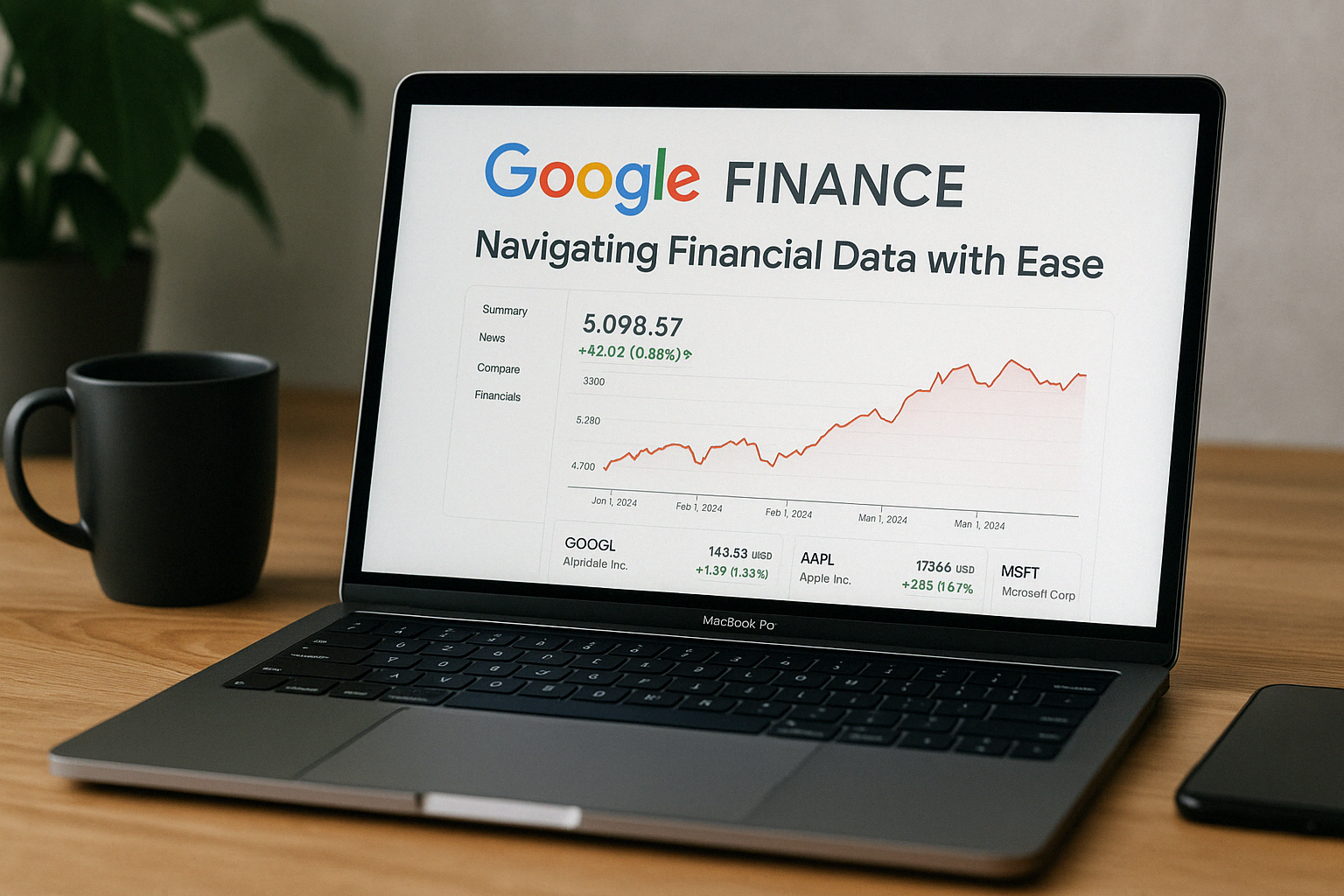
In today’s fast-paced business environment, data is the backbone of smart decision-making. For entrepreneurs and small business owners, extracting actionable insights from vast amounts of financial data is crucial. GoogleFinances has emerged as a trusted partner, offering versatile functionality and ease of use. This comprehensive guide explores practical ways to leverage GoogleFinances for effective financial planning and investment insights, making complex data more accessible and actionable.
Unlocking the Potential of GoogleFinances
GoogleFinances provides a user-friendly interface that seamlessly integrates real-time financial data into your daily workflow. Whether you are tracking market trends, monitoring stock prices, or evaluating economic indicators, this tool brings essential data right into your spreadsheets. Its integration with Google Sheets means you can update monthly reports or analyze historical stock performance effortlessly, saving you valuable time.
One of GoogleFinances’ key advantages is its ability to consolidate data from multiple sources into a single, easily accessible dashboard. This centralization enables entrepreneurs to maintain a complete overview of their investments and make informed financial decisions. With customizable dashboards, you can tailor your analytical tools to meet specific needs, ensuring that your financial strategies remain precise and effective.
By harnessing GoogleFinances for investment insights, you gain the ability to visualize market movements and filter data for nuanced analysis. This comprehensive view empowers business owners to set realistic investment goals and swiftly adjust strategies in response to market shifts.
Streamlining Financial Planning with GoogleFinances
Managing the intricacies of financial planning can be challenging, especially when balancing day-to-day operations with long-term strategies. A well-rounded guide to using GoogleFinances for financial planning can transform this process. Embedding live financial data into your forecasting models gives you the agility to respond to real-time market changes and maintain a competitive edge.
Imagine a dynamic spreadsheet that automatically updates with current stock performance, currency rates, and commodity prices. With GoogleFinances, this vision becomes reality. Business owners can integrate live data feeds into their financial models, reducing manual input errors and ensuring their reports remain accurate and timely.
The tool’s drag-and-drop interface and customizable formulas allow you to create dashboards that reflect your business priorities, whether you’re forecasting cash flow or analyzing investment portfolios. This streamlined approach simplifies complex financial data, making it easier to manage and understand.
Real-World Applications and Success Stories
GoogleFinances has proven its worth across various business scenarios. For instance, an entrepreneur managing multiple revenue streams can instantly access updated financial performance data from diverse global markets. This real-time integration is invaluable when comparing historical trends or assessing market volatility across different business segments.
Small business owners benefit from the tool by streamlining budget planning. Historical market data helps forecast seasonal trends and plan for economic downturns with confidence. One innovative startup incorporated GoogleFinances to merge stock market trends into their risk analysis, enabling strategic pivots when market conditions changed unexpectedly. These success stories highlight how the tool minimizes guesswork in financial planning and enhances overall decision-making.
Articles from trusted sources like Forbes emphasize the importance of integrating technology with financial management. Combining real-time data with strategic planning creates resilient business models capable of adapting to market demands. Additionally, resources on tools and strategies for small business management offer valuable insights into how digital tools like GoogleFinances can boost performance and drive smarter investment decisions.
Tips and Tricks for Effective Use
Maximizing the benefits of GoogleFinances starts with a clear plan. Define the key financial data points most relevant to your business to prevent data overload and keep your dashboards focused. Organize your spreadsheet with dedicated sections for stock prices, exchange rates, and economic indicators to facilitate easier analysis.
Consider these practical tips to enhance your experience:
- Customize your data feeds: Use tailored formulas to extract precise data, including specific time frames, industry comparisons, or regional statistics.
- Review and revise: Periodically assess your data dashboards to ensure they align with your strategic objectives. Adjust parameters as your business or market conditions evolve.
- Experiment with visualizations: Try different charts, graphs, and pivot tables to find the best way to present your financial insights. The goal is to simplify complex data into a clear, actionable format.
Establishing a routine that incorporates these strategies will help you unlock the full potential of GoogleFinances. Over time, you might explore more advanced techniques, such as merging multiple data feeds or integrating third-party financial tools, to further enrich your insights.
Integrating GoogleFinances into your routine financial planning sessions not only ensures that your data remains current but also cultivates a culture of continuous improvement. Regularly reviewing market trends can spark new ideas and drive strategic initiatives across your business.
In conclusion, no matter your industry or business scale, mastering GoogleFinances for investment insights is a valuable addition to your financial toolkit. Incorporating this powerful tool into your daily workflow transforms the way you use data for decision-making, leading to a more agile, responsive, and profitable business model.
- Centralizes real-time financial data for informed decision-making.
- Integrates live market trends into financial planning, minimizing manual errors.
- Provides practical examples for both investment analysis and operational planning.
- Enhances accuracy and relevance through regular reviews and customized dashboards.