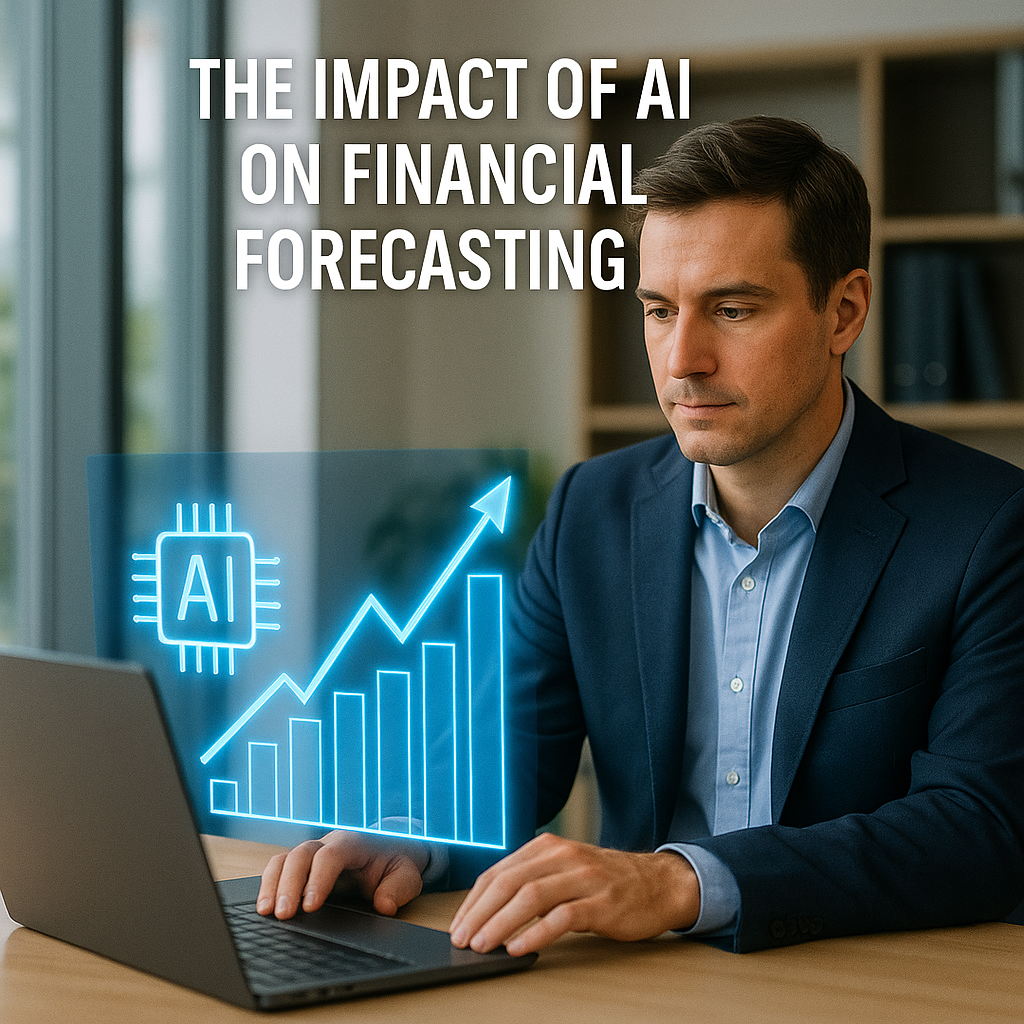
In today’s fast-paced entrepreneurial landscape, predicting market shifts and developing reliable strategies is more challenging than ever. Artificial intelligence (AI) is emerging as a game-changer in financial forecasting, using advanced data analysis to uncover patterns that traditional methods often miss. This transformation is changing how businesses plan for the future.
Revolutionizing Forecasting with Advanced AI Techniques
Traditional financial forecasting has relied on trend analysis and historical data. Today, however, AI integration offers a more nuanced approach. Experts note that the AI impact on financial forecasting models not only enhances accuracy but also alleviates the burden on human analysts by automating data analysis. With machine learning algorithms and neural networks continuously improving through new data entries, AI is reshaping the landscape of financial planning.
One significant advancement is AI’s ability to analyze both structured and unstructured data. From market trends and economic indicators to social media sentiment, these innovative AI techniques for accurate financial forecasting allow businesses to make proactive decisions. As small business owners and entrepreneurs experience tangible benefits, there is a growing trend towards leveraging AI for real-time, data-driven decision-making. For more insights on leveraging technology in business, check out our post on AI in Business.
Transforming Data into Actionable Insights
The real power of artificial intelligence in finance lies in its capability to convert raw data into clear, actionable insights. Sophisticated algorithms break down vast datasets into recognizable trends and patterns, highlighting even the smallest details that could influence future outcomes. Integrating these insights into forecasting models empowers businesses to predict downturns and capitalize on growth opportunities.
For instance, a small retail store might use AI-powered tools to analyze customer purchasing behaviors and forecast future demand surges. Similarly, tech entrepreneurs can apply these tools to anticipate market changes. This forward-thinking approach demonstrates how artificial intelligence transforms financial forecasting, giving businesses a competitive edge.
Reputable sources, including Forbes, have highlighted the transformative potential of AI in finance, reinforcing its importance in modern business strategies.
Practical Integration for Small Businesses and Entrepreneurs
While the theoretical benefits of AI in forecasting are compelling, practical implementation is what truly matters for entrepreneurs and small business owners. Transitioning to an AI-driven model doesn’t require a complete overhaul; instead, it involves incremental adjustments to existing forecasting processes.
Starting with tools that analyze historical trends and refine predictions with new data, businesses can integrate small AI modules into their financial software. This approach bridges traditional methods with cutting-edge AI techniques for accurate financial forecasting, gradually enhancing budget estimates and sales forecasts.
Working with specialists who understand both technology and business operations can lead to significant improvements in decision-making. Many entrepreneurs have already benefited from AI-driven financial services, and resources on platforms like MakeBusiness.eu offer additional guidance and real-world examples of successful AI integration.
Building Resilience in an AI-Driven Future
In an unpredictable economic landscape, robust financial forecasting is essential for staying ahead. AI-enhanced models not only predict future outcomes but also help craft strong contingency plans. The speed and precision of AI enable businesses to quickly respond to market changes, ensuring long-term resilience.
When small business owners consider the AI impact on financial forecasting models, they recognize a future where innovation, adaptability, and precision converge. Embracing these technologies builds a dynamic forecasting system and fosters a culture of continuous improvement, preparing companies to meet unexpected challenges head-on. For further strategies on building business resilience, see our article on Resilient Strategies.
This proactive strategy goes beyond risk avoidance—it strategically positions businesses for growth by fine-tuning financial strategies based on multiple economic scenarios. The clarity and agility provided by AI-driven models are especially valuable during economic volatility, giving businesses of all sizes a competitive advantage.
Artificial intelligence is not a futuristic concept; it is a practical asset that delivers immediate benefits. For entrepreneurs seeking to enhance forecast accuracy and improve decision-making, these innovative AI techniques for accurate financial forecasting are indispensable. Embracing AI today paves the way for long-term success and a more resilient business model.
Adopting AI in financial forecasting is a journey of gradual integration, blending traditional methods with cutting-edge technology. Although the transition may involve an initial learning curve, the result is a robust, precise, and actionable forecasting system. With the right tools and ongoing support from specialized platforms, business owners can seamlessly incorporate these technologies into their daily operations.
In the near future, AI will dominate the conversation around financial forecasting. Early adopters are already enjoying significant benefits, and as more businesses recognize these advantages, the trend will only accelerate. In an ever-evolving financial landscape, understanding how artificial intelligence transforms financial forecasting is not just a competitive edge—it is a necessity for survival and growth.
- AI identifies hidden trends that traditional methods may overlook.
- Innovative AI techniques offer actionable insights for proactive decision-making.
- Incremental AI integration enhances existing financial processes without major disruptions.
- AI-driven forecasting builds resilience and prepares businesses for market volatility.