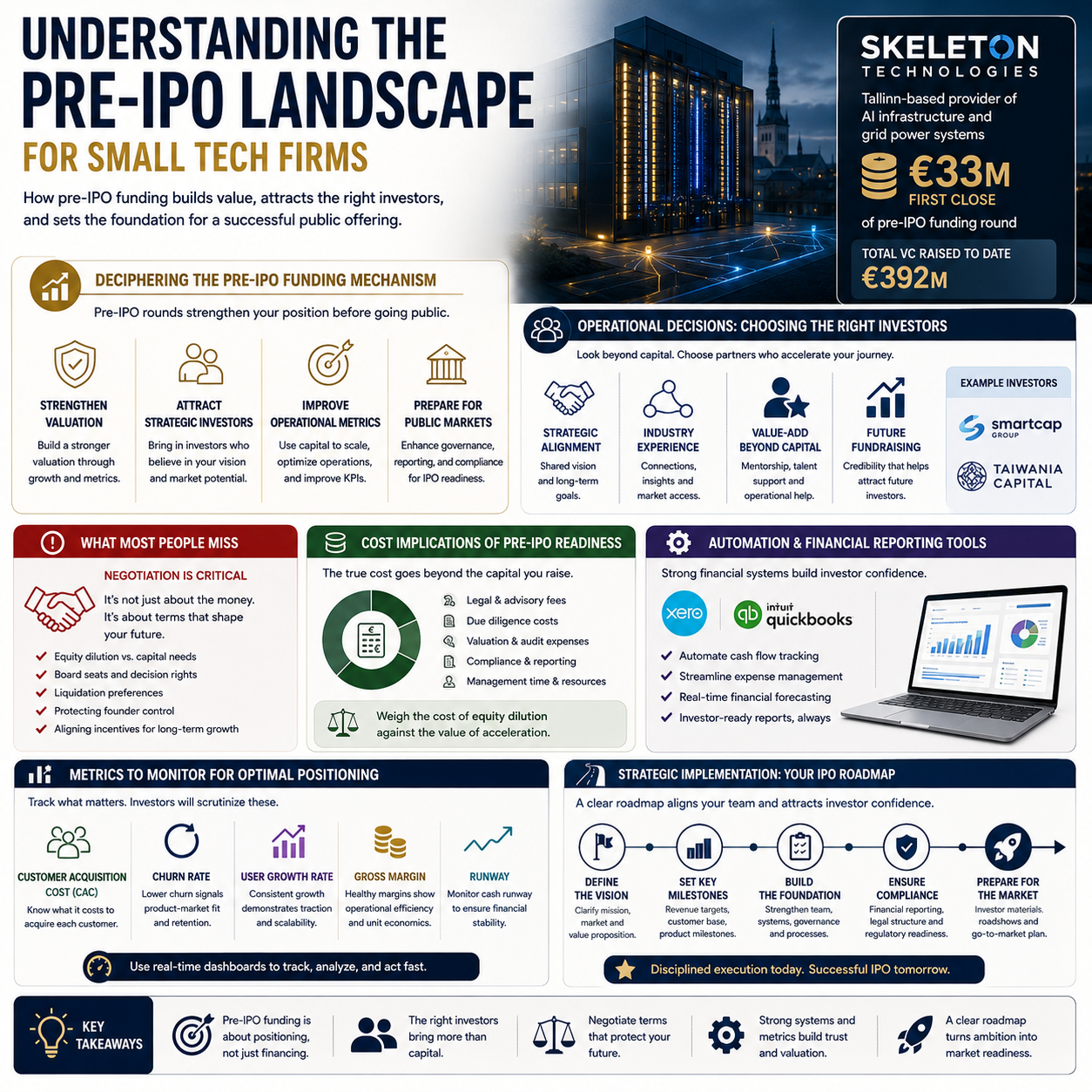
Skeleton Technologies, a Tallinn-based provider of AI infrastructure and grid power systems, recently announced a €33 million first close of its pre-IPO funding round. This is a crucial development not just for the company but for small tech firms contemplating similar paths towards public offerings.
Deciphering the Pre-IPO Funding Mechanism
Pre-IPO rounds are vital for companies aiming to bolster their financial position before hitting the public market. This phase allows firms to solidify their valuation, attract investors, and improve operational metrics. For smaller technology companies, understanding this mechanism can be transformative.
Operational Decisions: Choosing the Right Investors
Who you bring on as an investor during a pre-IPO round could determine your trajectory. Skeleton Technologies’ choice of investor groups, such as Smartcap and Taiwania Capital, suggests a strategic alignment towards future growth. Small tech business owners should scrutinize potential investors not just for capital but for how they can add strategic value through mentoring, industry connections, or market insights.
What most people miss
Many overlook the negotiation aspect during pre-IPO rounds. It is as much about what you can offer investors—like equity or decision-making influence—as it is about the funding amount. Small tech firms must prepare a robust negotiation strategy that aligns potential investor interests with their operational goals.
Cost Implications of Pre-IPO Readiness
Funding rounds come with direct and indirect costs. Firms often incur hefty legal fees, due diligence costs, and valuation expenses during this phase. Skeleton Technologies, for instance, has amassed a total of €392 million in venture capital with financial projections likely influencing these figures. Small operators should calculate whether the dilution of equity due to external funding outweighs the benefits of increased capital during this formative phase.
Automation and Financial Reporting Tools
Small businesses must also consider upgrading their financial reporting systems as they approach an IPO. Tools that automate cash flow tracking, expense reporting, and financial forecasting will likely make companies more attractive to investors. Consider solutions like Xero or Quickbooks that can provide comprehensive insights while reducing operational burdens.
Metrics to Monitor for Optimal Positioning
As you prepare for an IPO, certain metrics become paramount. Customer acquisition cost (CAC), churn rate, and user growth rate are critical indicators that potential investors will scrutinize. Small tech companies should set up dashboards that enable real-time tracking of these metrics, allowing them to pivot operational strategies when necessary.
Strategic Implementation: Creating a Roadmap Toward IPO
Crafting an IPO roadmap involves not just increasing revenue but also ensuring compliance with regulatory requirements. Small companies may benefit from alignment with legal advisors experienced in what needs to be disclosed during an IPO process. This roadmap should include milestones like achieving a certain revenue level, customer base expansion, and operational readiness, enhancing growth rate projections.


