Exploring Software Options for Your Business
Entrepreneurs and small business owners face critical technology decisions every day. One of the most important choices is whether to adopt a Software as a Service (SaaS) solution or invest in in-house software. Each option has its own unique advantages and challenges, especially regarding cost, convenience, and long-term flexibility. Understanding these factors will empower you to make a decision that perfectly aligns with your business model and growth strategies.
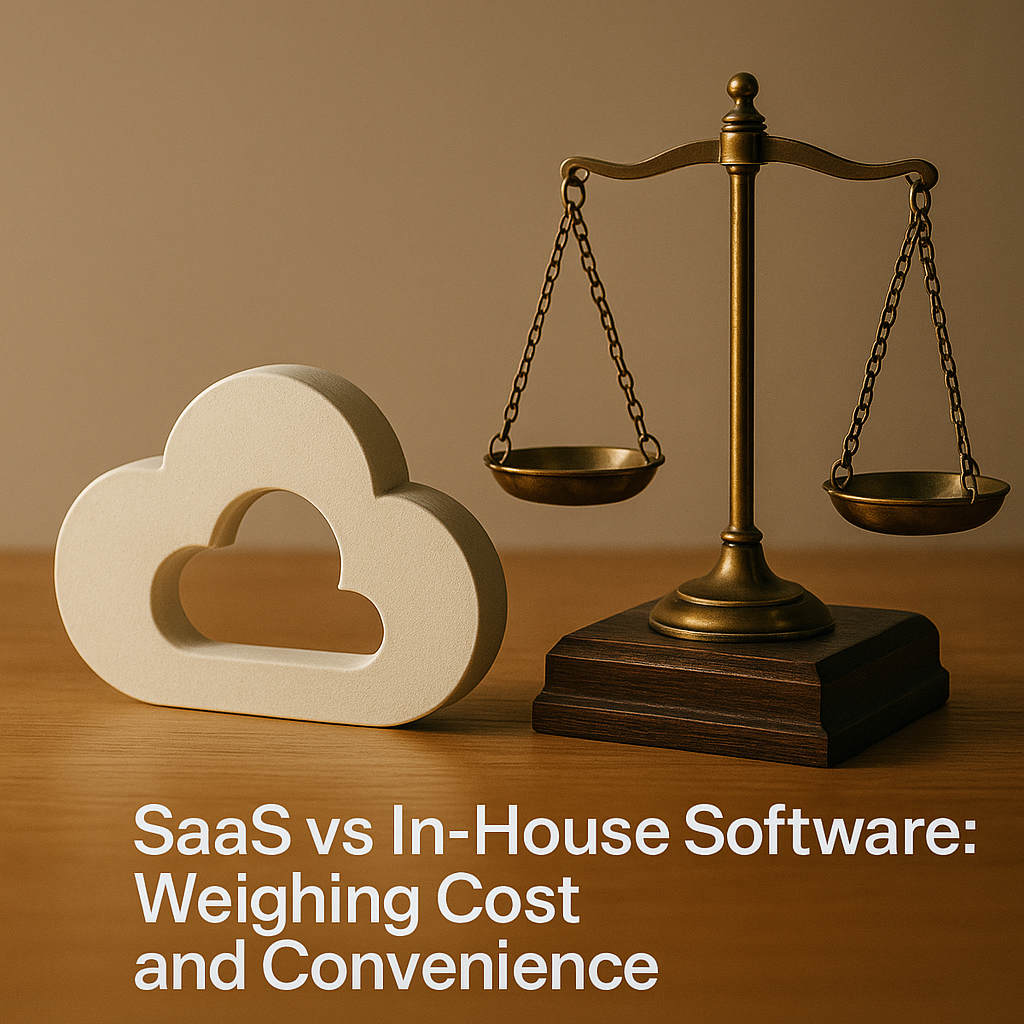
This article presents a detailed SaaS vs in-house software cost analysis that weighs initial investments against ongoing expenses. We also provide insights into comparing SaaS and in-house software convenience to help you decide which option will streamline your operations. Whether you aim to minimize upfront costs or desire greater control over your software, a comprehensive evaluation is essential.
Digging Deeper: Cost Considerations
A key aspect of evaluating cost and convenience of SaaS vs in-house solutions is understanding the financial differences between the two models. SaaS solutions typically feature a subscription-based pricing model, which means lower initial investments, consistent recurring fees, and minimized capital expenditure. This approach is particularly appealing to startups and small businesses with limited cash flow.
In contrast, developing or purchasing in-house software often requires a significant upfront investment. These costs can include hardware, licensing fees, and development or customization expenses. Despite the higher initial outlay, in-house software can offer enhanced control and customization options in the long run. For businesses with specialized requirements or rigorous security needs, the in-house solution can provide enduring value.
In many cases, the total cost of ownership for SaaS solutions remains lower over time. SaaS providers manage server hardware, software updates, and IT support, reducing the operational burden on your business. However, as your business scales, subscription fees can add up, potentially rivaling or exceeding the cost of an in-house solution.
It is crucial to consider both short-term cash flow and long-term expenses during your SaaS vs in-house software cost analysis. A seemingly cost-effective solution at the start may incur hidden expenses—like pay-per-use fees, integration charges, or enhanced data security costs—as your business grows.
The Convenience Factor: Flexibility, Maintenance, and Scalability
SaaS platforms are designed for ease-of-use, offering features like automated updates, robust customer support, and scalable hosting environments. These advantages make SaaS a practical choice for businesses without a dedicated IT department, saving both time and money.
On the other hand, an in-house software solution offers complete control and can be tailored to suit your company’s unique workflows. If your business has very specific needs, building software in-house might deliver the perfect fit with a higher level of customization and integration.
Convenience also plays a critical role in scalability. Scaling a SaaS platform can be as effortless as clicking a button, whereas expanding an in-house system often requires additional technical expertise, new hardware, or extra personnel. For fast-growing companies, the streamlined scalability of SaaS can provide the momentum needed to stay ahead.
Moreover, many SaaS vendors integrate seamlessly with third-party tools such as accounting software and customer relationship management (CRM) systems. This extensive integration capability enhances overall convenience, reducing operational headaches and ensuring a smooth workflow. For additional insights on leveraging technology for business growth, visit our resources page.
Beyond Basics: Assessing the Bigger Picture
The choice between SaaS and in-house software ultimately depends on your business’s unique needs and strategic goals. Many businesses benefit from SaaS’s blend of predictable pricing and operational simplicity, which is especially valuable in fast-paced environments. With SaaS, providers handle all updates, allowing you to focus on your core business functions. However, you might face limitations in data control and customization with this model.
Alternatively, in-house software demands higher initial costs and ongoing maintenance but offers complete control, allowing you to adapt the system to your evolving business requirements. This level of customization is crucial for industries that demand strict data privacy and highly specialized operations.
Long-term support and future-proofing your technology are also critical factors. Expert opinions, including those featured in leading publications like Forbes, highlight that SaaS often delivers cost savings and innovative updates that are challenging to replicate with an in-house solution.
The best solution aligns with your company’s development stage, technical expertise, and available resources. Startups typically lean toward SaaS for its fast implementation and minimal maintenance requirements, while more established companies with specific needs might find that an in-house solution justifies the additional investment.
Ultimately, a thorough analysis that includes a robust SaaS vs in-house software cost analysis and a detailed look at comparing SaaS and in-house software convenience will guide you in selecting the optimal approach for achieving your business objectives. Taking the time to evaluate your needs and anticipate future challenges will set you on the path to success.
Every business is unique. In-house software may be ideal for companies seeking granular control and tailored functionality, while SaaS solutions often excel in agility, cost predictability, and ease of use. The key is to conduct an evaluation that matches your specific operational requirements and growth ambitions to determine the best fit.
- Perform a detailed SaaS vs in-house software cost analysis to evaluate both short-term and long-term financial impacts.
- Assess the operational convenience of SaaS, including benefits like automatic updates and easy scalability.
- Consider in-house solutions if complete control, customization, and integration with specialized operations are essential.
- Align your technology strategy with your business needs to foster growth and operational efficiency.