
Latest News
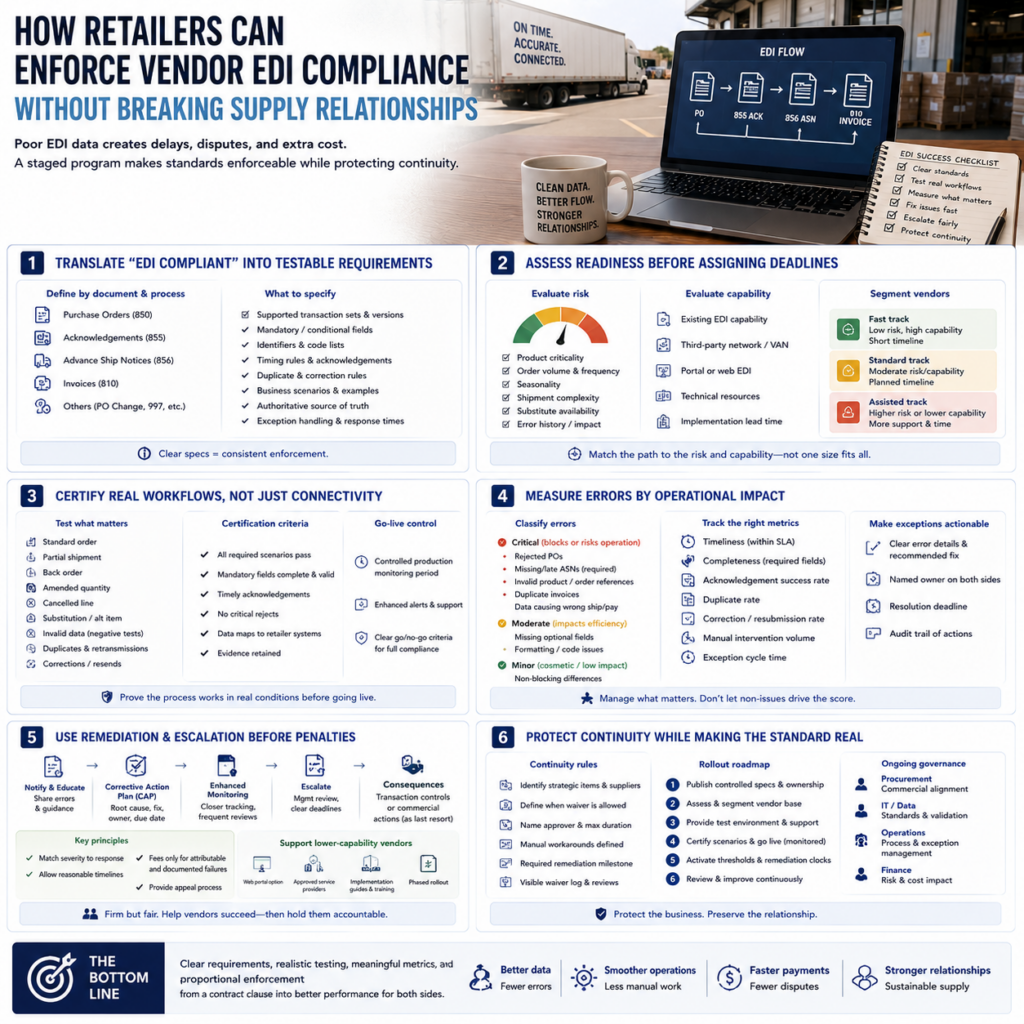
How Retailers Can Enforce Vendor EDI Compliance Without Breaking Supply Relationships
Retailers increasingly depend on electronic data interchange (EDI) to move purchase orders, acknowledgements, shipment notices, invoices, and related documents between trading partners. When a vendor sends incomplete, late, duplicated, or incorrectly mapped data, the failure does not remain inside the supplier’s system. It becomes a retailer problem: orders require manual intervention, receiving teams cannot reliably […]
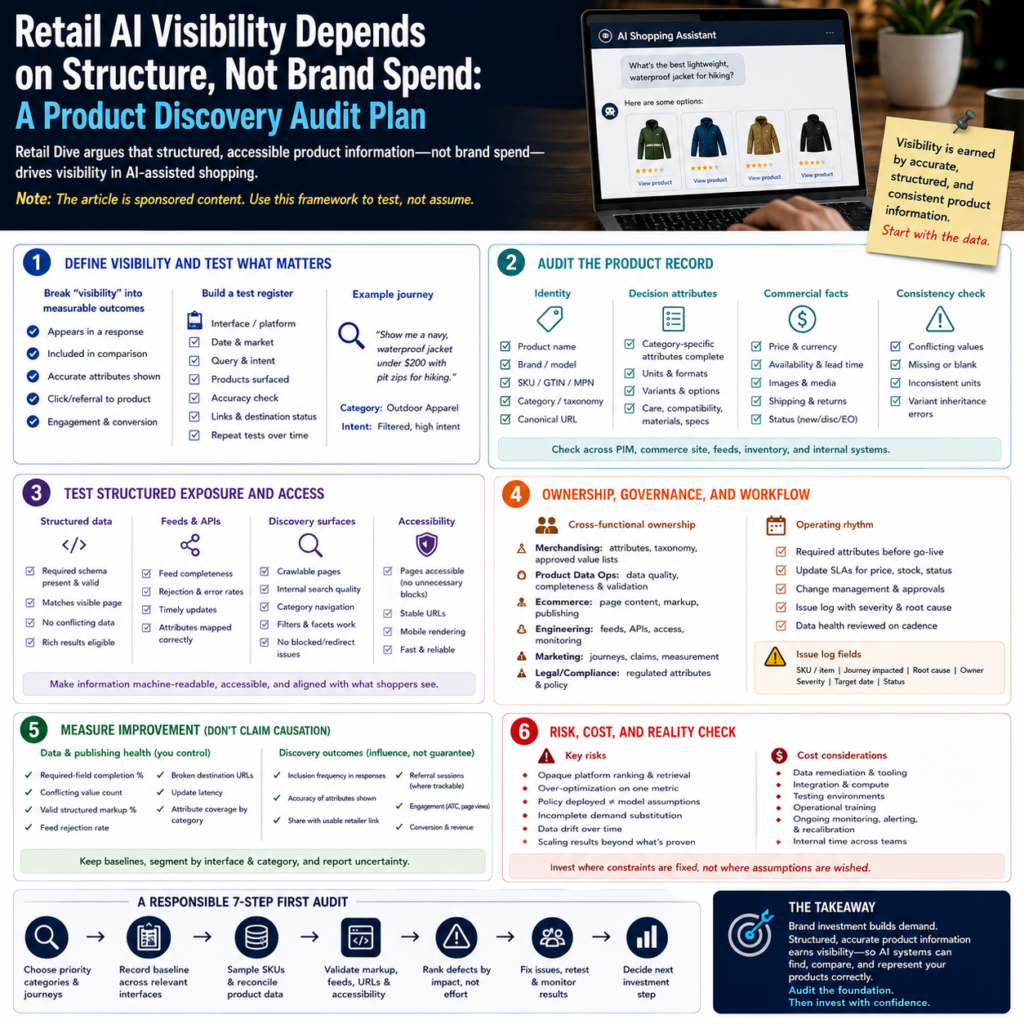
Retail AI Visibility Depends on Structure, Not Brand Spend: A Product Discovery Audit Plan
Retailers accustomed to buying reach may assume that strong brand equity, large media budgets and polished campaigns will also secure visibility when shoppers use AI-assisted discovery. The supplied Retail Dive article challenges that assumption, arguing that structured, accessible product information matters more than brand spend alone. Importantly, the article is sponsored content, so its argument […]
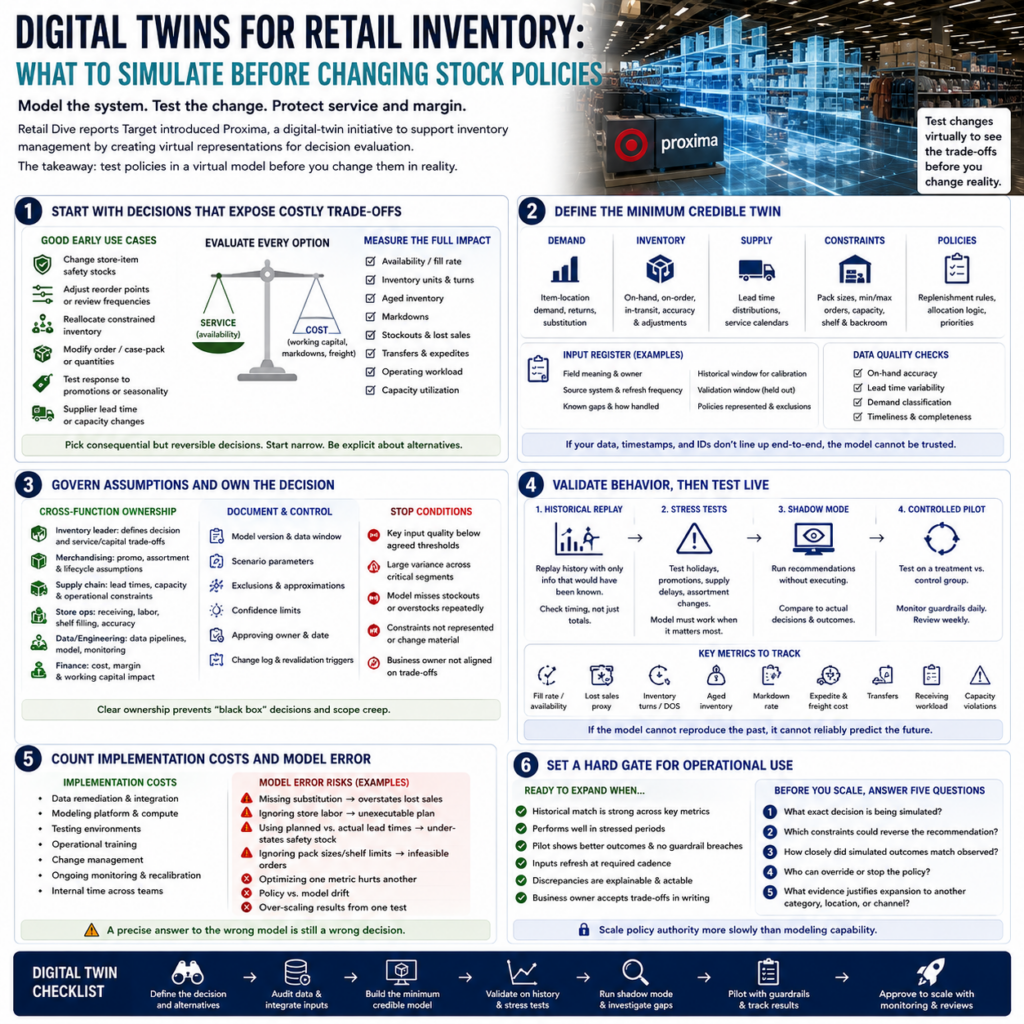
Digital Twins for Retail Inventory: What to Simulate Before Changing Stock Policies
Changing an inventory policy is rarely a contained decision. A higher safety-stock target may improve availability but increase markdown exposure. A different replenishment rule may help one store format while creating capacity problems elsewhere. Digital twins promise a safer way to examine such trade-offs: model the relevant operating system, simulate a proposed change, and compare […]
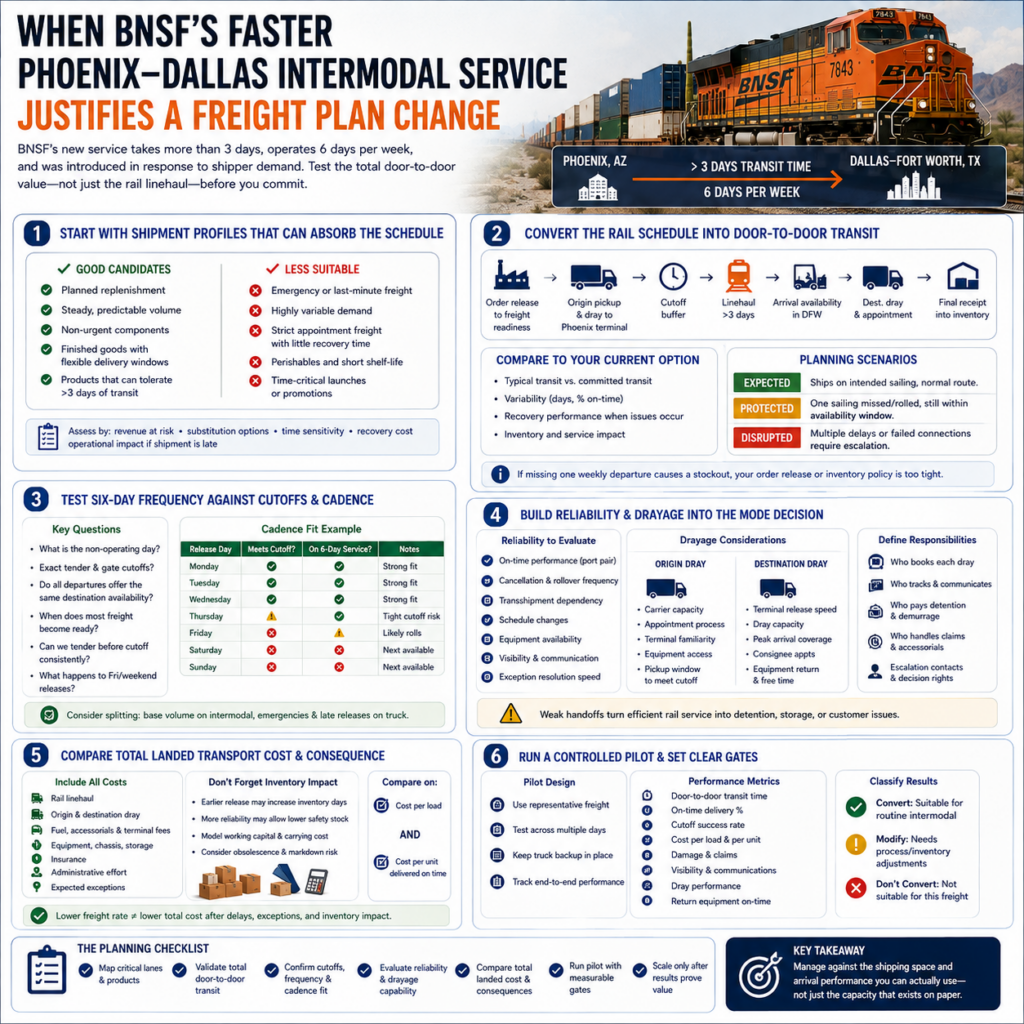
When BNSF’s Faster Phoenix–Dallas Intermodal Service Justifies a Freight Plan Change
BNSF’s faster intermodal service between Phoenix and Dallas-Fort Worth gives Southwest shippers another reason to revisit freight that may currently move by truck or through a different rail plan. According to Supply Chain Dive, the Phoenix-to-Dallas-Fort Worth route takes more than three days, operates six days per week, and was introduced in response to shipper […]
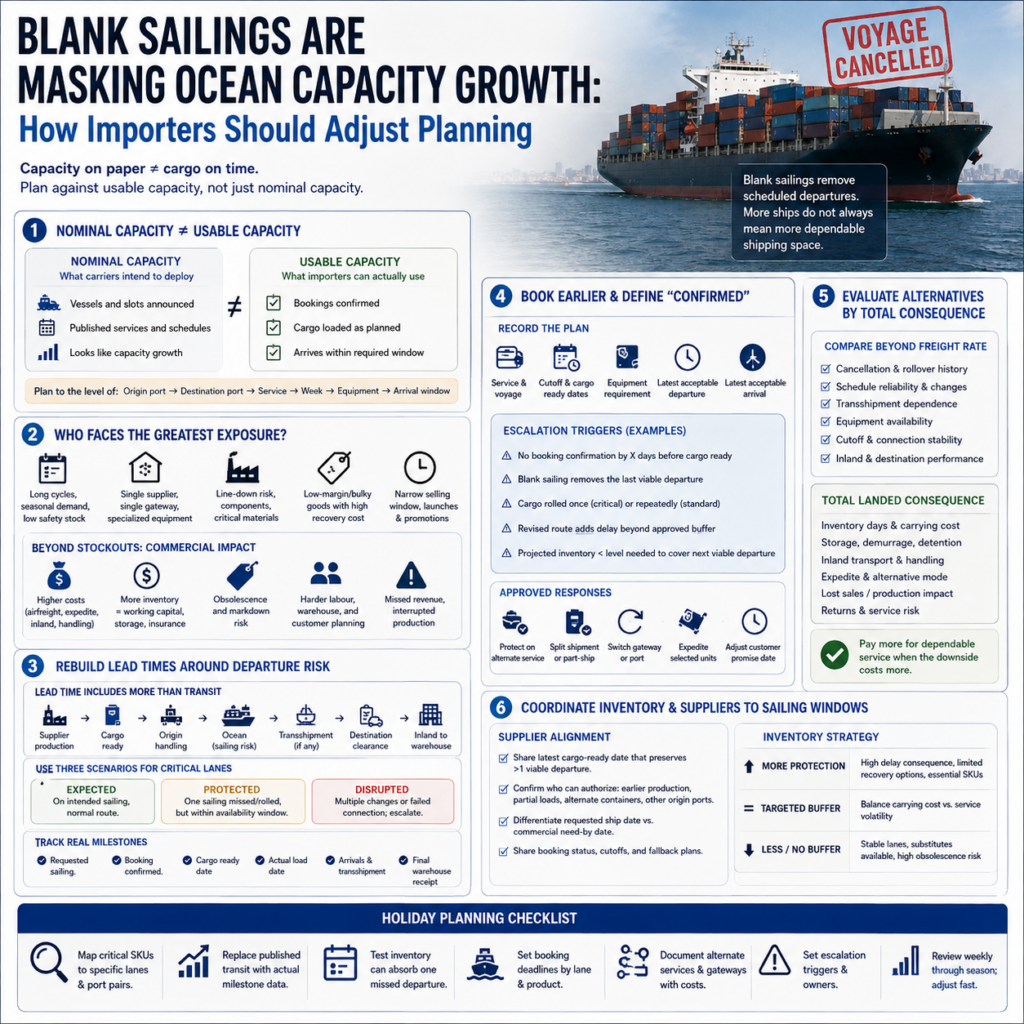
Blank Sailings Are Masking Ocean Capacity Growth: How Importers Should Adjust Planning
More ships or slots in the market do not automatically give importers more dependable shipping space. Carriers can add nominal capacity while simultaneously cancelling scheduled voyages—known as blank sailings—to manage supply, demand, and network performance. Supply Chain Dive reports that uneven capacity growth and blank sailings are contributing to longer lead times and reduced schedule […]
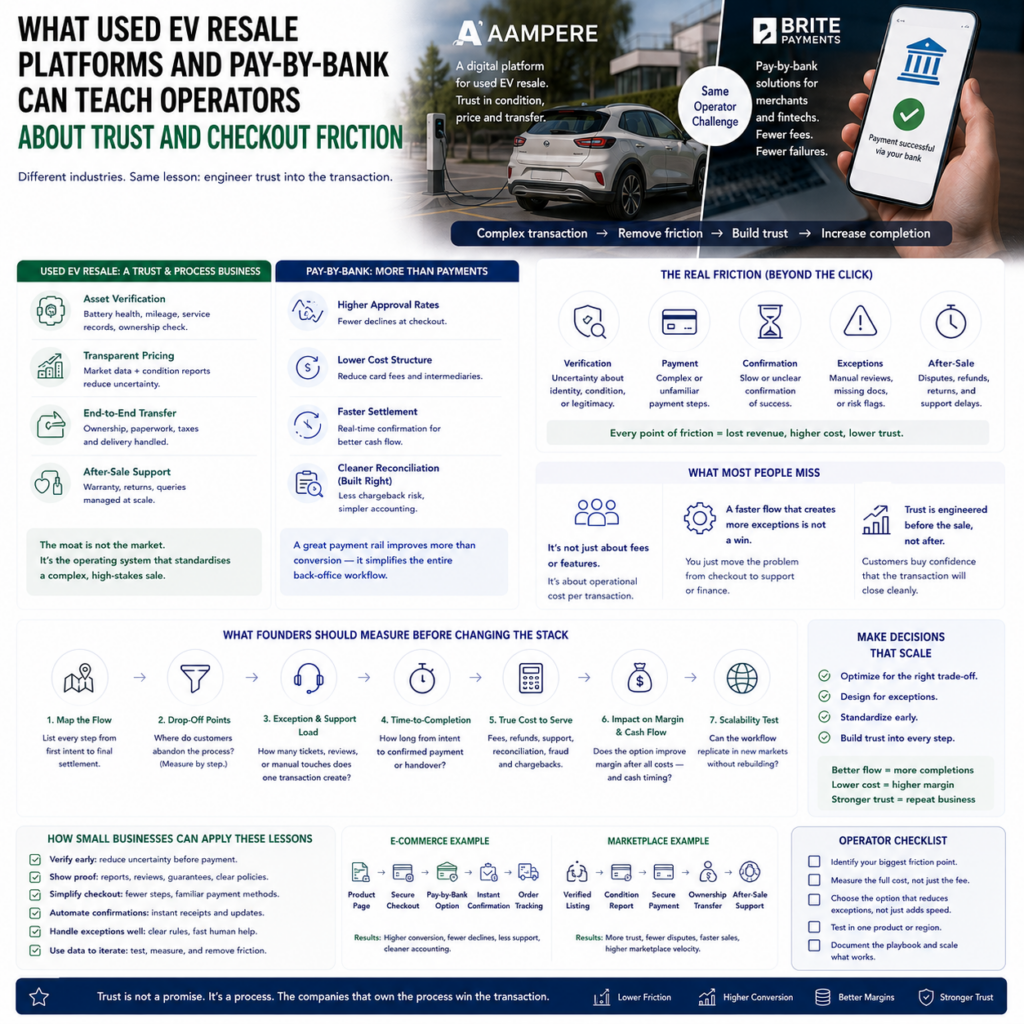
What used EV resale platforms and pay-by-bank can teach operators about trust and checkout friction
Two European startup signals point to the same operator problem: trust has to be engineered into the transaction, not added afterward. One is about used […] ...
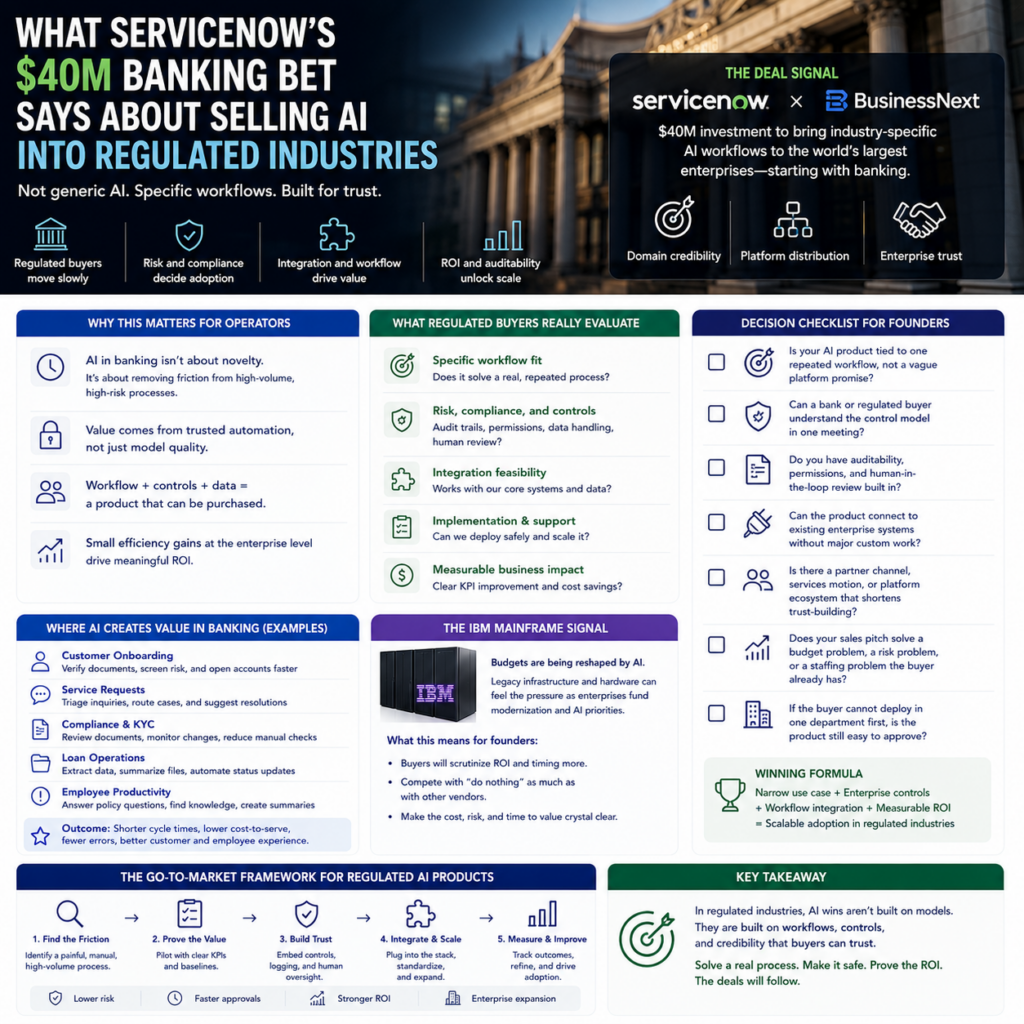
What ServiceNow’s Banking Bet Says About Selling AI Into Regulated Industries
ServiceNow’s $40 million investment in BusinessNext is not just another AI funding story. It is a signal about how enterprise software is being packaged for […] ...
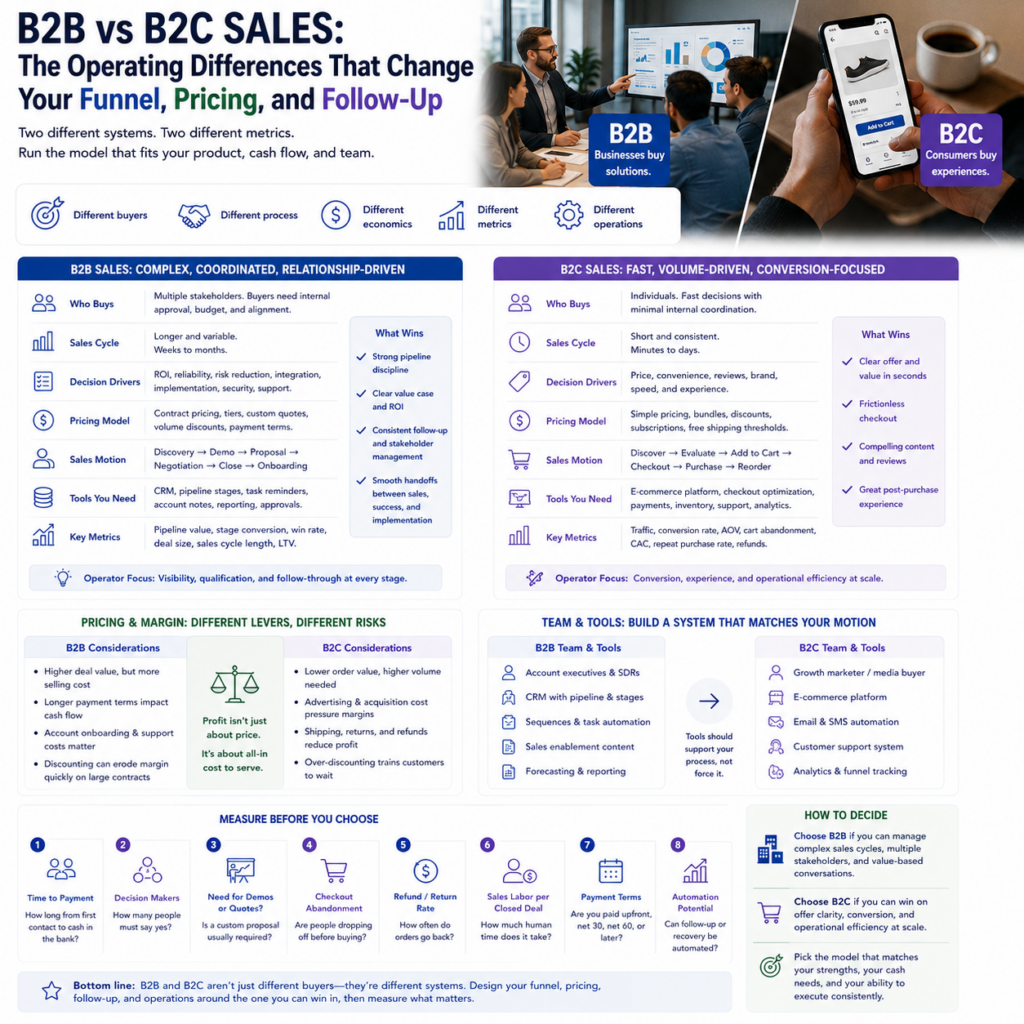
B2B vs B2C Sales: The Operating Differences That Change Your Funnel, Pricing, and Follow-Up
B2B and B2C are often described as two sales styles, but for operators they are two different systems. The distinction affects how leads are qualified, […] ...
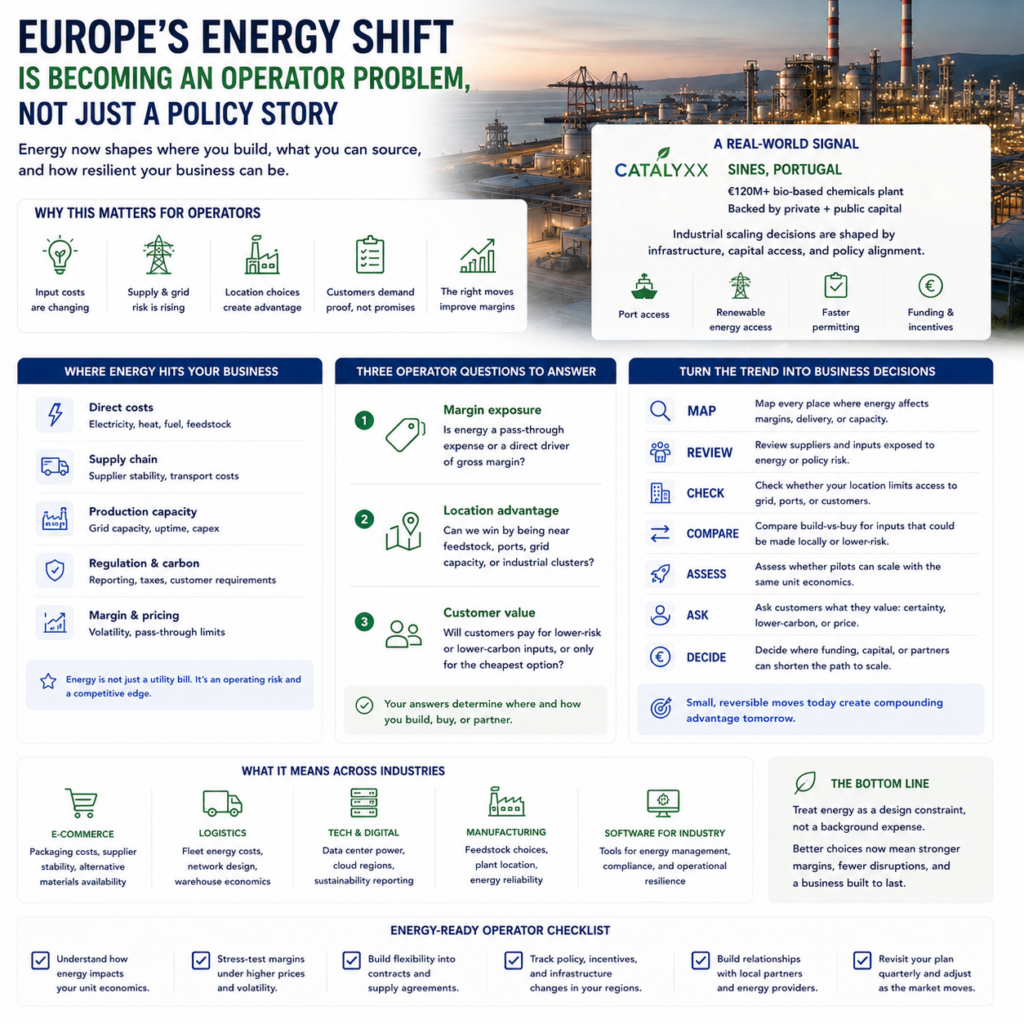
Europe’s energy shift is becoming an operator problem, not just a policy story
Europe’s energy transition is no longer only about regulation, subsidies, or long-term climate goals. It is increasingly shaping where industrial plants get built, which inputs […] ...